
Equipment
Ingredients
Aromatics & Base
- 30 g unsalted butter
- 150 g leek, white and light green parts only, washed and thinly sliced
- 2 garlic, minced
Main Ingredients
- 150 g fresh sorrel, washed, tough stems removed, roughly chopped
- 500 ml chicken broth, low sodium preferred
- 400 ml cultured buttermilk, chilled, well-shaken
Seasoning & Garnish
- 5 g kosher salt
- 2 g white pepper, freshly ground
- 10 g fresh dill, finely chopped
Nutrition (per serving)
Nutrition is estimated per serving. Nutrients without complete source data are omitted.
Full nutrition
- Calories
- 137 kcal
- Protein
- 5 g
- Carbohydrates
- 12 g
- Fat
- 8 g
- Fiber
- 2 g
- Sugar
- 7 g
- Sodium
- 1148 mg
- Saturated Fat
- 5 g
- Monounsaturated Fat
- 2 g
- Polyunsaturated Fat
- 0 g
- Cholesterol
- 19 mg
- Potassium
- 264 mg
- Calcium
- 174 mg
- Iron
- 1.2 mg
- Magnesium
- 14 mg
- Phosphorus
- 23 mg
- Zinc
- 0.2 mg
- Vitamin A
- 605 mcg
- Vitamin C
- 25 mg
- Vitamin E
- 0.2 mg
- Vitamin K
- 1 mcg
- Vitamin B6
- 0.0 mg
- Vitamin B12
- 0.0 mcg
- Thiamin
- 0.03 mg
- Riboflavin
- 0.09 mg
- Niacin
- 0.3 mg
- Folate
- 4 mcg
- Water
- 127 g
Sources: Aggregated Public Data, USDA FoodData Central
Method
Melt the unsalted butter in a heavy-bottomed pot over medium heat. Add the sliced leeks and cook until softened and translucent, about 5 to 7 minutes.
Add the minced garlic to the pot and cook, stirring constantly, for 1 minute until fragrant.
Add the chopped sorrel to the pot. Toss frequently until the leaves are completely wilted and have turned a muted olive green color, which should take about 2 minutes.
Pour in the chicken broth and stir to combine. Bring the mixture to a gentle boil, then immediately reduce the heat to low. Cover and simmer for 10 minutes to meld the flavors.
Carefully transfer the hot soup base to a blender. Blend on high speed until completely smooth. Alternatively, use an immersion blender directly in the pot.
Pour the pureed soup base into an airtight container. Refrigerate until completely chilled, dropping below 4°C/40°F. This will take at least 2 hours.
Once the base is thoroughly chilled, use a whisk to vigorously blend in the cold buttermilk, kosher salt, and white pepper.
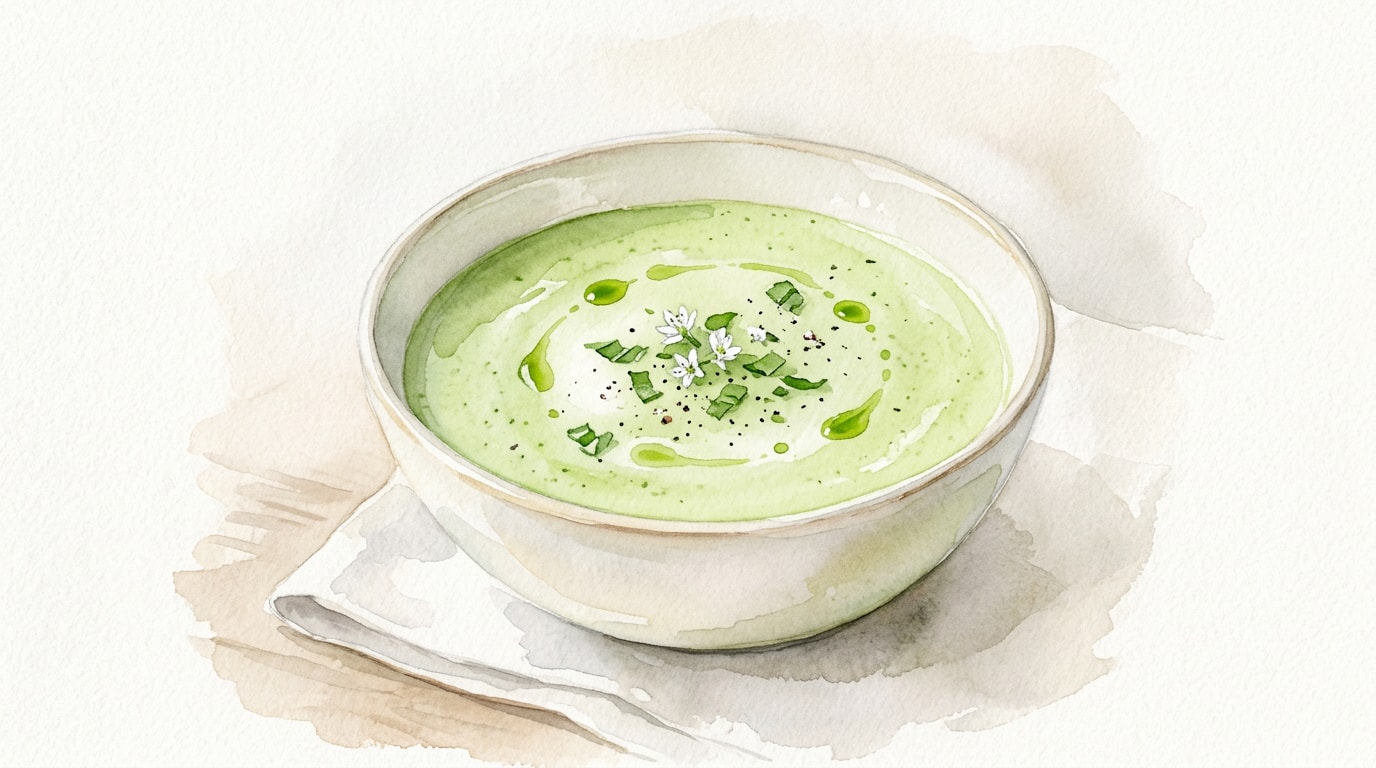
Ladle the chilled soup into serving bowls. Garnish with a sprinkle of fresh chopped dill before serving.
Chef's Notes
- Sorrel's vibrant green color inevitably shifts to an olive-brown when heated due to its high acid content reacting with chlorophyll. Do not be alarmed by this color change; it is natural and indicates the release of its signature tangy flavor.
- For the creamiest mouthfeel and best flavor balance, seek out full-fat cultured buttermilk. Low-fat or non-fat varieties can render the final soup too thin and watery.
- White pepper is specifically chosen here to maintain the pure visual aesthetic of the soup, avoiding the black specks that black pepper would leave behind.
Storage
Refrigerator: 3 days — Keep in an airtight container. The soup may separate slightly upon resting; whisk vigorously before serving.
Troubleshooting
Buttermilk curdles and separates into white specks
Cause: The buttermilk was added to the soup base while it was still hot or warm.
Fix: Vigorously re-blend the soup in a high-speed blender to emulsify, though some minor textural graininess may remain.
Prevention: Ensure the pureed sorrel and broth mixture is entirely chilled (below 4 degrees Celsius) before whisking in the buttermilk.
Soup is too tart or sour
Cause: Sorrel can vary greatly in its natural oxalic acid content depending on the season and harvest time.
Fix: Whisk in a splash of heavy cream or a pinch of sugar to balance the sharp acidity.
Prevention: Taste your sorrel raw before cooking to gauge its acidity, adjusting the buttermilk ratio as needed.
Cultural Context
Chilled sorrel soup shares a strong lineage with Eastern European Schav, a beloved springtime dish historically enjoyed by Jewish, Polish, and Russian communities. Because sorrel is one of the very first edible greens to emerge from the frozen earth after a long, harsh winter, its bright, lemony bite has long been celebrated as a revitalizing harbinger of spring.


