Equipment
* optional
Ingredients
Chicken and marinade
- 600 g boneless skinless chicken thighs, cut into 3cm pieces
- 80 g plain whole-milk yogurt, for marinade
- 30 g ginger-garlic paste, split, half for marinade and half for the curry base
- 4 g fine sea salt
- 3 g ground turmeric, for marinade
- 4 g red chili powder
Curry base
- 30 ml vegetable oil, neutral oil such as canola or sunflower
- 2 g cumin seeds, whole
- 200 g yellow onion, finely diced
- 1 green chili, finely minced, seeds removed for less heat if desired
- 6 g ground coriander
- 4 g ground cumin
- 1 g ground turmeric
- 2 g red chili powder
- 250 g roma tomato, finely diced
- 150 ml water, for adjusting sauce consistency
Curry finishing
- 4 g garam masala
- 2 g kasuri methi, dried fenugreek leaves, crushed between palms just before adding
- 10 ml lemon juice, freshly squeezed, about 1/2 lemon
- 10 g cilantro, leaves and tender stems, chopped, reserving a small handful for the raita
Basmati rice
- 300 g basmati rice, uncooked, rinsed
- 750 ml water
- 5 g fine sea salt
- 1 bay leaf, dried
Cucumber raita
- 250 g plain whole-milk yogurt, well chilled
- 120 g cucumber, grated and squeezed dry in a clean towel
- 2 g roasted cumin powder
- 2 g fine sea salt
- 5 g cilantro, chopped, from the reserved handful
Nutrition (per serving)
Nutrition is estimated per serving. Nutrients without complete source data are omitted.
Full nutrition
Only basic nutrition values are available for this recipe. More detailed nutrient data is incomplete.
- Calories
- 629 kcal
- Protein
- 41 g
- Carbohydrates
- 73 g
- Fat
- 18 g
Sources: Aggregated Public Data, USDA FoodData Central
Method
Cut the chicken thighs into roughly 3cm pieces. In a mixing bowl, combine the chicken with 80g yogurt, half of the ginger-garlic paste (about 15g), 4g salt, 3g turmeric, and 4g red chili powder. Mix until evenly coated, then cover and rest for 15 minutes while you prepare the remaining components.
Finely dice the onion and tomatoes. Grate or finely mince the remaining ginger-garlic paste and the green chili if using. Chop the cilantro, reserving a small handful for the raita. For the raita, grate the cucumber and squeeze it firmly in a clean kitchen towel to remove as much water as possible.
Place the basmati rice in a bowl, cover with cool water, swish gently, and drain. Repeat two or three times until the rinse water runs mostly clear. Soak the rice in fresh water for 10 minutes, then drain thoroughly.
Bring 750ml water to a rolling boil in a saucepan with 5g salt and the bay leaf if using. Add the drained rice, stir once, and cook uncovered at a gentle boil for 8 to 10 minutes, until the grains are just tender with a slight bite in the center. Drain through a fine-mesh strainer, return the rice to the hot pan off the heat, cover with a tight lid, and let rest for 10 minutes.
Heat 30ml oil in a heavy-bottomed pot over medium heat. If using cumin seeds, add them and let sizzle for about 10 seconds. Add the diced onion and cook, stirring every minute or so, for 8 to 10 minutes until the onion turns deep golden with browned edges. Lower the heat if the onion threatens to scorch.
Add the remaining ginger-garlic paste and minced green chili to the pot. Stir constantly for 1 to 2 minutes until the raw garlic aroma dissipates and the paste darkens slightly.
Add 6g ground coriander, 4g ground cumin, 1g turmeric, and 2g red chili powder. Stir constantly for 30 seconds so the ground spices bloom in the oil without burning.
Add the diced tomato and stir to combine. Cook over medium heat for 5 to 7 minutes, mashing gently with the back of your wooden spoon, until the tomatoes break down completely and you see a thin layer of reddish oil pooling at the edges of the masala.
Add the marinated chicken along with any marinade juices. Stir to coat, then spread the pieces in a single layer and cook undisturbed for 2 minutes to lightly brown. Stir once more.
Pour in 150ml water and stir, scraping up any browned bits from the bottom of the pot. Bring to a gentle simmer, cover, and reduce the heat to low. Cook for 12 to 15 minutes, stirring once midway, until the chicken reaches an internal temperature of 74°C/165°F and is opaque throughout with no pink centers.
Uncover the curry and simmer for 2 to 3 minutes to thicken the gravy to a coating consistency. Stir in 4g garam masala, the crushed kasuri methi if using, 10ml lemon juice, and most of the chopped cilantro. Taste and adjust with additional salt if necessary.
While the curry finishes, combine 250g yogurt, the squeezed grated cucumber, 2g roasted cumin powder, 2g salt, and the reserved cilantro in a bowl. Fold gently and chill until ready to serve.
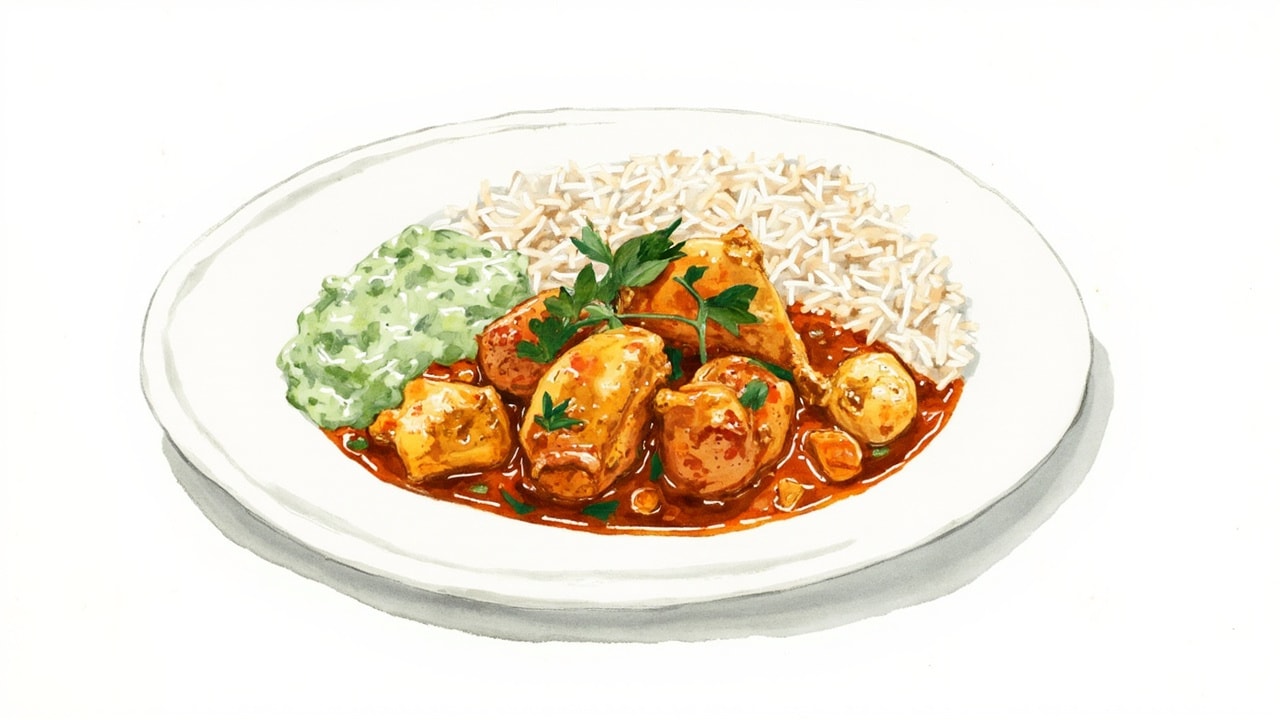
Uncover the rice and fluff gently with a fork. Divide among shallow bowls, spoon the chicken curry alongside or over the rice, and serve the cucumber raita in a small dish on the side. Garnish with the remaining cilantro and serve immediately.
Chef's Notes
- Whole-milk yogurt works far better in the marinade than low-fat versions; the fat tenderizes the chicken and carries fat-soluble flavor compounds from the spices into the meat.
- Crushing dried kasuri methi between your palms just before adding it releases its volatile oils and is the single most recognizable finishing touch of restaurant-style curries.
- The biggest upgrade for weeknight curries is patience with the onion and tomato base. Those 12 to 17 minutes of sautéing are what separate a homestyle curry from one that tastes like it came from a serious kitchen.
- If you have an extra 2 minutes, bloom the ground spices in a small ladle of hot oil separately and stir that tadka into the pot at the very end for a layered aromatic finish on top of the simmered spices.
- Cool leftovers completely before refrigerating. Storing hot rice and curry together in a closed container makes the rice gummy and can drop the temperature in your fridge into the danger zone for too long.
Storage
Refrigerator: 3 days — Store curry, rice, and raita separately in airtight containers. Refresh the curry with a splash of water when reheating.
Freezer: 2 months — Freeze only the curry. Rice is best made fresh; raita does not freeze. Thaw curry overnight in the refrigerator.
Reheating: Reheat the curry gently on the stovetop over medium-low heat until piping hot throughout and the chicken reaches 74°C/165°F internally. Raita is served cold and should be stirred fresh.
Troubleshooting
Curry gravy is thin and watery
Cause: The tomato base was not cooked down enough, or the final simmer was covered too long.
Fix: Simmer uncovered over medium heat for an additional 5 to 10 minutes, stirring occasionally, until the sauce reduces and coats the back of a spoon.
Prevention: Cook the tomato until oil visibly separates before adding the chicken, and finish the curry uncovered.
Chicken is tough or dry
Cause: Overcooking, especially with breast meat, or simmering too vigorously.
Fix: Cannot be fully reversed once the proteins have tightened. Slice thinly and toss back into the gravy, or repurpose as a wrap or sandwich filling with extra sauce.
Prevention: Use boneless thighs for more forgiving results, keep the simmer gentle once the water is added, and stop cooking as soon as the chicken hits 74°C/165°F.
Curry tastes flat or one-dimensional
Cause: Under-cooked onion or tomato base, insufficient salt, or spices added at the wrong time.
Fix: Stir in another pinch of salt, a small squeeze of lemon juice, and an extra 1g of garam masala off the heat. If the tomatoes were sharp, a small pinch of sugar can balance acidity.
Prevention: Brown the onions deeply and cook the tomato until oil separates. Season in layers and taste before finishing.
Rice turned sticky or mushy
Cause: Too much water, too long a boil, or skipping the post-cook rest covered.
Fix: Spread the cooked rice on a tray and let excess steam escape briefly, then fluff with a fork. Mushy grains are best repurposed into a quick fried rice rather than served under curry.
Prevention: Use a measured 2.5 parts water to 1 part rice, drain promptly when the grains are just tender, and rest covered off the heat for 10 minutes.
Raita is watery and thin
Cause: The cucumber was not drained before mixing, or the yogurt was a thin low-fat variety.
Fix: Stir in another tablespoon or two of thick yogurt, or drain the finished raita through a coffee filter for 15 minutes to recover some body.
Prevention: Always squeeze the grated cucumber firmly in a clean towel and choose a thicker whole-milk yogurt.
Cultural Context
Chicken curry in its many regional forms is a cornerstone of home cooking across the Indian subcontinent, with each household typically keeping a slightly different spice blend and technique passed down through generations. The pairing of a spiced main with cooling yogurt raita and plain rice is a classic everyday balance: the dairy tames the heat of the chilies, the rice stretches the meal, and the combination delivers complete protein alongside the day's vegetables and spices. Boneless thigh preparations like this one are a modern convenience adaptation of older bone-in recipes, trading the deeper flavor that bones provide for a much shorter cooking time suited to busy weeknights.