
Equipment
Ingredients
Umami Flavor Base
- 15 ml olive oil
- 250 g cremini mushrooms, finely chopped
- 2 garlic, minced
- 15 g red miso paste
- 15 ml soy sauce
- 15 g tomato paste
- 5 g smoked paprika
Patty Body and Binders
- 250 g black beans, rinsed and drained well
- 100 g cooked brown rice or quinoa, cooled
- 50 g panko breadcrumbs
Cooking and Assembly
- 15 ml olive oil
- 4 burger buns, split and toasted
- 4 lettuce leaves
- 1 tomato, sliced
Nutrition (per serving)
Nutrition is estimated per serving. Nutrients without complete source data are omitted.
Full nutrition
- Calories
- 446 kcal
- Protein
- 15 g
- Carbohydrates
- 64 g
- Fat
- 10 g
- Fiber
- 9 g
- Sugar
- 7 g
- Sodium
- 630 mg
- Saturated Fat
- 1 g
- Monounsaturated Fat
- 6 g
- Polyunsaturated Fat
- 1 g
- Potassium
- 725 mg
- Calcium
- 176 mg
- Iron
- 4.1 mg
- Magnesium
- 73 mg
- Phosphorus
- 222 mg
- Zinc
- 1.9 mg
- Vitamin A
- 71 mcg
- Vitamin C
- 7 mg
- Vitamin D
- 0.1 mcg
- Vitamin E
- 2.3 mg
- Vitamin K
- 17 mcg
- Vitamin B6
- 0.3 mg
- Vitamin B12
- 0.1 mcg
- Thiamin
- 0.29 mg
- Riboflavin
- 0.41 mg
- Niacin
- 3.8 mg
- Folate
- 125 mcg
- Water
- 165 g
Sources: Aggregated Public Data, USDA FoodData Central
Method
Heat 15ml of olive oil in a large skillet over medium-high heat. Add the finely chopped mushrooms and sauté until they release their liquid and brown deeply, about 8 to 10 minutes. Stir in the minced garlic during the last minute of cooking.
Transfer the cooked mushrooms to a food processor. Add the well-drained black beans, red miso paste, soy sauce, tomato paste, and smoked paprika. Pulse 5 to 6 times until the mixture is cohesive but still highly textured. Do not puree into a paste.
Scrape the mixture into a mixing bowl. Fold in the cooked rice and panko breadcrumbs until evenly distributed.
Divide the mixture evenly into 4 portions and form into tight patties about 2 centimeters thick. Place on a tray, cover, and refrigerate for at least 30 minutes to allow the starches to hydrate and bind the burgers.
Heat the remaining 15ml of olive oil in a skillet over medium heat. Fry the chilled patties for 4 to 5 minutes per side until a crispy crust forms. Alternatively, bake the patties in the oven at 190°C/375°F for 20 minutes, flipping halfway through.
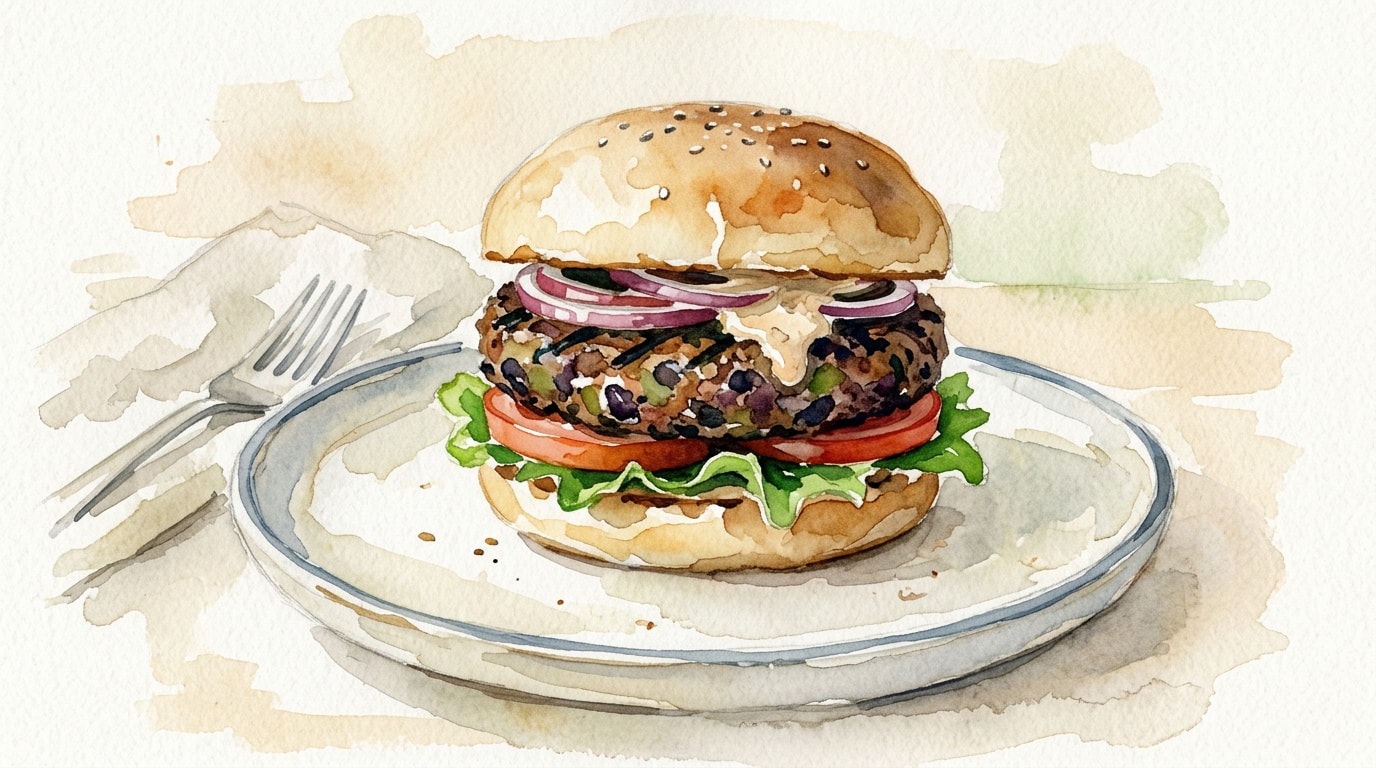
Place the hot patties on the toasted burger buns and top with lettuce and tomato slices.
Chef's Notes
- The secret to a truly meaty vegetarian burger is layering glutamates. Mushrooms, miso, tomato paste, and soy sauce each provide a different umami compound that creates a deeply savory profile.
- Cooking the moisture out of the mushrooms is completely non-negotiable. Wet mushrooms will steam the burger from the inside out and cause total structural failure.
- Black beans can hold a surprising amount of water. Rinse them thoroughly and let them sit in a strainer for at least 10 minutes, or pat them dry with paper towels to ensure a firm patty.
- For an extra flavor boost, try adding a few drops of liquid smoke to the food processor to mimic the aroma of a charcoal grill.
Storage
Refrigerator: 4 days — Store patties separately from buns and garnishes.
Freezer: 3 months — Freeze uncooked patties separated by parchment paper in an airtight container.
Reheating: Pan-fry chilled patties over medium heat for 3 minutes per side, or bake at 180°C/350°F until warmed through.
Troubleshooting
Patties fall apart in the pan while flipping
Cause: Too much moisture left in the mushrooms or insufficient resting time in the refrigerator
Fix: If the raw mixture feels too wet before chilling, fold in an additional 15g of panko breadcrumbs
Prevention: Cook mushrooms until the pan is bone dry, and chill patties for the full 30 minutes
Burgers have a mushy interior texture
Cause: Over-processing the beans in the food processor
Fix: Cannot be fixed once pureed, but baking at 190°C instead of frying can help dry out the center
Prevention: Use the pulse function and stop while distinct bean pieces are still visible
Cultural Context
The vegetarian burger has evolved dramatically from the early soy-based substitutes of the late 20th century to highly sophisticated, chef-driven creations. Modern plant-based cuisine focuses on building complex flavor profiles using natural, umami-rich ingredients rather than relying heavily on artificial meat flavorings. This recipe reflects that culinary shift, celebrating the robust, savory potential of humble vegetables and legumes.


