Equipment
* optional
Ingredients
Meringue Base
- 4 egg whites, room temperature
- 200 g caster sugar
- 4 g cornstarch, sifted
- 5 ml white vinegar
- 5 ml vanilla extract
Vanilla Cream
- 300 ml heavy cream, cold, 4°C/39°F
- 100 g mascarpone cheese, cold
- 30 g powdered sugar, sifted
- 5 ml vanilla extract
Fruit Topping
- 2 ripe mangoes, peeled and cubed
- 5 passion fruits, halved with pulp scooped
- 1 lime, zested
Garnish
- 30 g unsweetened coconut flakes, toasted golden
Nutrition (per serving)
Nutrition is estimated per serving. Nutrients without complete source data are omitted.
Full nutrition
- Calories
- 365 kcal
- Protein
- 4 g
- Carbohydrates
- 42 g
- Fat
- 21 g
- Fiber
- 2 g
- Sugar
- 38 g
- Sodium
- 44 mg
- Potassium
- 203 mg
- Calcium
- 52 mg
- Iron
- 0.4 mg
- Magnesium
- 16 mg
- Phosphorus
- 46 mg
- Zinc
- 0.2 mg
- Vitamin C
- 22 mg
Sources: Aggregated Public Data, USDA FoodData Central
Method
Position a rack in the lower third of the oven and preheat to 120°C (250°F). Line a large baking sheet with parchment paper, tracing a 22cm circle on the paper as a guide, then turn the paper over.
In a clean, completely grease-free bowl, whisk the egg whites on medium speed until soft peaks form when the whisk is lifted, about 2-3 minutes.
With the mixer running on high speed, add the caster sugar 1 tablespoon at a time, waiting 20-30 seconds between additions, until all the sugar is incorporated and the meringue is stiff, glossy, and the granules are no longer gritty when rubbed between clean fingertips.
Sift the cornstarch evenly over the meringue, then drizzle the white vinegar and vanilla extract over the surface. Using a rubber spatula, gently fold the ingredients together with a cutting and turning motion until just combined, taking care not to deflate the meringue.
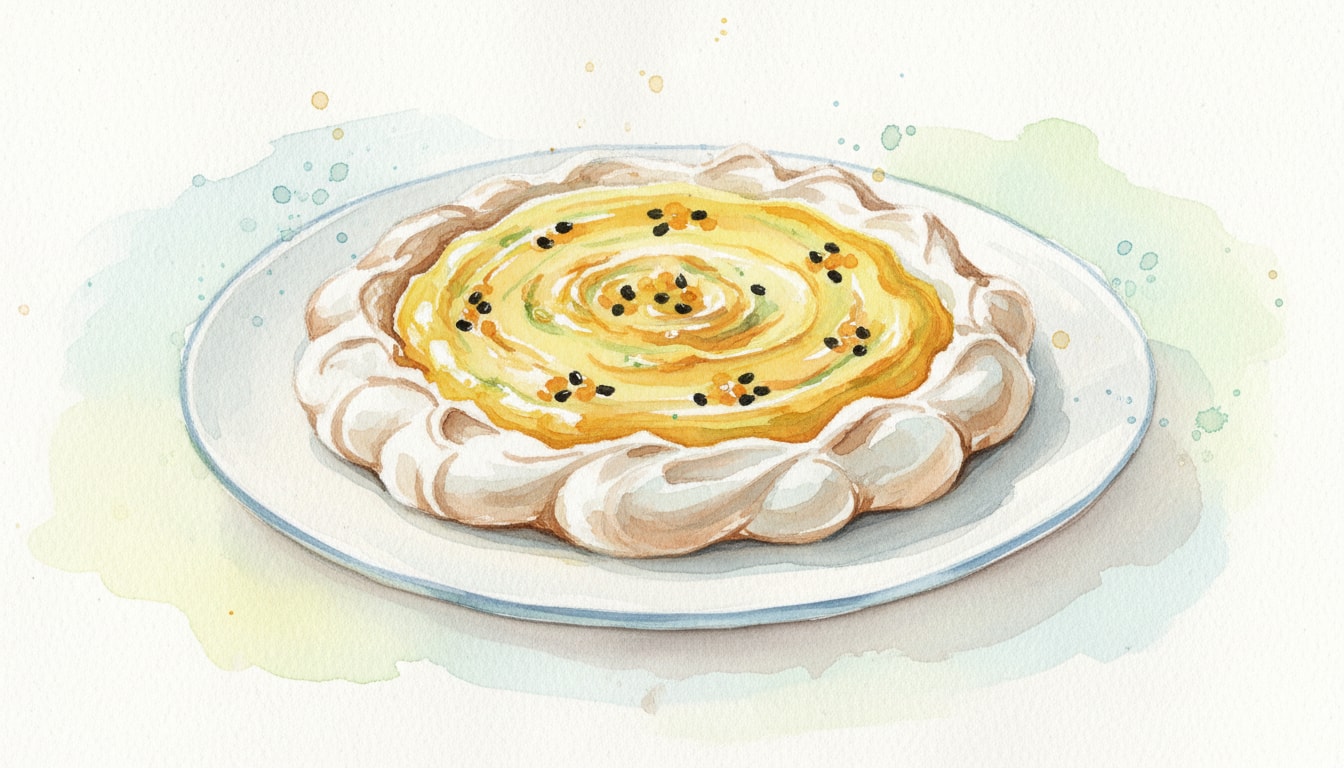
Spoon the meringue onto the parchment within the traced circle. Using an offset spatula or the back of a spoon, shape it into a round about 22cm wide and 6cm high at the edges, forming a shallow well in the center that will hold the cream and fruit.
Place the baking sheet on the lower rack and bake at 120°C (250°F) for 1 hour 30 minutes without opening the oven door. The meringue should feel dry to the touch and lift cleanly off the parchment.
Turn the oven off completely and leave the meringue inside, door closed, for 1 hour to cool slowly. This gradual cooling prevents the shell from cracking and yields the signature shatter-crisp exterior with a soft marshmallow interior.
While the meringue cools, prepare the topping. In a chilled bowl, combine the cold heavy cream, cold mascarpone, sifted powdered sugar, and vanilla extract. Whip on medium speed until soft peaks just hold their shape, about 2-3 minutes. Do not overwhip.
Stand each mango upright, slice off the two cheeks on either side of the flat pit, then score the flesh in a crosshatch pattern without cutting through the skin. Press the skin side up to pop the cubes out. Halve the passion fruits and scoop the pulp and seeds into a small bowl. Zest the lime and reserve.
Place the coconut flakes in a small dry skillet over medium-low heat and toast, tossing constantly, until fragrant and pale golden, about 90 seconds to 2 minutes. Immediately transfer to a plate to cool; they will continue to darken from residual heat.
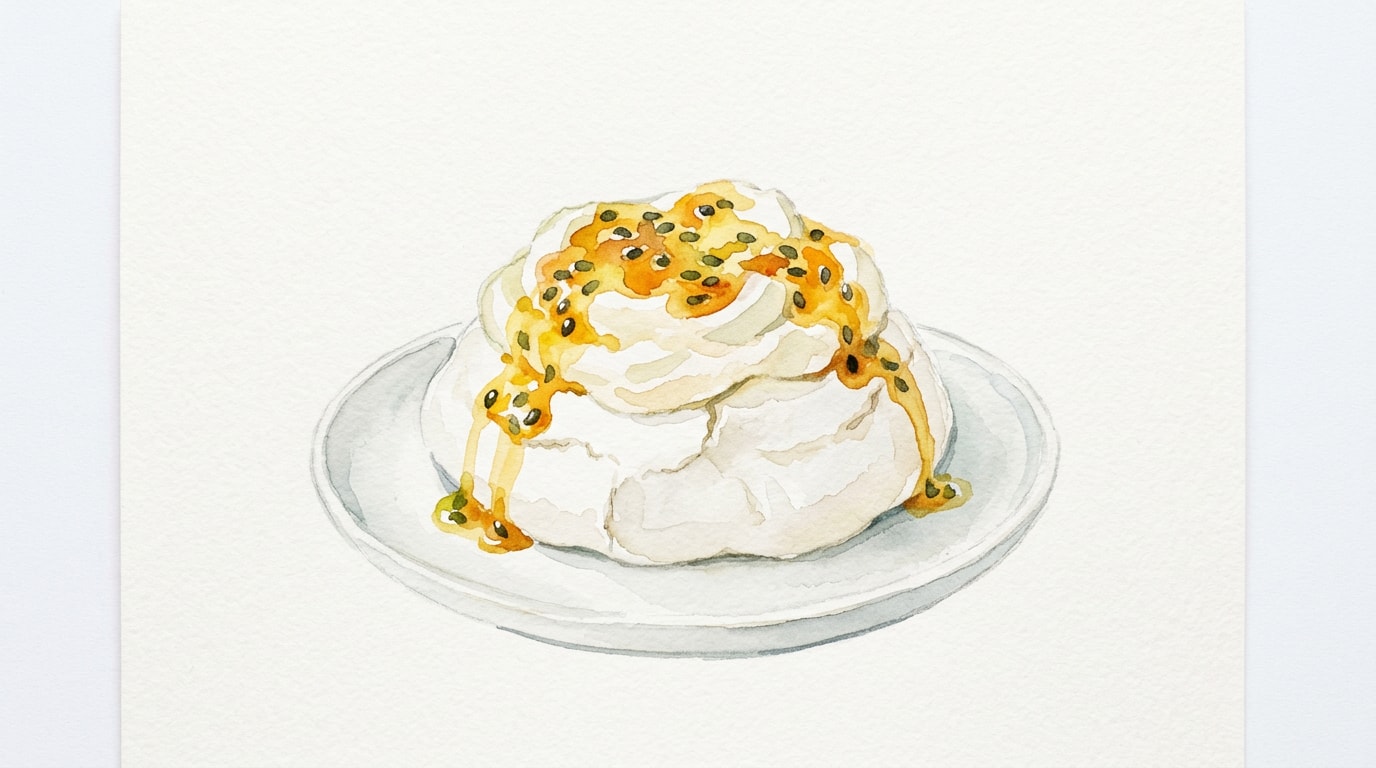
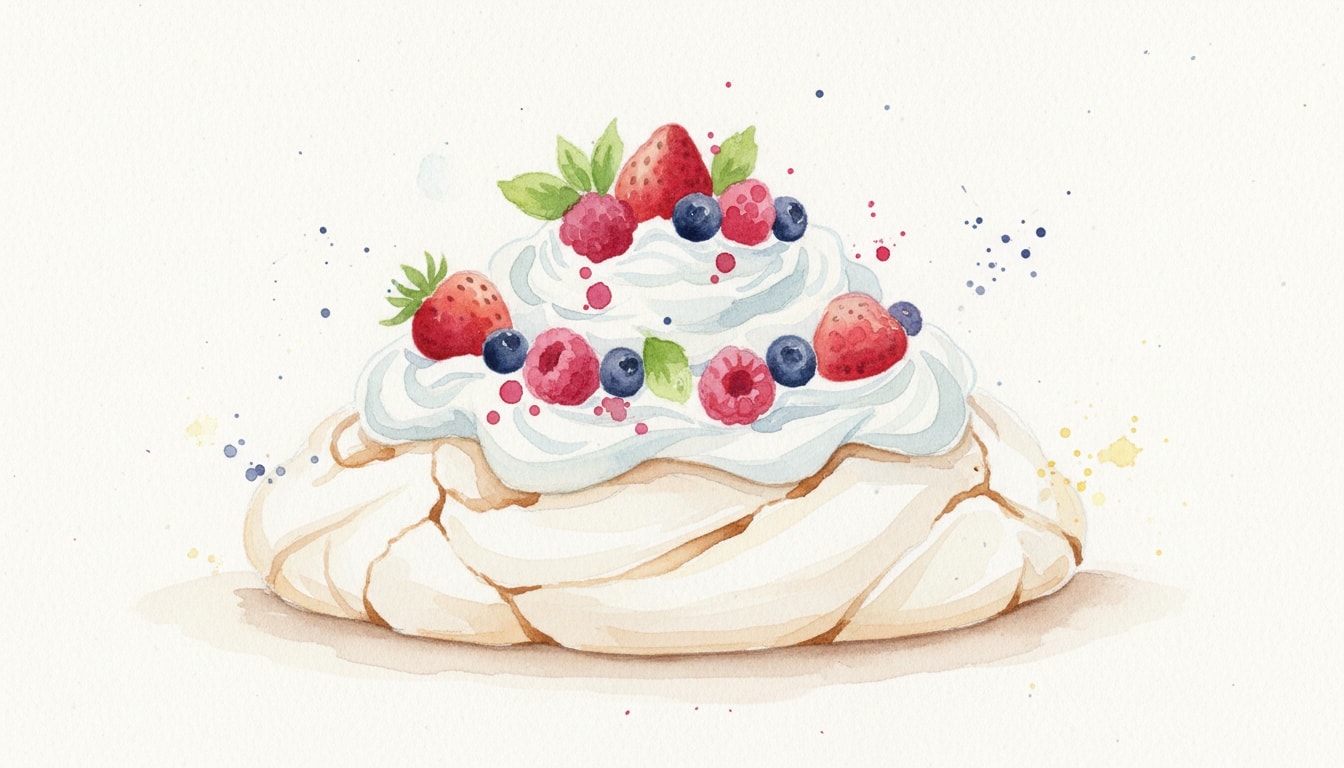
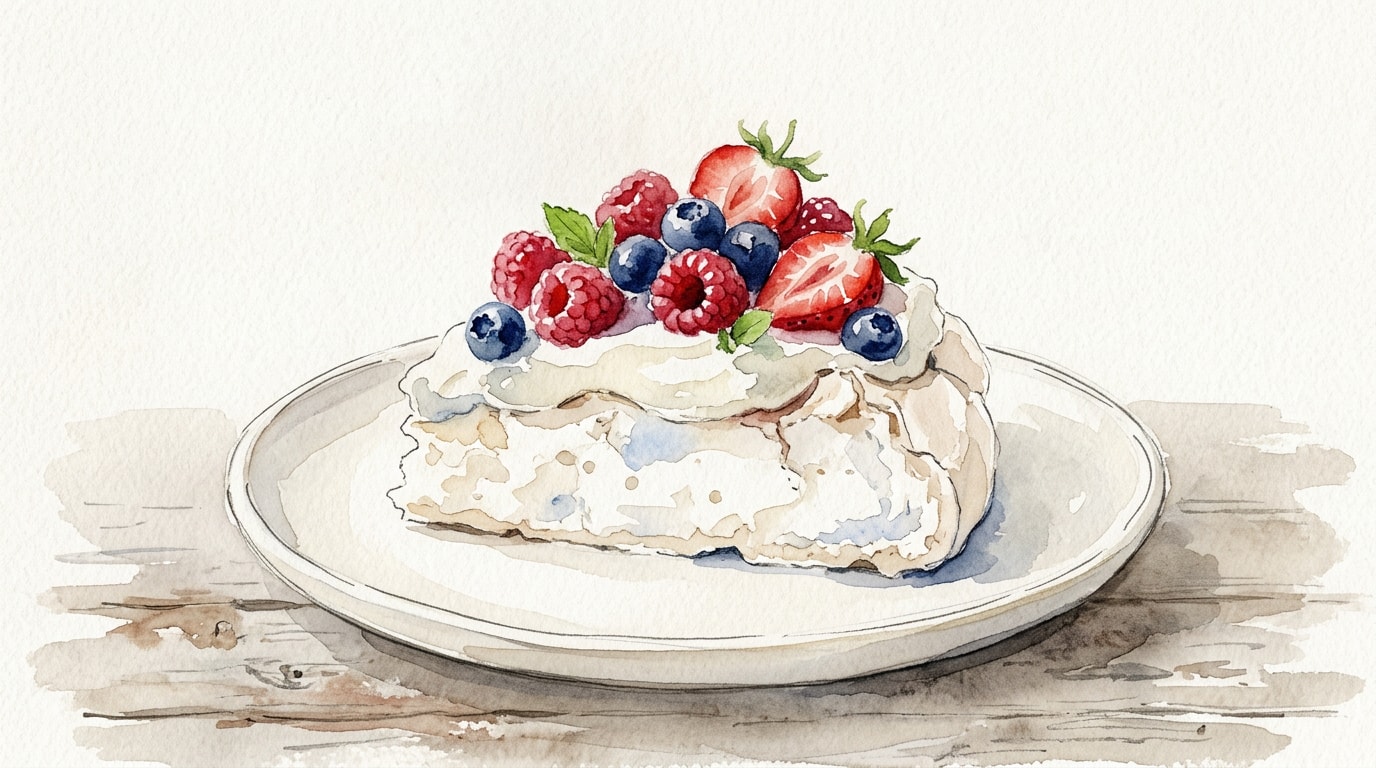
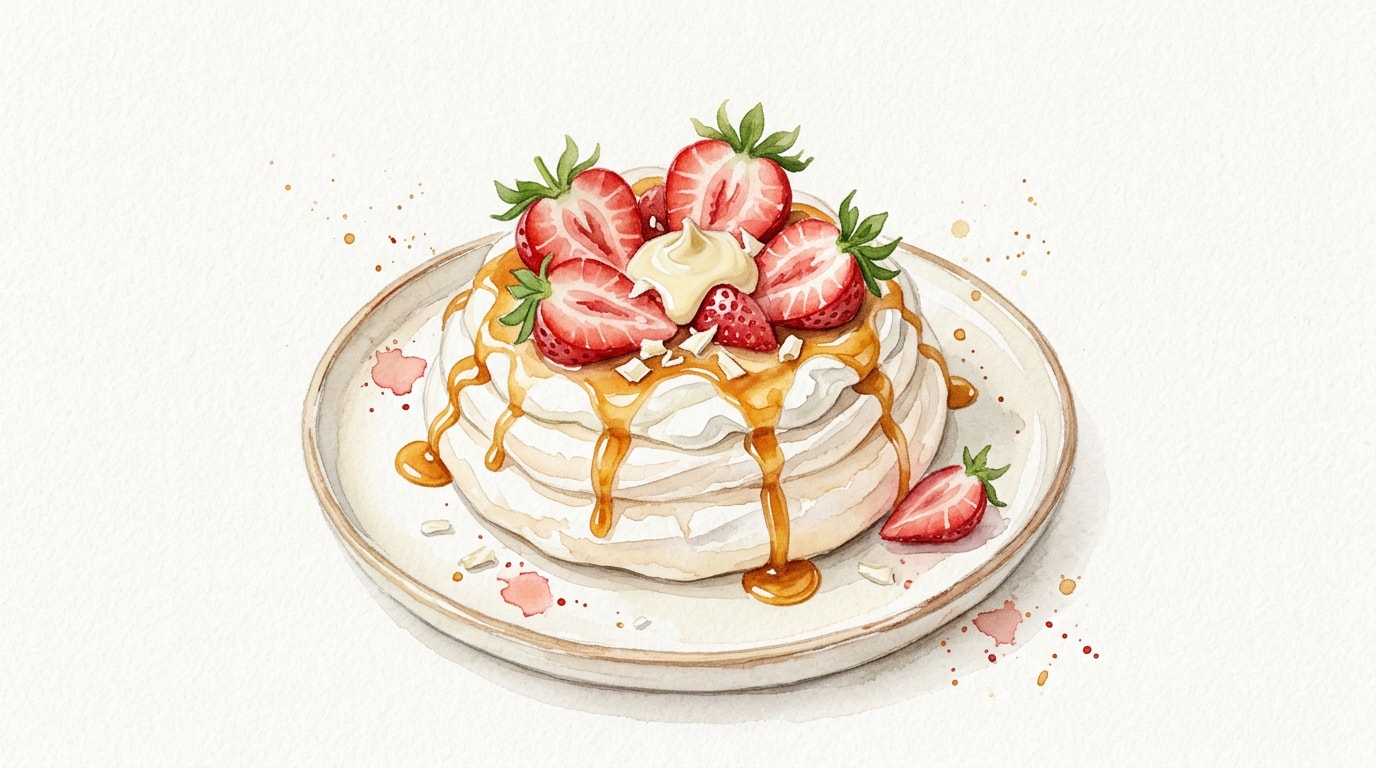
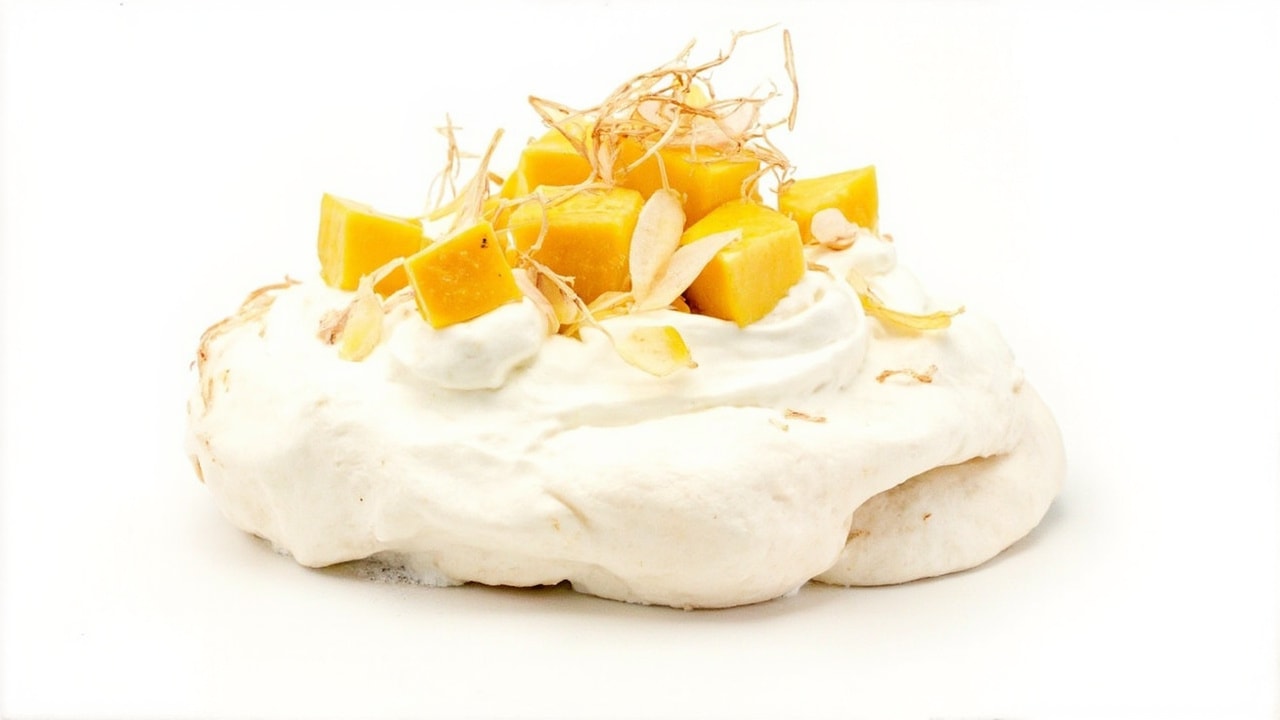
Carefully slide the cooled meringue onto a serving platter. Spoon the whipped cream into the central well and spread gently toward the edges, leaving a 1-2cm border of meringue visible. Arrange the mango cubes on top, drizzle the passion fruit pulp and seeds over the cream, then scatter the toasted coconut and lime zest over the fruit. Slice with a sharp serrated knife and serve within 1 hour for the best contrast between crisp shell and pillowy cream.
Chef's Notes
- Egg whites whip to nearly triple their volume when properly beaten; cold whites separate more cleanly from yolks but warm whites whip to greater volume, so the room-temperature approach used here maximizes the cloud.
- The cornstarch-vinegar combination stabilizes the foam during the long bake and creates the pavlova's signature tender, marshmallow-like interior beneath the brittle shell.
- Strain excess juice from passion fruit pulp through a small sieve if you prefer fewer seeds and a cleaner gloss; the seeds add textural contrast and look jewel-like, so use them whole for tropical drama.
- For best texture contrast, serve within 1 hour of assembly; humidity and fruit juices will soften the shell within hours no matter how careful the bake.
- Raw egg white is consumed briefly here in baked form; for pregnant guests or those with compromised immunity, use pasteurized egg whites, which whip nearly as well.
Storage
Refrigerator: 4 hours — Once assembled the meringue will soften; consume within 4 hours for best texture. Meringue base alone can be held uncovered at room temperature in an airtight tin for up to 1 week.
Freezer: 1 month — Unfilled meringue shells freeze well wrapped in two layers of plastic wrap; thaw uncovered to restore crispness. Do not freeze assembled pavlova or the cream topping.
Reheating: No reheating required. If meringue has softened, refresh in a 110°C (225°F) oven for 10 minutes and cool before topping.
Troubleshooting
Meringue is soft or chewy in the center, not marshmallow-light
Cause: Underbaked or sugar was added too quickly, leaving gritty pockets
Fix: Return to a 110°C (225°F) oven for 15-20 minutes to dry further, then cool in the oven
Prevention: Add sugar a tablespoon at a time and verify each addition is fully dissolved before adding more; bake the full duration
Meringue weeps liquid beads or pools after cooling
Cause: Fat contamination in the bowl or whites, or sugar not fully dissolved
Fix: Cannot be fully fixed; blot moisture with paper towel and serve quickly
Prevention: Wipe bowl and whisk with vinegar; add sugar slowly and rub between fingers to confirm it is fully dissolved
Meringue is pale but evenly browned or cracked deeply
Cause: Oven ran hot or door was opened during baking
Fix: Cannot be reversed; accept as rustic, or fold warm meringue into whipped cream as an Eton mess-style rescue
Prevention: Verify oven temperature with a thermometer and avoid opening the door in the first 60 minutes
Cream deflates or turns to butter
Cause: Cream was too warm or over-whipped past soft peaks
Fix: If it splits into butter, gently whisk in a few tablespoons of cold cream to bring it back, or start over
Prevention: Chill the bowl and beaters in the freezer for 10 minutes; stop whipping as soon as soft peaks form
Mango and passion fruit release juice that pools under the cream
Cause: Fruit was overripe or topping was assembled too far ahead of serving
Fix: Pat fruit gently with paper towel before arranging and serve immediately
Prevention: Use just-ripe mangoes and assemble within 30 minutes of serving
Cultural Context
Pavlova was created in the 1920s to honor the Russian ballerina Anna Pavlova during her tours to Australasia, and its light, cloud-like form is said to echo her grace on stage. Whether the dish first appeared in Australia or New Zealand is still a friendly debate between the two nations. This tropical variation draws on the Pacific and equatorial fruits that flourish across Australia's north and throughout the islands of the wider Pacific, layering bright acidity and ripe sweetness atop the original dessert's crisp shell.