
Equipment
Ingredients
Pesto Genovese
- 50 g fresh basil leaves, washed and thoroughly dried
- 15 g pine nuts
- 2 garlic, peeled, green germ removed
- 30 g parmigiano-reggiano, finely grated
- 15 g pecorino sardo, finely grated
- 80 ml extra virgin olive oil
- 2 g coarse sea salt
Pasta and Vegetables
- 400 g trenette pasta
- 200 g waxy potatoes, peeled and cut into 1.5cm cubes
- 150 g green beans, trimmed and cut into 3cm lengths
- 20 g fine sea salt
Nutrition (per serving)
Nutrition is estimated per serving. Nutrients without complete source data are omitted.
Full nutrition
- Calories
- 673 kcal
- Protein
- 20 g
- Carbohydrates
- 88 g
- Fat
- 27 g
- Fiber
- 6 g
- Sugar
- 5 g
- Sodium
- 2325 mg
- Saturated Fat
- 5 g
- Monounsaturated Fat
- 16 g
- Polyunsaturated Fat
- 4 g
- Cholesterol
- 5 mg
- Potassium
- 591 mg
- Calcium
- 200 mg
- Iron
- 5.0 mg
- Magnesium
- 95 mg
- Phosphorus
- 343 mg
- Zinc
- 2.2 mg
- Vitamin A
- 62 mcg
- Vitamin C
- 17 mg
- Vitamin D
- 0.0 mcg
- Vitamin E
- 3.6 mg
- Vitamin K
- 83 mcg
- Vitamin B6
- 0.4 mg
- Vitamin B12
- 0.1 mcg
- Thiamin
- 0.98 mg
- Riboflavin
- 0.50 mg
- Niacin
- 8.3 mg
- Folate
- 267 mcg
- Water
- 98 g
Sources: Aggregated Public Data, USDA FoodData Central
Method
Place the garlic and pine nuts in a mortar. Pound with the pestle until a rustic paste forms.
Add the basil leaves and coarse salt to the mortar. Crush against the sides using a circular motion until the leaves break down into a dark green, fragrant paste.
Stir in the grated Parmigiano-Reggiano and Pecorino Sardo. Slowly drizzle in the olive oil while stirring continuously until the pesto emulsifies into a creamy sauce. Transfer to a large mixing bowl and set aside.
Bring a large pot of water to a rolling boil at 100°C/212°F. Add the 20g of fine sea salt and the cubed potatoes. Cook for 3 minutes.
Add the trenette pasta and green beans to the boiling water with the potatoes. Stir well to prevent sticking. Boil according to the pasta package instructions for al dente, usually about 9 to 11 minutes.
Carefully scoop out 120ml of the starchy pasta cooking water and reserve. Drain the pasta, potatoes, and green beans using a colander.
Add 30ml of the reserved hot pasta water to the pesto in the large mixing bowl, stirring to temper the sauce. Add the drained hot pasta and vegetables, tossing vigorously until the sauce coats everything evenly. Add more reserved water if the mixture seems too dry.
Portion into warm shallow bowls. Serve immediately, garnished with a light sprinkle of grated Parmigiano-Reggiano and a few drops of fresh olive oil.
Chef's Notes
- The secret to a luscious pesto is the starch synergy. Boiling the potatoes in the same water as the pasta releases extra starch into the liquid. When this starchy water is used to temper the pesto, it creates an unbreakable, silky emulsion.
- Ligurian olive oil is famous for being delicate, buttery, and slightly sweet. Heavy, peppery oils from Southern Italy can overwhelm the subtle sweetness of the basil and pine nuts.
- To preserve the bright green color of your basil when making pesto, ensure the leaves are completely dry after washing. Any lingering water droplets encourage rapid oxidation during grinding.
- Using coarse salt in the mortar acts as a crucial abrasive element, tearing the basil leaves rapidly and extracting their vibrant green essential oils before they have time to oxidize.
Storage
Refrigerator: 3 days — Store leftover pesto separately in an airtight container with a thin layer of olive oil on top to prevent oxidation. Assembled pasta will absorb the oil and lose vibrancy over time.
Reheating: Gently warm in a skillet over low heat with a splash of water to revive the emulsion, or enjoy at room temperature.
Troubleshooting
Pesto turns a dull brownish-green
Cause: Basil oxidized due to excessive heat from a food processor blade or from being cooked directly on the stove.
Fix: Cosmetic issue only; cannot be fixed but flavor remains largely intact.
Prevention: Chill food processor blades in the freezer for 15 minutes before use, or strictly use a mortar and pestle. Never toss pesto with pasta over a lit burner.
Pasta dish is clumpy and dry
Cause: Not enough pasta water was used to thin out the pesto, or the pasta absorbed the moisture while sitting.
Fix: Toss vigorously with an additional 15-30ml of hot pasta water or a splash of hot tap water.
Prevention: Always reserve at least 120ml of pasta water and temper the pesto before tossing.
Cheese clumped or became stringy in the sauce
Cause: Pasta water added to the pesto was boiling hot, melting the cheese proteins too aggressively.
Fix: Cannot be fixed
Prevention: Let the reserved pasta water sit for a minute to slightly cool before whisking it into the pesto.
Cultural Context
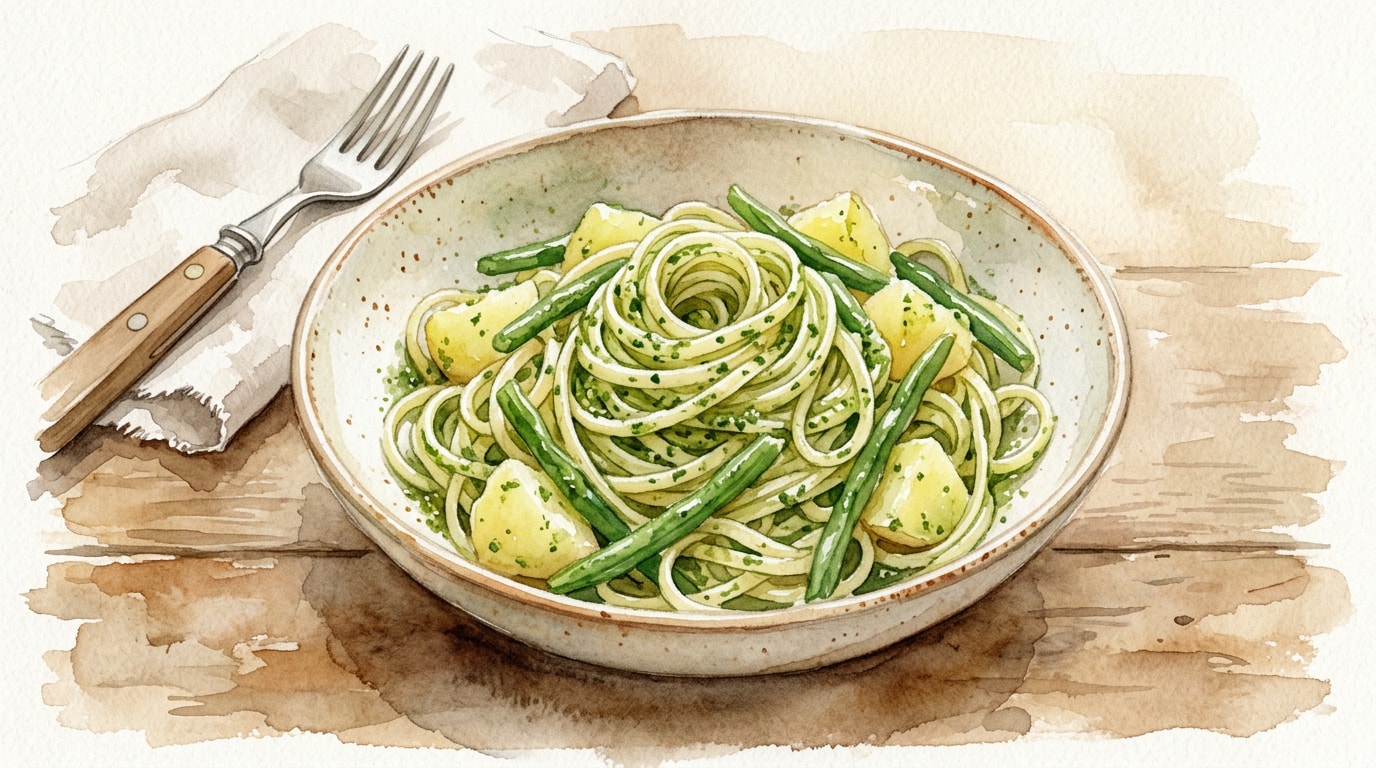
Trenette al Pesto con Patate e Fagiolini is the quintessential summer dish of Genoa, the capital of Italy's coastal Liguria region. Cooking the vegetables in the same water as the pasta is a historically practical Genovese technique that conserved limited fresh water and cooking fuel while naturally enriching the dish. This specific combination is beloved for its contrasting textures: the firm bite of al dente pasta, the crisp pop of green beans, and the creamy, melting tenderness of the potatoes, all bound by deeply aromatic basil.


