
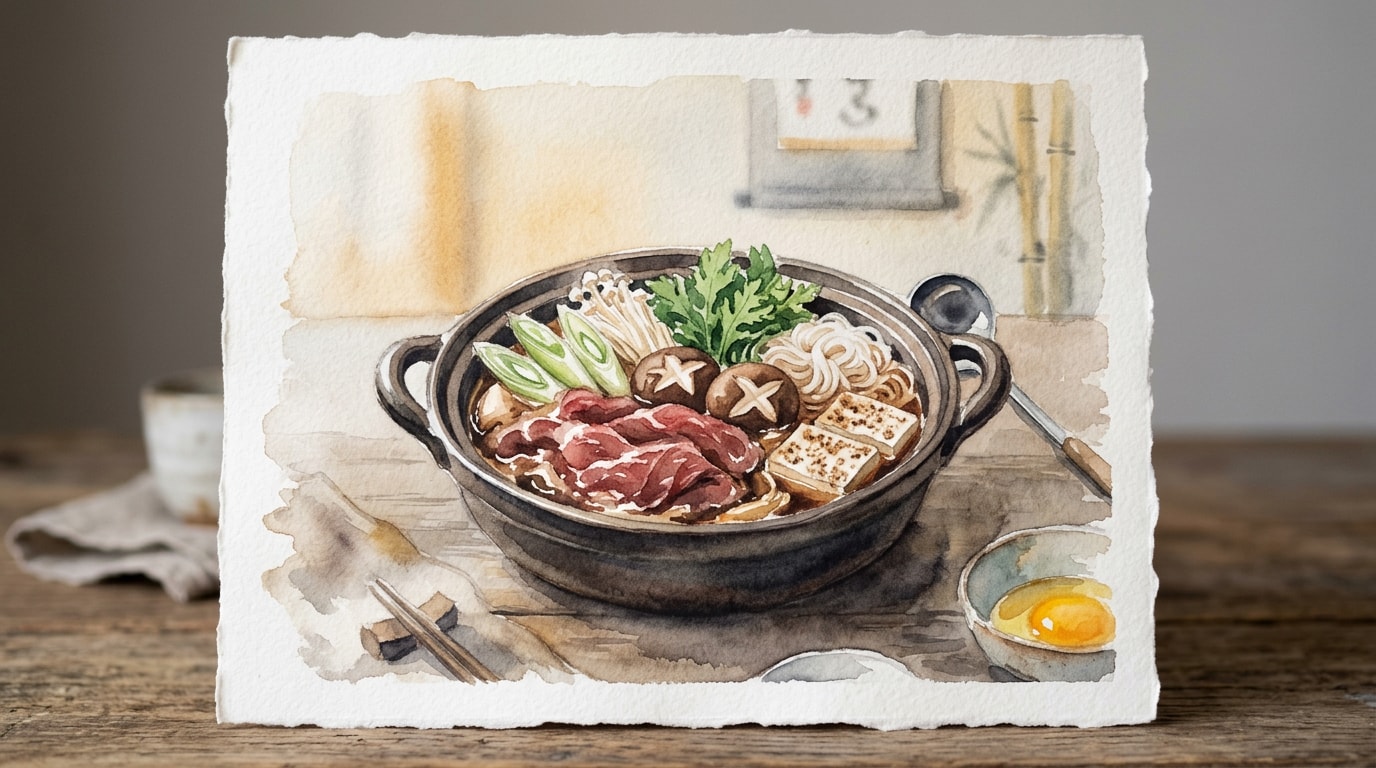
Equipment
Ingredients
Warishita Broth
- 100 ml sake
- 100 ml mirin
- 100 ml soy sauce
- 40 g brown sugar
- 120 ml dashi
Main Ingredients
- 600 g beef, thinly sliced ribeye or sirloin
- 15 g beef fat, suet
- 400 g napa cabbage, cut into bite-sized pieces
- 150 g negi, sliced diagonally
- 200 g enoki mushrooms, bottoms trimmed, separated
- 100 g shiitake mushrooms, stems removed, caps scored
- 300 g firm tofu, cut into cubes
- 400 g udon noodles, pre-cooked
Dipping Sauce
- 4 egg, raw, pasteurized
Nutrition (per serving)
Nutrition is estimated per serving. Nutrients without complete source data are omitted.
Full nutrition
- Calories
- 814 kcal
- Protein
- 47 g
- Carbohydrates
- 69 g
- Fat
- 36 g
- Fiber
- 7 g
- Sugar
- 26 g
- Sodium
- 3579 mg
- Saturated Fat
- 11 g
- Trans Fat
- 0 g
- Monounsaturated Fat
- 15 g
- Polyunsaturated Fat
- 3 g
- Cholesterol
- 270 mg
- Potassium
- 1331 mg
- Calcium
- 305 mg
- Iron
- 8.2 mg
- Magnesium
- 114 mg
- Phosphorus
- 558 mg
- Zinc
- 6.8 mg
- Vitamin A
- 138 mcg
- Vitamin C
- 59 mg
- Vitamin D
- 1.1 mcg
- Vitamin E
- 0.8 mg
- Vitamin K
- 80 mcg
- Vitamin B6
- 0.8 mg
- Vitamin B12
- 3.3 mcg
- Thiamin
- 0.28 mg
- Riboflavin
- 0.77 mg
- Niacin
- 11.2 mg
- Folate
- 101 mcg
- Water
- 367 g
- Alcohol
- 4 g
Sources: Aggregated Public Data, USDA FoodData Central
Method
Prepare the Napa cabbage, negi, mushrooms, and tofu on a cutting board. Arrange them neatly on a large platter alongside the thinly sliced beef and udon noodles.
In a measuring jug, combine sake, mirin, soy sauce, brown sugar, and dashi to create the warishita broth. Mix thoroughly until the sugar dissolves completely.
Place the skillet or sukiyaki pot on the stovetop over medium-high heat. Add the beef fat and melt it to coat the surface of the pan.
Add a few slices of beef to the skillet. Sear briefly until lightly browned on one side, then pour in a splash of the warishita broth to season the meat.
Push the cooked beef to one side of the skillet. Arrange the Napa cabbage, negi, enoki mushrooms, shiitake mushrooms, and tofu in distinct, separate sections within the skillet.
Pour the remaining warishita broth over the ingredients. Bring to a gentle simmer at 100C or 212F and cook for 5 to 7 minutes until the vegetables soften and the meat reaches a safe internal temperature of 63C or 145F.
Crack one pasteurized egg into each small individual bowl and beat lightly. Keep raw egg guidelines in mind for food safety.
Serve the hotpot directly from the stovetop. Diners dip the hot meat and vegetables into the raw egg before eating. Once most ingredients are eaten, add the pre-cooked udon noodles to the remaining broth to simmer for 2 minutes and absorb the flavors.
Chef's Notes
- For the most authentic experience and safest consumption, use properly pasteurized eggs for the dipping sauce, especially when serving vulnerable populations.
- If thinly sliced hotpot beef is hard to find, partially freeze a block of ribeye or sirloin for 45 minutes, then slice it as thinly as possible against the grain with a sharp knife.
- Keep the tofu and the beef slightly separated in the pot. The calcium in tofu can react with the proteins in the meat, making the beef tougher if they simmer directly against each other for extended periods.
Storage
Refrigerator: 3 days — Store cooked ingredients and broth separately from raw egg and raw beef. Discard any leftover dipping egg.
Reheating: Gently simmer leftover broth and ingredients on a stovetop until heated through.
Troubleshooting
Broth becomes too salty or intensely flavored
Cause: Evaporation from continuous tabletop simmering
Fix: Add a splash of water or extra dashi directly to the simmering pan
Prevention: Keep a small pitcher of water or dashi nearby to dilute as needed
Beef is tough and chewy
Cause: Thin slices of meat were simmered too long
Fix: Cannot be fixed once overcooked
Prevention: Add beef in small batches and remove as soon as it changes color
Cultural Context
Sukiyaki is a traditional Japanese celebratory dish often prepared communally at the table during winter months or special occasions. The Kanto style, which this recipe follows, involves pre-mixing the sweet and savory warishita broth before simmering, creating a deeply comforting and interactive dining experience.


