Equipment
* optional
Ingredients
Dry Ingredients
- 320 g all-purpose flour
- 50 g granulated sugar
- 10 g baking powder
- 4 g fine sea salt
- lemon zest
Cold Fat
- 115 g unsalted butter, frozen for 30 minutes
Wet Ingredients
- 180 g sour cream, cold
- 1 egg, large, cold
- 5 ml vanilla extract
- 15 ml whole milk, for brushing the tops
Fruit and Topping
- 150 g frozen mixed berries, frozen solid
- 15 g turbinado sugar, for topping
Nutrition (per serving)
Nutrition is estimated per serving. Nutrients without complete source data are omitted.
Full nutrition
Only basic nutrition values are available for this recipe. More detailed nutrient data is incomplete.
- Calories
- 349 kcal
- Protein
- 6 g
- Carbohydrates
- 43 g
- Fat
- 17 g
- Sodium
- 225 mg
Sources: Aggregated Public Data, USDA FoodData Central
Method
Line a baking sheet with parchment paper and slide it into the freezer to chill. Confirm the frozen berries are still solid and return them to the freezer until needed.
In a large mixing bowl, whisk the flour, granulated sugar, baking powder, salt, and lemon zest until evenly combined and the zest is dispersed throughout.
Grate the frozen butter on the large holes of a box grater directly into the dry mixture. Use a fork to toss the shreds so each piece is coated in flour.
In a medium mixing bowl, whisk together the cold sour cream, egg, and vanilla extract until completely smooth with no streaks of yolk visible.
Pour the wet mixture into the dry ingredients. Fold gently with a rubber spatula just until no dry streaks of flour remain. The dough will look shaggy, rough, and slightly sticky.
Scatter the frozen berries over the dough and fold quickly just to distribute them. Move briskly so the fruit stays solid and does not thaw into the dough.
Turn the dough out onto a lightly floured surface. Pat it into an 18 cm (about 7 inch) round approximately 2.5 cm (1 inch) thick, using a bench scraper to keep the edges straight.
Cut the round into 8 equal wedges with a bench scraper or sharp knife, pressing straight down without twisting. Transfer the wedges to the chilled baking sheet, spacing them about 5 cm (2 inches) apart.
Slide the baking sheet with the cut scones into the freezer for 20 minutes to firm up. During the final 5 minutes of chilling, place an oven rack in the middle position and preheat the oven to 205°C (400°F).
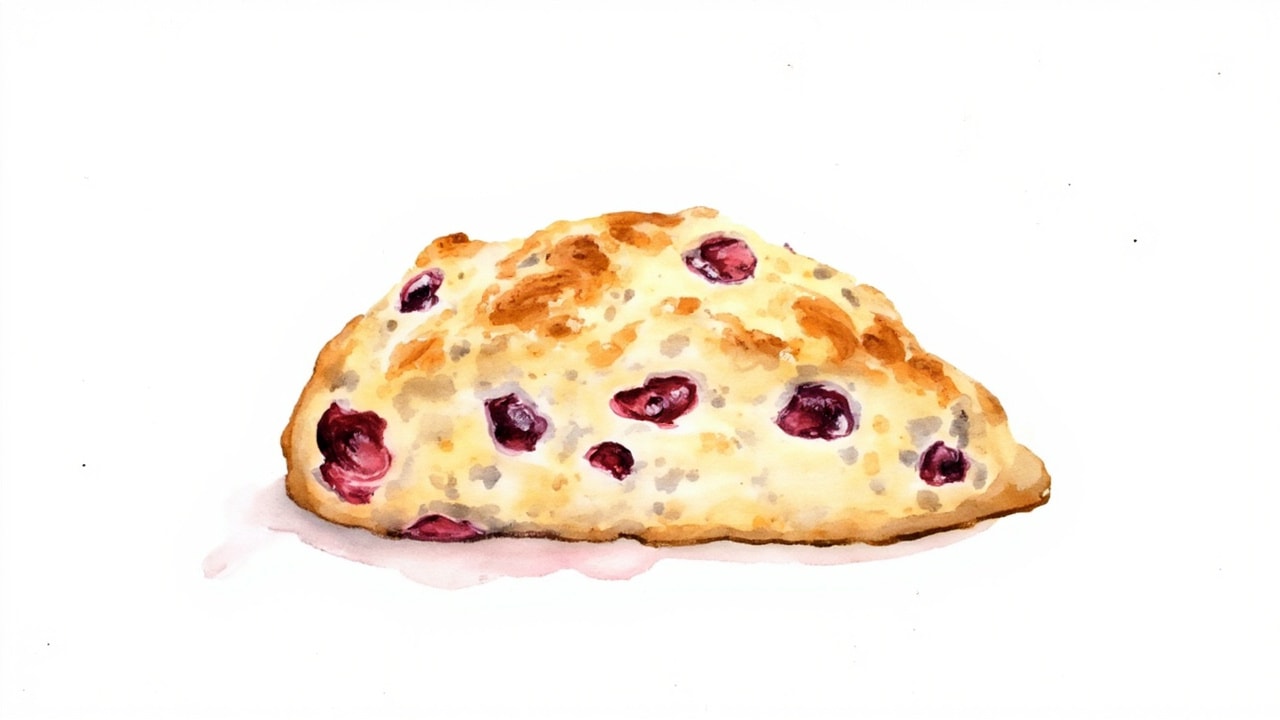
Brush the chilled scones lightly with milk and sprinkle evenly with turbinado sugar. Bake on the middle rack for 22 to 25 minutes, rotating the pan front to back halfway through, until the tops are deep golden and the bottoms sound hollow when tapped.
Transfer the scones to a wire rack and let them cool for at least 10 minutes. The internal crumb will finish setting as they cool, so resist cutting them too early.
Chef's Notes
- The frozen berries serve a double purpose: they chill the surrounding dough so the butter stays firm, and they release less juice during baking, which keeps the bottom crust from going soggy.
- Grating frozen butter on a box grater produces thin, evenly distributed shreds that melt into the dough as it bakes, creating distinct flaky layers without the risk of overworking the dough.
- Sour cream brings both lactic acid and fat in one ingredient. The acid reacts gently with baking powder for a more tender crumb than milk alone, while the fat adds richness that plain buttermilk cannot match.
- For the tallest rise, press the bench scraper straight down when cutting wedges. A clean, untwisted cut preserves the layered edges so the scones climb upward in the hot oven.
- Brush with milk for a matte, crackly top that lets the turbinado sugar sparkle; brush with a beaten egg if you prefer a deep, glossy mahogany finish.
Storage
Refrigerator: 4 days — Store in an airtight container once fully cooled. Refresh in a 160°C/325°F oven for 5 minutes before serving.
Freezer: 2 months — Wrap individually in plastic film, then place in a freezer bag. Bake from frozen, adding 5 to 7 minutes to the baking time.
Reheating: Warm in a 160°C/325°F oven for 5 minutes, or microwave for 15 to 20 seconds.
Troubleshooting
Scones are tough or dense
Cause: Overmixing the dough after adding the wet ingredients, which develops gluten
Fix: Cannot be fixed once baked. Use a lighter hand next time and stop the moment the dough holds together.
Prevention: Fold only until no dry streaks remain and the dough still looks shaggy
Scones spread flat instead of climbing tall
Cause: Butter softened into the flour before baking, or the shaped scones were not chilled long enough
Fix: Cannot be fixed once baked. Re-chill the dough thoroughly and confirm the oven is fully preheated to 205°C (400°F).
Prevention: Keep the butter frozen until mixing and chill the cut wedges for a full 20 minutes before baking
Purple or red streaks bleeding through the crumb
Cause: Frozen berries thawed during mixing and released juice into the dough
Fix: Cannot be undone, but flavor is unaffected. Coat the berries in 1 tablespoon of flour before folding next time to absorb excess moisture.
Prevention: Keep berries in the freezer until the final fold and work very quickly once added
Dry, crumbly scones
Cause: Too much flour was incorporated during patting and shaping, or the scones were baked past doneness
Fix: Serve with butter, clotted cream, or jam to add moisture. Reduce baking time by 3 minutes on the next batch.
Prevention: Measure flour by weight and pull the pan at the minimum baking time
Bottoms darken before the tops turn golden
Cause: Baking sheet was not chilled or the oven rack sits too low
Fix: Place a second sheet pan underneath as a heat shield for the next batch, or double up the parchment layer.
Prevention: Use the chilled baking sheet and bake on the middle rack only
Cultural Context
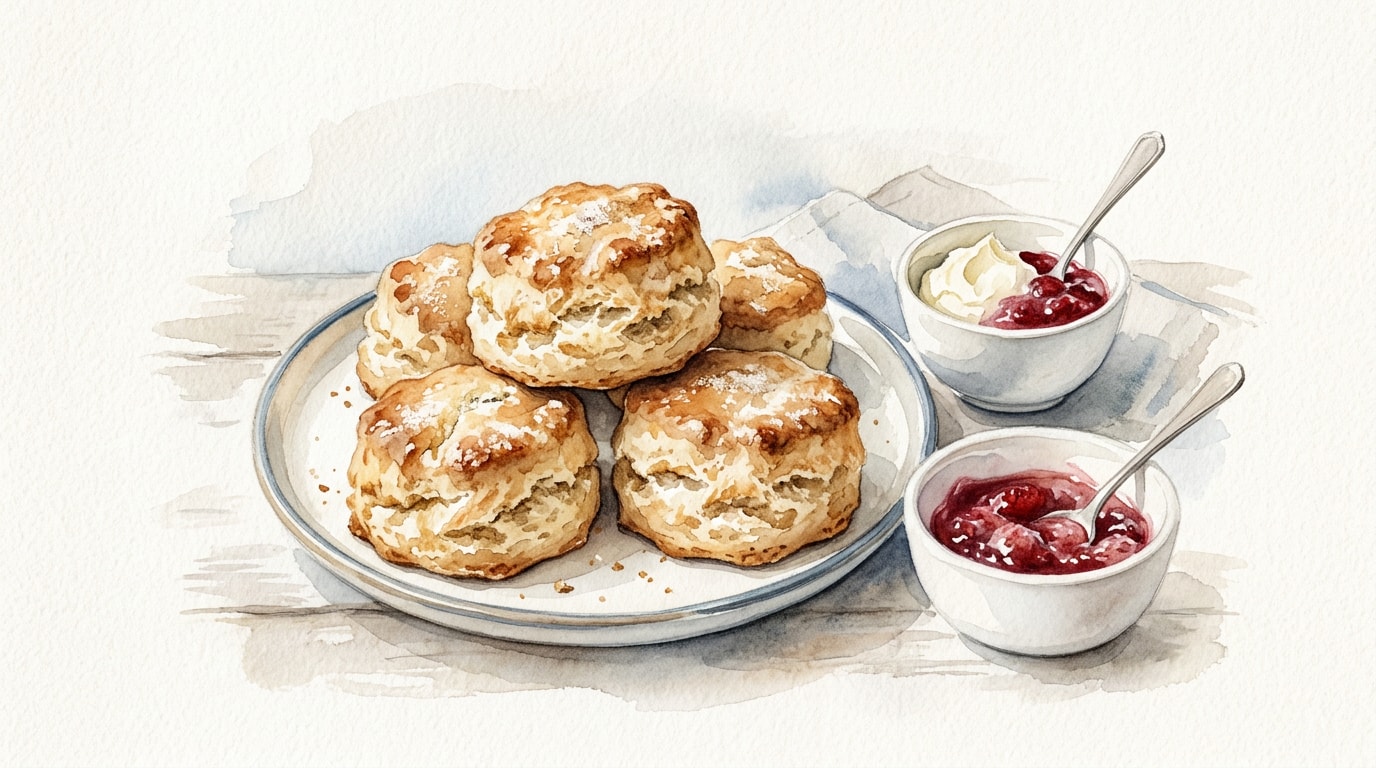
Scones have been a cornerstone of British baking since the early 1500s, originally cooked on griddles over open hearths and named after the Stone of Scone in Scotland. They became central to the cream tea tradition of southwest England, where they are split warm and topped with clotted cream and jam. This version keeps that heritage intact while modernizing the technique with sour cream, which adds both tang and tenderness in a single ingredient, and frozen fruit, which acts as a built-in insurance policy for flaky layers.