Equipment
Ingredients
Mango
- 500 g raw green mango, firm, unripe, peeled and diced
Sweet and Tangy Dressing
- 150 ml apple cider vinegar, at least 5% acidity
- 150 g granulated sugar
- 5 g fine sea salt
Aromatic Spices
- 8 g black mustard seeds, whole
- 3 g fenugreek seeds, whole
- 4 g fennel seeds, whole
- 3 g cumin seeds, whole
- 2 g ground turmeric, about 1 teaspoon
- 4 g kashmiri red chili powder, about 1 teaspoon, for color and mild heat
Aromatics
- 15 g fresh ginger, peeled and finely grated
- 4 garlic, peeled and finely minced
Nutrition (per serving)
Nutrition is estimated per serving. Nutrients without complete source data are omitted.
Full nutrition
Only basic nutrition values are available for this recipe. More detailed nutrient data is incomplete.
- Calories
- 931 kcal
- Protein
- 9 g
- Carbohydrates
- 220 g
- Fat
- 6 g
- Fiber
- 12 g
Sources: Aggregated Public Data, USDA FoodData Central
Method
Wash the jar and lid in hot soapy water, rinse well, and either air-dry upside down on a clean kitchen towel or place in a low oven at 110°C/230°F for 15 minutes to sterilize.
Wash the mangoes under cool running water and pat completely dry with a clean kitchen towel. Any moisture left on the skin can introduce unwanted liquid into the pickle.
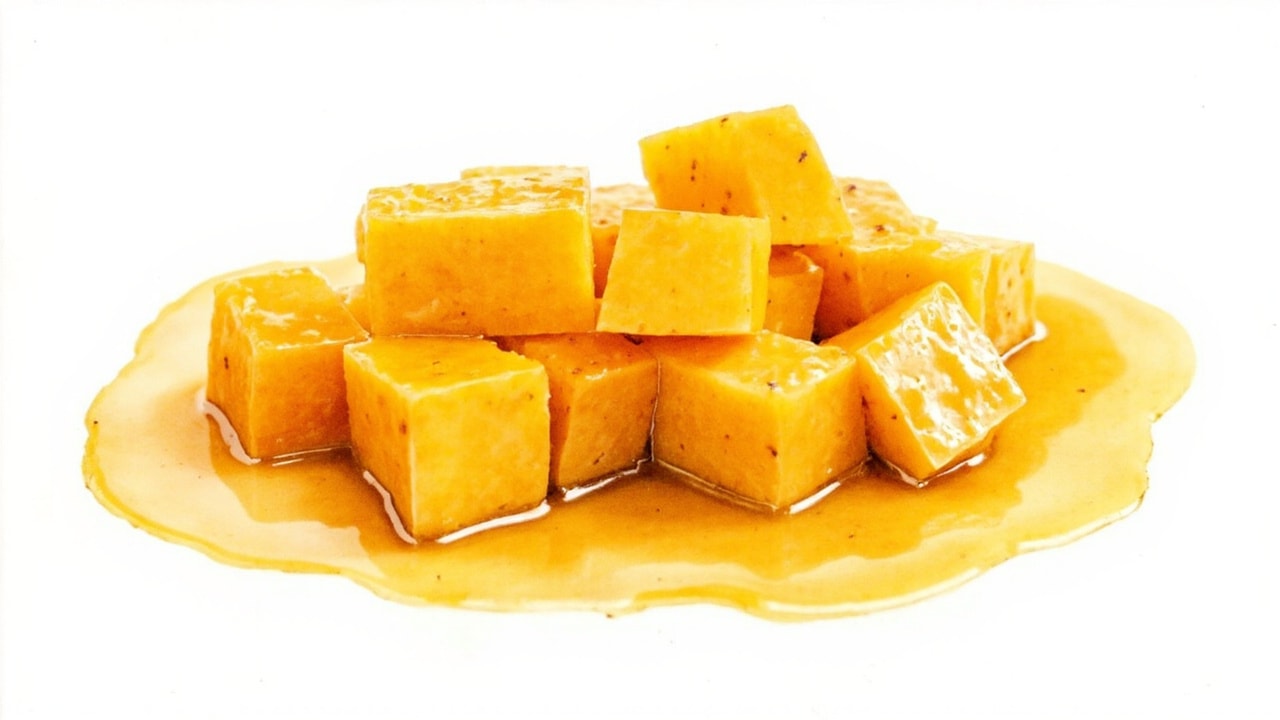
Stand each mango on end and slice off the two fleshy cheeks on either side of the flat pit. Peel the cheeks, then dice the flesh into 1 cm cubes. Trim any remaining flesh from the pit and discard the pit.
Measure the diced mango into a non-reactive bowl, sprinkle with the salt, and toss gently. Set aside for 15 minutes to draw out excess juice.
Combine the mustard seeds, fenugreek seeds, fennel seeds, and cumin seeds in a small dry saucepan. Toast over medium-low heat, shaking the pan often, until the mustard seeds begin to pop and the spices smell fragrant, about 2 minutes. Watch carefully to prevent burning.
Add the vinegar, sugar, turmeric, and Kashmiri chili powder to the toasted spices. Stir to combine and bring to a gentle simmer over medium heat, dissolving the sugar completely.
Stir in the grated ginger and minced garlic. Simmer gently for 5 minutes until the syrup reduces slightly and turns glossy, with a consistency that lightly coats the back of a spoon.
Drain and discard any liquid that has collected in the bowl of salted mango. Pour the hot spiced syrup over the mango and stir gently until every cube is well coated.
Pack the warm pickle into the sterilized jar, pressing the mango down so it is fully submerged under the syrup. Tap the jar gently on the counter to release trapped air bubbles, then seal the lid tightly.
Cool the sealed jar to room temperature on the counter, then transfer to the refrigerator. Let the pickle rest for at least 24 hours before opening so the mango can absorb the syrup and the flavors can meld.
Chef's Notes
- Choose mangoes that are completely green and yield only slightly when pressed; any yellowing or softness will result in a mushy pickle.
- Toasting whole spices in a dry pan releases their essential oils and gives a much more fragrant syrup than adding pre-ground spices directly to the vinegar.
- The salt toss in step 4 draws out excess moisture from the mango. Draining this juice prevents the final pickle from tasting watered down.
- For a slightly hotter pickle with a vivid red hue, swap the Kashmiri chili powder for 1 teaspoon of cayenne or 2 teaspoons of smoked paprika plus a pinch of cayenne.
- Always keep the mango submerged under the syrup during storage. Any cube that rises above the surface may oxidize and turn brown.
Storage
Refrigerator: 2 months — Always use a clean, dry spoon to prevent contamination. Keep the jar tightly sealed.
Troubleshooting
Pickle tastes too sharp or vinegary
Cause: Syrup was not reduced enough, or the vinegar to sugar ratio is too high
Fix: Stir in additional sugar 1 teaspoon at a time until balanced, then rest 12 hours before tasting again
Prevention: Reduce the syrup until it lightly coats a spoon before combining with the mango, and weigh ingredients carefully
Mango cubes are mushy or soft
Cause: Mangoes were too ripe at the start, or the raw fruit was simmered in the syrup
Fix: Cannot be fixed; repurpose the batch as a chutney-style spread for sandwiches or cheese boards
Prevention: Choose only firm, completely green mangoes and pour the hot syrup over raw fruit rather than cooking the mango
Syrup is thin and watery around the mango
Cause: Sugar was not fully dissolved, or the syrup was not reduced before pouring over the fruit
Fix: Drain the syrup back into a saucepan, reduce by about one-third, and pour back over the mango while hot
Prevention: Simmer the syrup until it visibly thickens and coats a spoon before combining with the mango
Surface of the pickle shows a white film or bubbles after a few weeks
Cause: Contamination from a wet spoon or improperly sterilized jar
Fix: Discard the entire jar if any mold, off smell, or fizzing appears. Vinegar pickles showing these signs are no longer safe to eat.
Prevention: Always use a completely dry utensil and ensure the jar was sterilized and fully dry before packing
Pickle tastes bland after 24 hours
Cause: Insufficient resting time for the flavors to penetrate the mango
Fix: Return the jar to the refrigerator and wait another 24 hours; the flavor will continue to deepen
Prevention: Allow at least 24 to 48 hours of cold resting before tasting
Cultural Context
Mango pickle, known as aam ka achaar across the Indian subcontinent, is a treasured condiment traditionally served alongside dal, rice, and flatbreads to cut through richness and add bright contrast. Sweet and tangy variations are especially popular in Gujarat and among South Indian and Sri Lankan Tamil communities, where sugar or jaggery is balanced against the fruit's natural tartness and tempered whole spices. Each household typically guards its own spice blend, making achaar a deeply personal expression of regional and family identity.