Equipment
Ingredients
Vanilla Shortbread Dough
- 200 g unsalted butter, softened to 18-20°C/64-68°F
- 130 g powdered sugar, sifted
- 5 ml vanilla extract
- 2 g fine sea salt
- 300 g all-purpose flour
- 40 g cornstarch
Raspberry Jam Filling
- 180 g seedless raspberry jam, stirred smooth
Chocolate Skeleton Decoration
- 120 g dark chocolate, 70% cacao, finely chopped
Nutrition (per serving)
Nutrition is estimated per serving. Nutrients without complete source data are omitted.
Full nutrition
- Calories
- 219 kcal
- Protein
- 2 g
- Carbohydrates
- 28 g
- Fat
- 11 g
- Sugar
- 13 g
- Sodium
- 42 mg
- Cholesterol
- 22 mg
Sources: Aggregated Public Data, USDA FoodData Central
Method
In a large mixing bowl with a stand mixer fitted with the paddle attachment, or with a hand mixer, beat the softened butter on medium speed for 2 minutes until pale, creamy, and spreadable.
Add the sifted powdered sugar and salt to the butter and beat on low speed for 1 minute to combine, then increase to medium and beat for 2 minutes until the mixture looks pale and fluffy.
Add the vanilla extract and beat briefly on low until just incorporated, about 30 seconds.
Whisk the flour and cornstarch together in a separate bowl. Add this dry mixture to the butter in three additions, mixing on low just until the dough comes together in soft clumps. Do not overwork the dough.
Turn the dough out onto a sheet of plastic wrap, press it into a 2 cm-thick disc, wrap tightly, and refrigerate for 1 hour until firm enough to roll without sticking.
Preheat the oven to 175°C (350°F) and line two baking sheets with parchment paper.
On a lightly floured surface, roll the chilled dough to an even 5 mm thickness.
Cut out 40 skull shapes with the cookie cutter and transfer them to the prepared baking sheets, spacing them 3 cm apart. Re-roll the scraps once, chilled briefly if needed, to cut the remaining skulls.
Bake one sheet at a time for 11-13 minutes, until the edges show a whisper of gold and the centers look matte and set. Rotate the pan front-to-back at the halfway point for even browning.
Let the cookies rest on the baking sheet for 5 minutes, then transfer to a wire rack and cool completely, about 20 minutes.
Place the chopped dark chocolate in a heatproof bowl set over a saucepan of barely simmering water - the bowl must not touch the water. Stir gently until two-thirds melted, then remove from heat and stir until completely smooth and glossy. Transfer to a piping bag fitted with the 2 mm round tip.
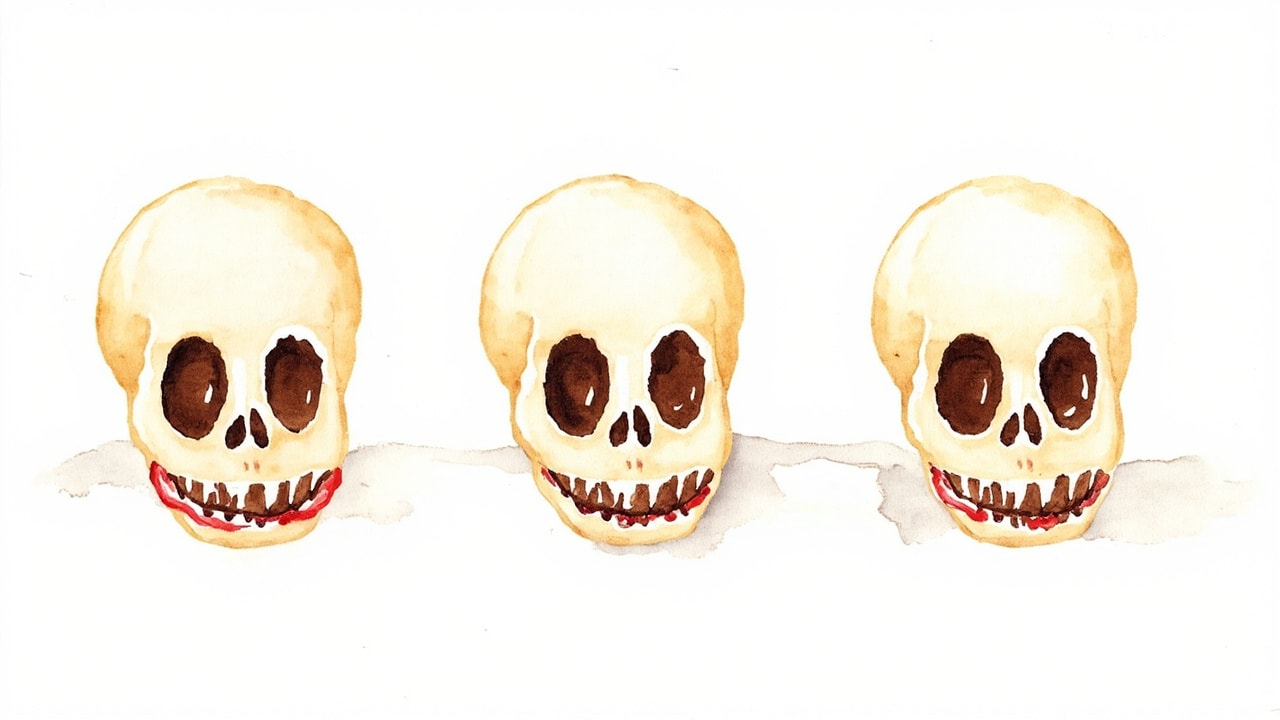
Pipe skeleton faces onto 20 of the completely cooled cookies (these will become the sandwich tops): two round hollow eye sockets, a small triangular nasal cavity, and a row of short vertical lines across the lower third for teeth. Let the chocolate set at room temperature for 15 minutes until firm to the touch.
Stir the seedless raspberry jam in its jar until smooth and glossy, then transfer to a clean piping bag or a small bowl.
Flip the remaining 20 cookies flat-side up. Pipe or spread about 9 g of jam onto each, leaving a 5 mm border around the edge. Top with a chocolate-faced skull cookie and press very lightly while giving the top a small twist so the jam spreads cleanly to the edges. Rest the assembled cookies for 10 minutes so the chocolate decoration firms up fully.
Serve the cookies at cool room temperature so the chocolate snaps cleanly against the tender crumb and the jam loosens to a saucy, jewel-like layer.
Chef's Notes
- Cornstarch is the quiet hero here: it dilutes gluten formation and gives the shortbread that powdery, melt-on-your-tongue quality that suits a bone-like texture.
- Piping chocolate onto completely cooled cookies is non-negotiable; even gentle residual warmth smears the careful skeleton faces and dulls the chocolate's snap.
- If your kitchen runs warm, pop the piped chocolate skulls into the refrigerator for 5 minutes to set the decoration quickly before sandwich assembly.
- A 2 mm piping tip is the sweet spot: large enough to draw confidently, small enough to produce convincing teeth without flooding the cookie.
- For a brighter red filling that pops against the bone-pale shortbread, gently warm the jam with a teaspoon of lemon juice and pass it through a fine sieve to remove any fruit solids.
Storage
Refrigerator: 1 week — Layer between sheets of parchment in an airtight container; refrigeration keeps the chocolate decoration crisp.
Freezer: 3 months — Flash-freeze on a tray until solid, then transfer to a sealed freezer bag; thaw in the refrigerator overnight before serving.
Reheating: Best enjoyed at cool room temperature around 18-20°C/64-68°F; do not microwave as it melts the chocolate and weeps the jam.
Troubleshooting
Cookies spread during baking and lose their skull definition
Cause: Dough was too warm when cut, or the baking sheet was warm or greased
Fix: Cannot be repaired after baking; re-roll the scraps into a fresh disc, chill thoroughly, and re-cut for the next batch
Prevention: Chill the cut cookies on the sheet for 10 minutes before baking, and use parchment paper rather than greasing the pan
Chocolate is too thick to pipe fine lines, or it seizes into a stiff paste in the bag
Cause: Chocolate was overheated, or water and steam got into the bowl
Fix: Stir in 5-10 ml of neutral oil (sunflower or grapeseed) a few drops at a time until piping consistency returns
Prevention: Melt gently over barely simmering water, keep the bowl dry, and remove from heat while two-thirds is still solid
Jam soaks into the shortbread and turns the cookies soggy
Cause: Cookies were filled while still warm, or the jam had high water content
Fix: Cannot be reversed once the jam has soaked in; next time store on a rack so air circulates and the base stays crisp
Prevention: Ensure cookies are completely cool before filling, use a thick high-fruit-content seedless jam, and rest assembled cookies on a wire rack
Cultural Context
These skull-shaped sandwich cookies sit at the crossroads of two Halloween traditions: the American custom of homemade themed treats distributed at parties and to trick-or-treaters, and the centuries-old practice of molding sweets into memento mori symbols. Sugar skulls in particular, rooted in Mexican Dia de los Muertos, treat sugar and chocolate as edible reminders of mortality, here softened into playful pumpkin-and-skeleton fare for a modern Western Halloween table.