
Equipment
Ingredients
Pasta
- 200 g dried linguine
- 15 g kosher salt
Sauce Base
- 15 ml extra virgin olive oil
- 2 garlic, minced
- 150 g cherry tomatoes, halved
- 30 g harissa paste
Protein and Finishing
- 160 g canned tuna in olive oil, drained
- 15 g fresh flat-leaf parsley, finely chopped
- 15 ml lemon juice, freshly squeezed
Nutrition (per serving)
Nutrition is estimated per serving. Nutrients without complete source data are omitted.
Full nutrition
- Calories
- 633 kcal
- Protein
- 38 g
- Carbohydrates
- 81 g
- Fat
- 17 g
- Fiber
- 5 g
- Sugar
- 7 g
- Sodium
- 3407 mg
- Saturated Fat
- 3 g
- Monounsaturated Fat
- 8 g
- Polyunsaturated Fat
- 4 g
- Cholesterol
- 14 mg
- Potassium
- 628 mg
- Calcium
- 67 mg
- Iron
- 5.5 mg
- Magnesium
- 91 mg
- Phosphorus
- 465 mg
- Zinc
- 2.4 mg
- Vitamin A
- 50 mcg
- Vitamin C
- 29 mg
- Vitamin D
- 5.4 mcg
- Vitamin E
- 1.9 mg
- Vitamin K
- 163 mcg
- Vitamin B6
- 0.3 mg
- Vitamin B12
- 1.8 mcg
- Thiamin
- 0.93 mg
- Riboflavin
- 0.51 mg
- Niacin
- 17.2 mg
- Folate
- 254 mcg
- Water
- 73 g
Sources: Aggregated Public Data, USDA FoodData Central
Method
Bring a large pot of water to a rolling boil at 100°C/212°F. Add the kosher salt, then drop in the linguine. Cook according to package instructions until al dente, reserving at least 120ml of the starchy pasta water before draining.
While the pasta cooks, heat the extra virgin olive oil in a large skillet over medium heat. Add the minced garlic and halved cherry tomatoes, cooking until the garlic is fragrant and the tomatoes begin to soften and release their juices.
Stir the harissa paste into the skillet. Cook for one minute to awaken the spices and lightly toast the paste, creating a deeply fragrant base.
Fold the drained tuna into the skillet, breaking it up slightly with tongs or a wooden spoon, but taking care to leave some larger, meaty chunks intact for texture.
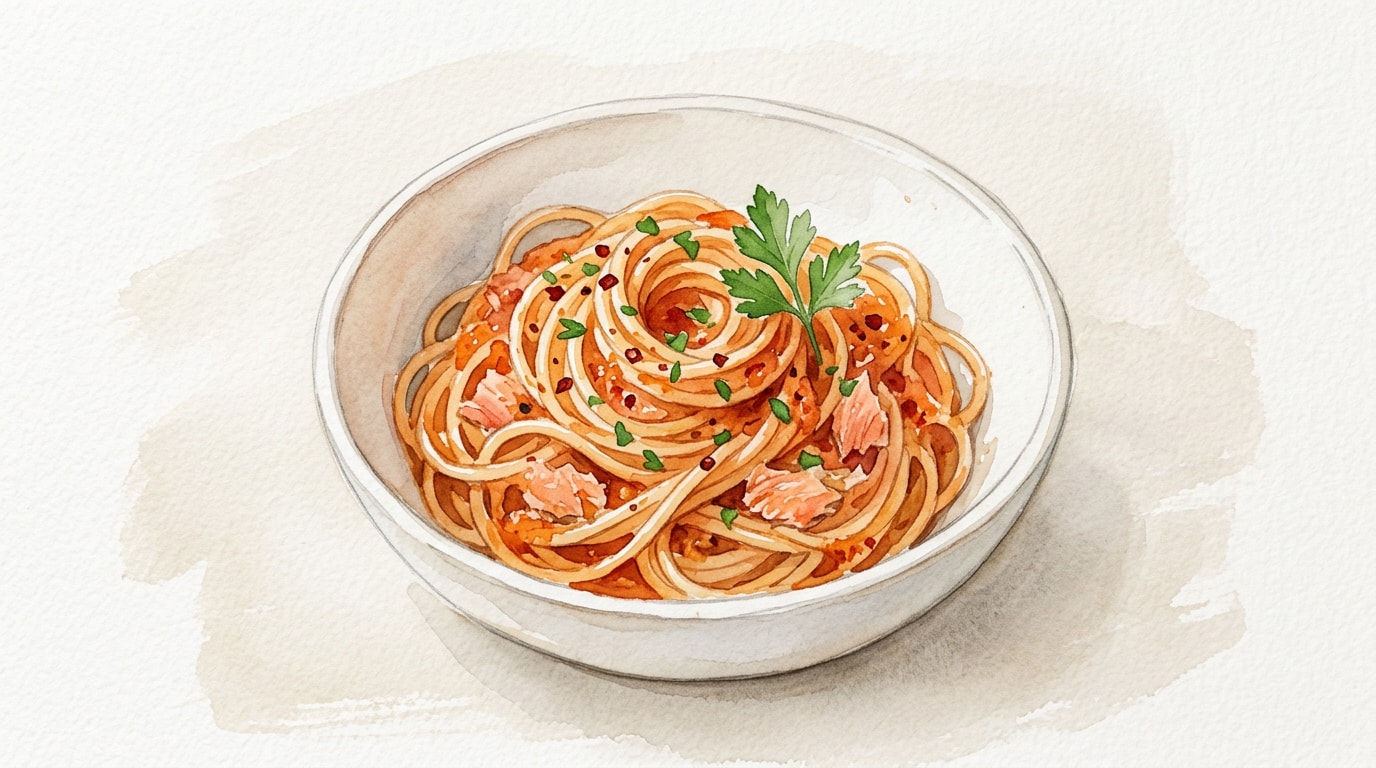
Transfer the drained pasta directly into the skillet along with 60ml of the reserved pasta water. Toss everything together vigorously over medium-low heat until the starchy water and spiced oil bind into a glossy sauce that coats the noodles. Add more reserved water if the mixture seems dry.
Remove the skillet from the heat. Scatter the freshly chopped parsley over the pasta and drizzle with the lemon juice. Give it one final toss to distribute the fresh flavors, then serve immediately.
Chef's Notes
- Using tuna packed in olive oil rather than spring water is crucial. The residual oil brings richness and a superior mouthfeel that stands up beautifully to the aggressive heat of the harissa.
- Harissa heat levels vary wildly between brands. If using a potent brand like Le Phare du Cap Bon, you may want to start with half the recommended amount. If using a milder rose harissa, you can be quite generous.
- Do not skip the lemon juice at the end. The acidity slices right through the dense smokiness of the chili paste and the richness of the fish, balancing the entire flavor profile.
Storage
Refrigerator: 3 days — Store in an airtight container. The pasta may absorb more liquid and become softer over time.
Freezer: 1 month — Freezing is not recommended as the pasta texture will degrade upon thawing.
Reheating: Reheat gently in a skillet over medium-low heat with a splash of water to loosen the sauce, or microwave in 30-second intervals.
Troubleshooting
The sauce is dry and greasy rather than creamy
Cause: Insufficient pasta water was added, or it was not tossed vigorously enough to emulsify
Fix: Return the pan to low heat, add 30ml of hot tap water, and toss vigorously until the sauce comes together
Prevention: Always reserve at least 120ml of pasta water and add it gradually while continuously tossing the pasta
The dish is overwhelmingly spicy
Cause: The specific brand of harissa used was much hotter than anticipated
Fix: Stir in a dollop of plain yogurt, sour cream, or extra olive oil to dilute the capsaicin concentration
Prevention: Taste the raw harissa paste before adding it to gauge its heat level
Cultural Context
Harissa is a foundational chili paste from the Maghreb region of North Africa, traditionally made by pounding roasted red peppers, Baklouti peppers, garlic, and warm spices like caraway and coriander. By combining this fiery paste with Mediterranean staples such as olive oil-packed tuna and Italian pasta, this dish reflects the vibrant and ongoing cross-cultural exchange inherent to Southern European coastal cooking.


