
Equipment
Ingredients
Warm Spice Blend
- 4 g ground cumin
- 3 g ground coriander
- 3 g ground ginger
- 3 g sweet paprika
- 2 g ground cinnamon
- 2 g ground turmeric
- 1 g ground black pepper
Lamb Tagine
- 800 g lamb shoulder, boneless, cut into 4cm cubes
- 30 ml olive oil
- 150 g brown onion, finely diced
- 3 garlic, minced
- 400 ml beef or lamb stock, warm
- 1 preserved lemon, rind only, finely sliced
- 100 g green olives, pitted
- 15 g fresh coriander, roughly chopped
Saffron Rice
- 200 g basmati rice, rinsed well until water runs clear
- 300 ml water
- 15 ml olive oil
- saffron threads, crushed
- 3 g kosher salt
Nutrition (per serving)
Nutrition is estimated per serving. Nutrients without complete source data are omitted.
Full nutrition
- Calories
- 664 kcal
- Protein
- 50 g
- Carbohydrates
- 51 g
- Fat
- 30 g
- Fiber
- 4 g
- Sugar
- 4 g
- Sodium
- 1477 mg
- Saturated Fat
- 6 g
- Trans Fat
- 0 g
- Monounsaturated Fat
- 15 g
- Polyunsaturated Fat
- 2 g
- Cholesterol
- 116 mg
- Potassium
- 1198 mg
- Calcium
- 91 mg
- Iron
- 5.1 mg
- Magnesium
- 82 mg
- Phosphorus
- 494 mg
- Zinc
- 8.7 mg
- Vitamin A
- 47 mcg
- Vitamin C
- 7 mg
- Vitamin E
- 3.5 mg
- Vitamin K
- 20 mcg
- Vitamin B6
- 0.4 mg
- Vitamin B12
- 4.8 mcg
- Thiamin
- 0.37 mg
- Riboflavin
- 0.35 mg
- Niacin
- 11.6 mg
- Folate
- 15 mcg
- Water
- 288 g
Sources: Aggregated Public Data, USDA FoodData Central
Method
In a mixing bowl, combine the ground cumin, coriander, ginger, paprika, cinnamon, turmeric, and black pepper. Toss the diced lamb shoulder in the spice blend until thoroughly and evenly coated.
Heat the olive oil in a Dutch oven over medium-high heat. Working in batches to avoid crowding, sear the spiced lamb pieces until deeply browned on all sides. Transfer the browned lamb to a plate.
Reduce the heat to medium. Add the diced brown onion to the residual lamb fat and spices in the pot. Saute for 5 minutes until soft and translucent, then add the minced garlic and cook for 1 minute until fragrant.
Return the seared lamb and its resting juices to the pot. Pour in the warm stock, using a wooden spoon to scrape up any browned bits stuck to the bottom of the pot.
Bring the liquid to a gentle boil, then immediately reduce the heat to the lowest setting. Cover tightly and simmer for 1 hour and 45 minutes, stirring occasionally, until the lamb is fork-tender. Internal temperature of the lamb should reach at least 90C/195F to properly break down connective tissue.
Remove the lid and stir in the sliced preserved lemon rind and pitted green olives. Simmer uncovered for 15 minutes to reduce and thicken the sauce slightly.
While the tagine is reducing, prepare the rice. In a medium saucepan, combine the rinsed basmati rice, water, olive oil, saffron threads, and salt. Bring to a boil over medium-high heat.
Once boiling, reduce the heat to low, cover the saucepan tightly, and steam the rice for 15 minutes without lifting the lid.
Remove the rice saucepan from the heat. Keep it covered and let the rice rest for 5 minutes, then gently fluff the grains with a fork.
Spoon the hot saffron rice onto individual plates or a wide serving platter. Top generously with the lamb tagine and rich sauce. Garnish with freshly chopped coriander before serving.
Chef's Notes
- Preserved lemons are intensely concentrated in both salinity and acidity. Always scoop out and discard the pulpy flesh; the aromatic oils and flavor you want reside entirely in the softened rind.
- Browning the lamb in batches is crucial. Overcrowding the pot drops the temperature, causing the meat to steam in its own juices rather than developing the Maillard reaction necessary for a deeply flavored stew.
- To elevate the complexity of the spice blend, toast whole cumin and coriander seeds in a dry skillet until fragrant, then grind them fresh before mixing with the other spices.
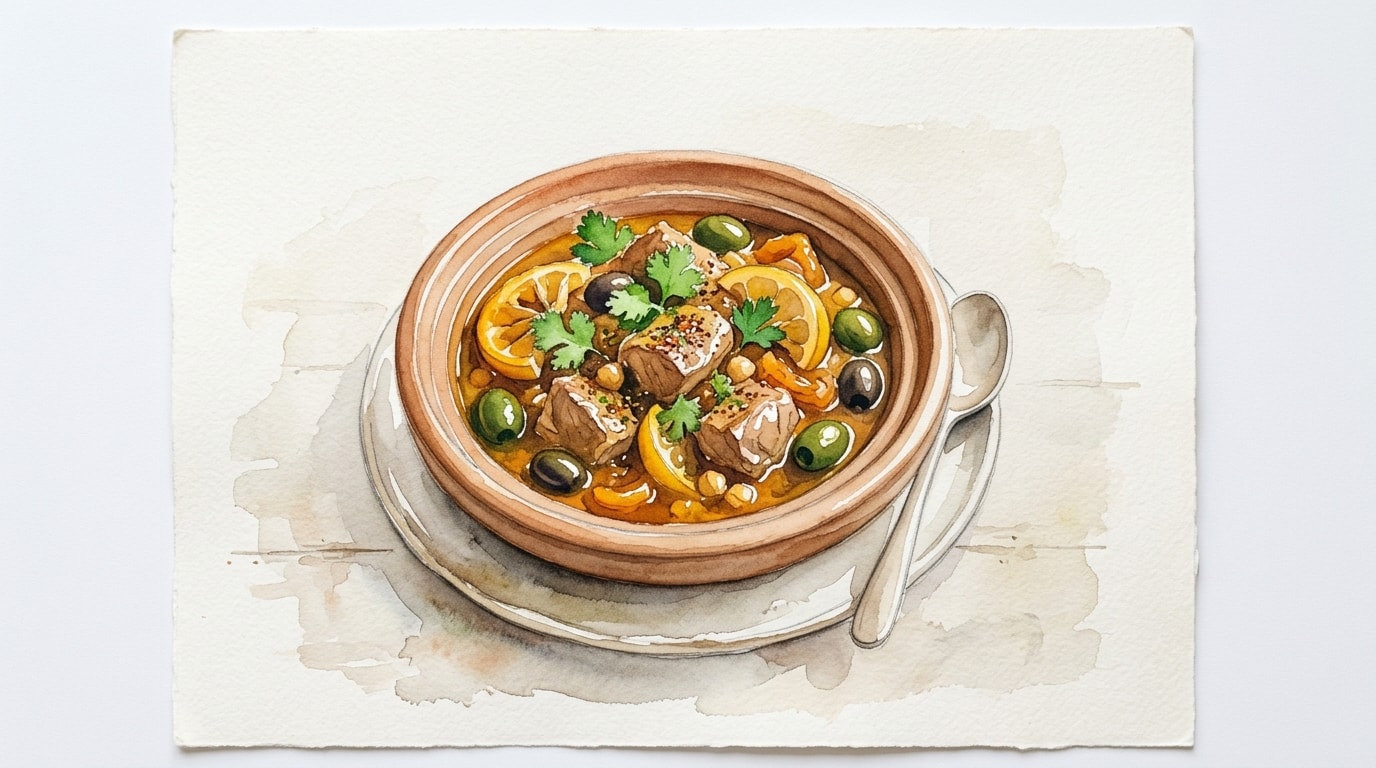
- If you own a traditional unglazed clay tagine, you must soak it in water before use and cook over a heat diffuser on very low heat to prevent the vessel from cracking.
Storage
Refrigerator: 4 days — Store the tagine and rice in separate airtight containers.
Freezer: 3 months — Freeze the lamb tagine only; fresh rice should be prepared upon reheating for best texture.
Reheating: Gently reheat the tagine on the stovetop over medium-low heat, adding a splash of water or stock if the sauce has over-thickened.
Troubleshooting
The lamb is tough and chewy after the recommended cooking time.
Cause: The cooking temperature was too high, or the specific cut of lamb shoulder requires more time to break down collagen.
Fix: Continue cooking on low heat, checking every 15 minutes. Add a splash of water or stock if the liquid level drops too low before the meat becomes tender.
Prevention: Ensure the simmer is extremely gentle, producing only the occasional surface bubble.
The stew is overwhelmingly salty or bitter.
Cause: The fleshy interior of the preserved lemon was included, or the olives were exceptionally briny.
Fix: Add a small pinch of sugar or a dash of honey to balance the bitterness, and stir in unsalted stock or water to dilute the salt concentration.
Prevention: Thoroughly rinse the preserved lemon under cold water, discard all interior flesh, and use strictly the rind. Taste olives beforehand and soak them in water for 10 minutes if excessively salty.
Cultural Context
The word tagine refers interchangeably to the iconic cone-shaped North African clay cooking vessel and the slow-cooked stews prepared within it. The conical lid is an ingenious design meant for arid climates: it traps rising steam, condenses it, and returns moisture to the base, requiring remarkably little water to braise tough cuts of meat into tender perfection.


