
Equipment
Ingredients
Meat and Marinade
- 2500 g baby goat leg or shoulder, bone-in, excess surface fat trimmed
- 30 g kosher salt
- 15 g coarse black pepper
- 10 g garlic powder
- 5 g ground cumin
Steaming Aromatics
- 8 mexican avocado leaves, dried or fresh
- 355 ml mexican lager beer or chicken broth
- 1 white onion, thickly sliced
Serving
- 18 corn tortillas, warmed
- 250 g fresh salsa
Nutrition (per serving)
Nutrition is estimated per serving. Nutrients without complete source data are omitted.
Full nutrition
- Calories
- 684 kcal
- Protein
- 92 g
- Carbohydrates
- 45 g
- Fat
- 12 g
- Fiber
- 7 g
- Sugar
- 4 g
- Sodium
- 2619 mg
- Saturated Fat
- 3 g
- Monounsaturated Fat
- 5 g
- Polyunsaturated Fat
- 2 g
- Cholesterol
- 238 mg
- Potassium
- 1994 mg
- Calcium
- 159 mg
- Iron
- 13.9 mg
- Magnesium
- 77 mg
- Phosphorus
- 1032 mg
- Zinc
- 17.9 mg
- Vitamin A
- 11 mcg
- Vitamin C
- 3 mg
- Vitamin E
- 0.8 mg
- Vitamin K
- 6 mcg
- Vitamin B6
- 0.3 mg
- Vitamin B12
- 4.7 mcg
- Thiamin
- 0.58 mg
- Riboflavin
- 2.15 mg
- Niacin
- 17.6 mg
- Folate
- 37 mcg
- Water
- 472 g
- Alcohol
- 2 g
Sources: Aggregated Public Data, USDA FoodData Central
Method
Combine kosher salt, black pepper, garlic powder, and ground cumin in a small bowl. Rub the spice mixture evenly over the entire surface of the baby goat.
Preheat your smoker to 110°C/225°F. Add mesquite wood chunks to the coals. Place the seasoned goat in the smoker and smoke for 2 hours until a rich mahogany bark forms on the exterior.
Remove the meat from the smoker and transfer it to a roasting pan. Scatter the thick slices of onion and the avocado leaves under and around the meat. Pour the beer or broth into the bottom of the pan, avoiding washing the rub off the meat.
Cover the roasting pan tightly with heavy-duty aluminum foil, ensuring the edges are completely sealed to trap all steam. Increase the heat of the smoker or an indoor oven to 135°C/275°F. Place the covered pan inside and braise for 3 hours, or until a meat thermometer reads an internal temperature of 93°C/200°F and the meat yields completely to a probe.
Remove the pan from the heat and let it rest undisturbed for 30 minutes without opening the foil. This allows the built-up steam to settle and the meat to reabsorb its juices.
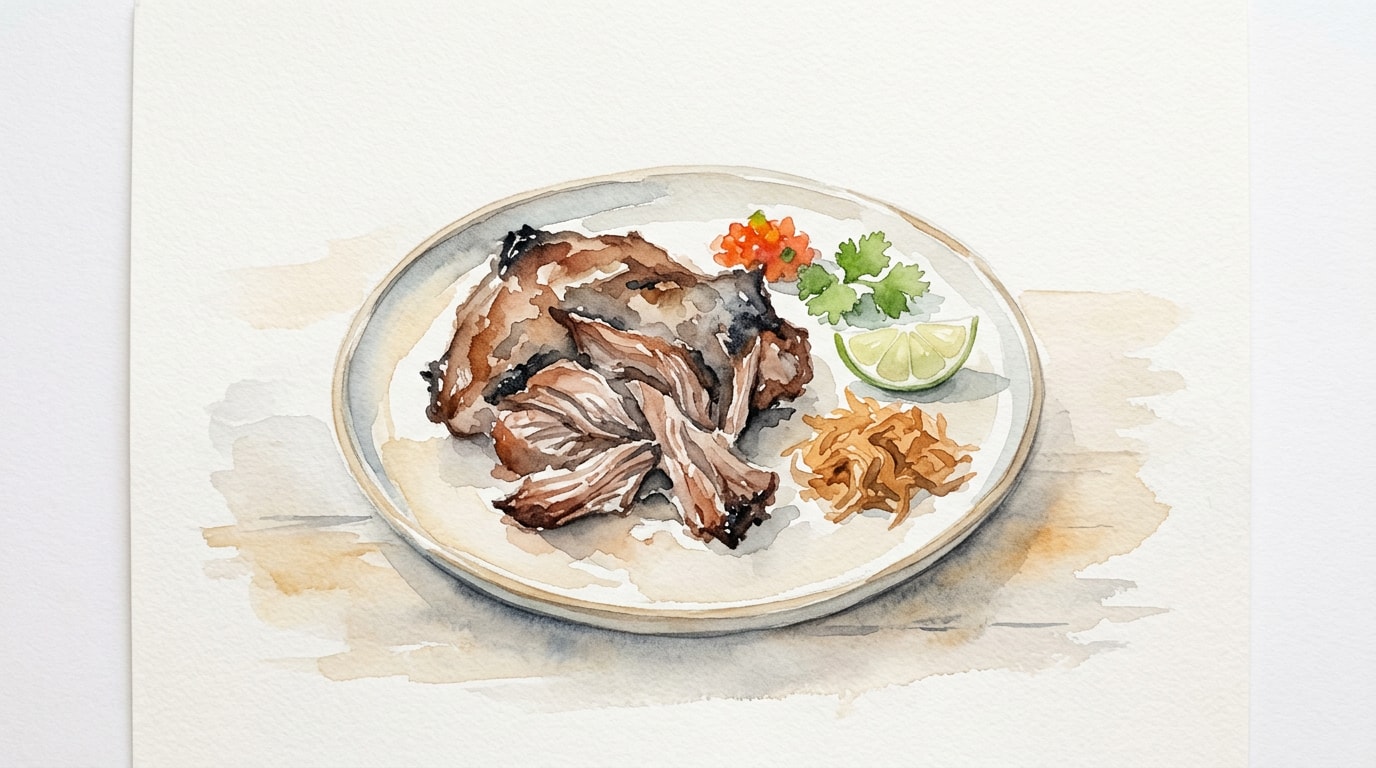
Carefully open the foil, watching out for hot steam. Discard the avocado leaves. Use forks to pull the tender meat from the bones, mixing it gently with the rendered onions and pan juices. Serve immediately with warm corn tortillas and salsa.
Chef's Notes
- Authentic Mexican avocado leaves come from the Persea americana var. drymifolia tree and contain estragole, which imparts the signature anise flavor. Never use standard Hass avocado leaves, which are bitter and lack the aromatic qualities.
- Cabrito is extraordinarily lean compared to older goat or lamb. The initial smoking phase builds the complex barbecue flavor, but the secondary steaming phase is what ensures the meat becomes tender rather than leathery.
- Mesquite smoke is highly pungent and can easily overpower delicate meats. Ensure your smoker is burning clean, thin blue smoke before adding the meat, and do not over-smoke beyond the two-hour mark.
Storage
Refrigerator: 4 days — Store shredded meat in its own braising liquid to prevent drying.
Freezer: 3 months — Freeze meat and liquid together in airtight containers.
Reheating: Reheat gently in a covered pan on the stove with a splash of water or broth to create steam.
Troubleshooting
Meat is tough and resists pulling
Cause: The connective tissues did not reach a high enough internal temperature for long enough to break down into gelatin.
Fix: Re-seal the pan tightly with foil and continue cooking at 135°C/275°F for another 45-60 minutes.
Prevention: Ensure internal temperature reaches at least 93°C/200°F and test in multiple spots for tenderness.
Meat is dry and stringy
Cause: The foil seal was breached, allowing the steaming liquid to evaporate and drying out the lean meat.
Fix: Toss the shredded meat with warm beef or chicken broth and a tablespoon of melted fat or oil to restore moisture.
Prevention: Crimp heavy-duty foil tightly around the lip of the roasting pan, using two layers if necessary.
Cultural Context
Cabrito is a foundational dish of South Texas and Northeastern Mexico, specifically originating from the vaquero culture of Monterrey and the Rio Grande Valley. Historically prepared in earth pits lined with hot coals and damp maguey leaves, this modern adaptation utilizes a smoker and a tightly sealed pan to replicate the slow, moist cooking environment of the pit. The addition of avocado leaves introduces indigenous Mesoamerican flavor notes to the rugged frontier barbecue tradition.


