
Equipment
Ingredients
Lamb and Marinade
- 2500 g lamb shoulder, bone-in
- 250 g plain whole milk yogurt
- 60 ml pomegranate molasses
- 45 ml olive oil
- 6 garlic, minced
- 15 g fresh rosemary, finely chopped
- 10 g fresh thyme, leaves picked
- 25 g kosher salt
- 5 g black pepper, freshly ground
- 10 g ground cumin
Glaze
- 45 ml pomegranate molasses
- 30 g honey
Garnish and Serving
- 2 persimmon, thinly sliced
- 100 g pomegranate seeds
- 10 g fresh mint, leaves picked
- 200 g plain whole milk yogurt, for serving
Nutrition (per serving)
Nutrition is estimated per serving. Nutrients without complete source data are omitted.
Full nutrition
- Calories
- 1365 kcal
- Protein
- 73 g
- Carbohydrates
- 40 g
- Fat
- 101 g
- Fiber
- 2 g
- Sugar
- 17 g
- Sodium
- 1912 mg
- Saturated Fat
- 41 g
- Monounsaturated Fat
- 43 g
- Polyunsaturated Fat
- 8 g
- Cholesterol
- 310 mg
- Potassium
- 1367 mg
- Calcium
- 239 mg
- Iron
- 10.3 mg
- Magnesium
- 113 mg
- Phosphorus
- 770 mg
- Zinc
- 17.2 mg
- Vitamin A
- 33 mcg
- Vitamin C
- 40 mg
- Vitamin D
- 0.5 mcg
- Vitamin E
- 2.2 mg
- Vitamin K
- 23 mcg
- Vitamin B6
- 0.7 mg
- Vitamin B12
- 10.8 mcg
- Thiamin
- 0.52 mg
- Riboflavin
- 1.02 mg
- Niacin
- 23.9 mg
- Folate
- 97 mcg
- Water
- 375 g
Sources: Aggregated Public Data, USDA FoodData Central
Method
In a large mixing bowl, whisk together the yogurt, pomegranate molasses, olive oil, minced garlic, chopped rosemary, thyme leaves, kosher salt, black pepper, and ground cumin until well combined.
Place the lamb shoulder on a cutting board and score the fat cap in a crosshatch pattern using a chef's knife. Rub the yogurt marinade all over the lamb, massaging it into the meat. Transfer to a roasting pan, cover tightly with aluminum foil, and refrigerate overnight.
Remove the lamb from the refrigerator and let it sit at room temperature for 1 hour to take off the chill before cooking.
Preheat the oven to 150C or 300F.
Place the covered roasting pan in the oven and roast the lamb for 4 hours, or until the meat is extremely tender and yields easily when pierced with a fork. Internal temperature should reach at least 90C or 195F to ensure connective tissue has dissolved.
Remove the foil from the roasting pan. In a small bowl, mix the glaze ingredients: pomegranate molasses and honey. Brush this glaze generously over the surface of the lamb using a pastry brush.
Increase the oven temperature to 200C or 400F. Return the uncovered lamb to the oven and roast for an additional 30 minutes until a deeply caramelized, sticky crust forms on the exterior.
Carefully transfer the lamb to a cutting board. Tent it loosely with fresh aluminum foil and let it rest for 30 minutes to allow the juices to redistribute and the crust to set.
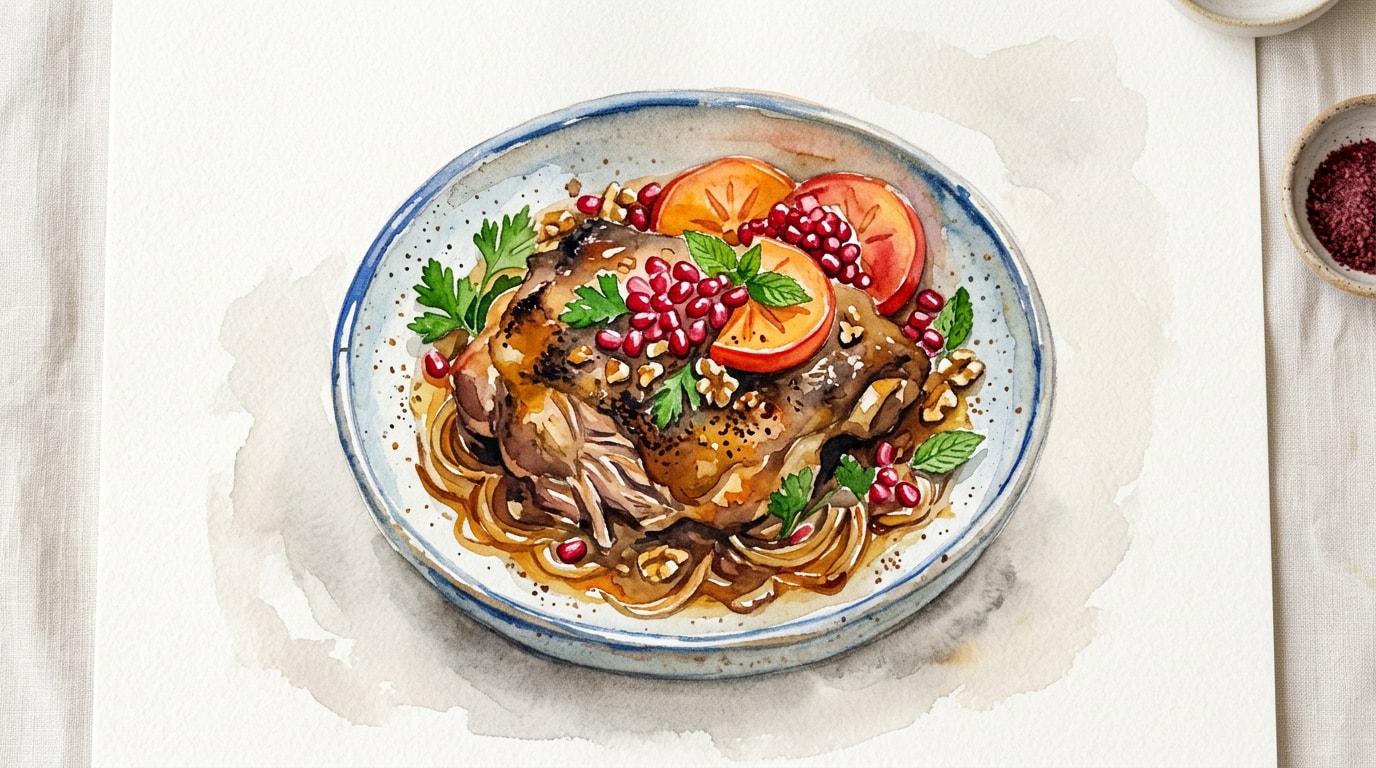
Transfer the rested lamb to a large serving platter. Surround the meat with the thinly sliced persimmons, scatter generously with pomegranate seeds and fresh mint leaves, and serve with extra plain yogurt on the side.
Chef's Notes
- Using firm Fuyu persimmons ensures a crisp, sweet counterpoint to the rich meat without the intense astringency of unripe Hachiya varieties.
- Pomegranate molasses varies wildly in sweetness depending on the brand. Taste yours before making the glaze; if it is intensely sour, increase the honey slightly to balance the tartness.
- Scoring the lamb's fat cap is crucial. It allows the yogurt marinade to penetrate deeper into the meat and renders the fat more efficiently during the long, slow roast.
- Do not skip the 30-minute resting period. It is absolutely critical for a massive piece of meat like a shoulder to relax so it retains its moisture when pulled or carved.
Storage
Refrigerator: 4 days — Store leftover meat and yogurt separately. Do not store sliced persimmons, as they will degrade in texture.
Freezer: 2 months — Freeze pulled meat with its pan juices in an airtight container. Do not freeze garnishes or yogurt.
Reheating: Reheat pulled lamb in a skillet over medium-low heat with a splash of water or broth until hot.
Troubleshooting
Lamb is tough and chewy instead of pulling apart easily
Cause: Connective tissue has not fully broken down due to insufficient slow-cooking time
Fix: Recover tightly with foil, add a splash of water to the pan if dry, and return to the 150C or 300F oven for another 45 to 60 minutes
Prevention: Test the meat for tenderness with a fork in several places before uncovering for the final glaze step
Glaze scorches and burns during the final high-heat roasting stage
Cause: The high sugar content in both the pomegranate molasses and honey can burn quickly if the oven runs hot or the meat is placed too close to the heating element
Fix: Cannot un-burn, but you can gently scrape off deeply scorched areas with a knife before serving
Prevention: Monitor the lamb closely during the last 15 minutes of roasting and lower the heat to 180C or 350F if browning occurs too rapidly
Cultural Context
In Turkish culinary tradition, slow-roasted lamb is a celebratory centerpiece, often cooked deep within a pit or clay oven. The incorporation of pomegranate molasses provides a quintessential tartness typical of Southern Anatolian and Levantine cuisines, perfectly cutting through the rich, fatty lamb shoulder. Accompanying the dish with autumnal fruits like persimmon nods to the bountiful harvest seasons of the region, making it an ideal crossover centerpiece for modern Thanksgiving or Easter feasts.


