
Equipment
Ingredients
Scallops
- 400 g bay scallops, muscle tabs removed, rinsed
- 3 g kosher salt
- 1 g black pepper, freshly ground
Brown Butter Sauce
- 60 g unsalted butter
- 50 g shallots, finely minced
- 1 lemon, juiced
- 10 g fresh parsley, finely chopped
Nutrition (per serving)
Nutrition is estimated per serving. Nutrients without complete source data are omitted.
Full nutrition
- Calories
- 379 kcal
- Protein
- 25 g
- Carbohydrates
- 13 g
- Fat
- 25 g
- Fiber
- 2 g
- Sugar
- 2 g
- Sodium
- 1376 mg
- Saturated Fat
- 15 g
- Trans Fat
- 0 g
- Monounsaturated Fat
- 7 g
- Polyunsaturated Fat
- 1 g
- Cholesterol
- 113 mg
- Potassium
- 556 mg
- Calcium
- 42 mg
- Iron
- 1.5 mg
- Magnesium
- 54 mg
- Phosphorus
- 696 mg
- Zinc
- 2.0 mg
- Vitamin A
- 229 mcg
- Vitamin C
- 17 mg
- Vitamin E
- 0.8 mg
- Vitamin K
- 85 mcg
- Vitamin B6
- 0.2 mg
- Vitamin B12
- 2.9 mcg
- Thiamin
- 0.05 mg
- Riboflavin
- 0.05 mg
- Niacin
- 1.6 mg
- Folate
- 51 mcg
- Water
- 208 g
Sources: USDA FoodData Central
Method
Preheat your oven to 200°C (400°F). Line a baking sheet with parchment paper or leave it bare, lightly greasing it.
Pat the bay scallops completely dry using paper towels. This is crucial to prevent them from steaming in their own juices. Season evenly with the kosher salt and black pepper.
Spread the scallops in a single layer on the prepared baking sheet. Roast in the preheated oven for 6 to 8 minutes until they turn opaque, feel firm to the touch, and reach a safe internal temperature of 63°C (145°F).
While the scallops roast, melt the unsalted butter in a skillet over medium heat. Add the minced shallots and cook, swirling occasionally, until the butter foams, milk solids drop and turn golden brown, and the shallots are softened, taking about 4 to 5 minutes.
Remove the skillet from the heat immediately to stop the butter from burning. Stir in the fresh lemon juice and chopped parsley.
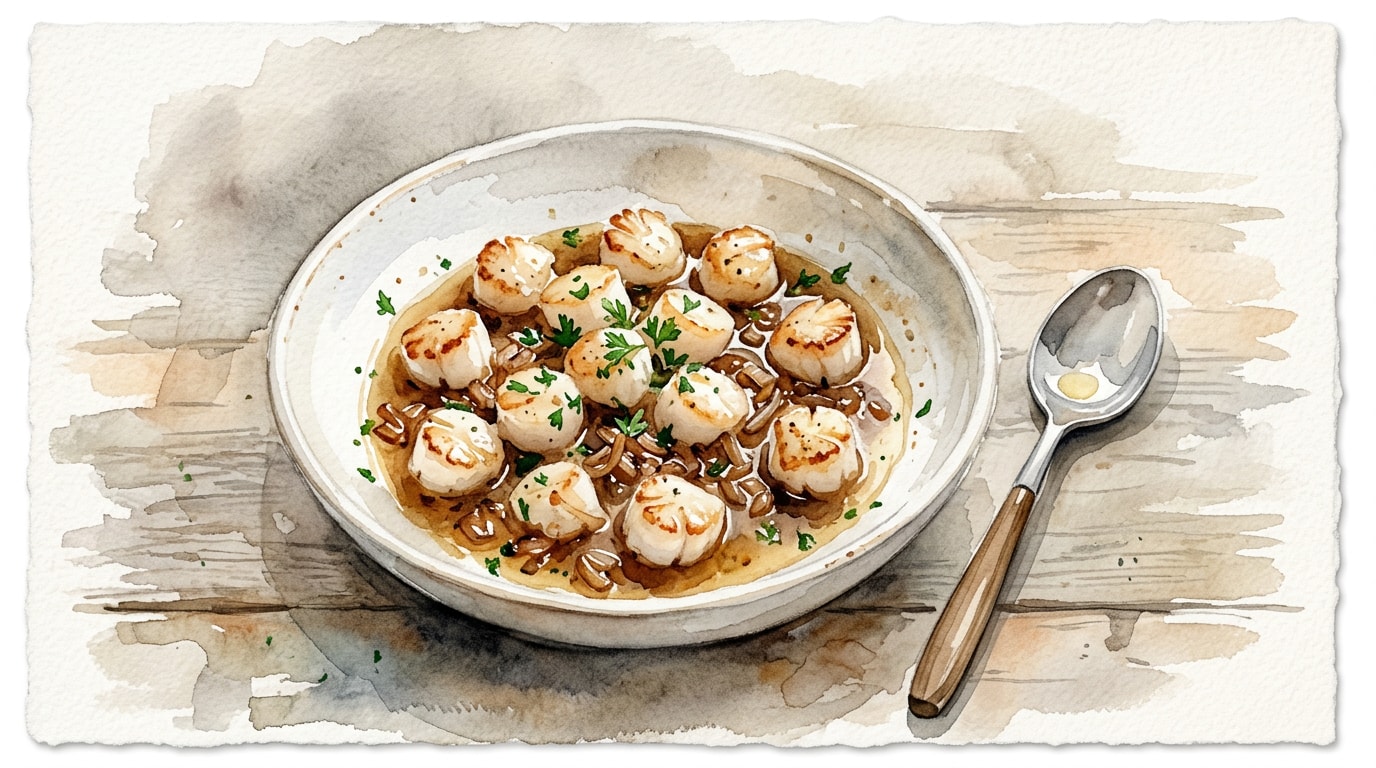
Transfer the warm, roasted bay scallops to a serving dish and pour the brown butter and shallot sauce evenly over the top. Serve immediately while hot.
Chef's Notes
- Ensure bay scallops are completely dry before roasting. Moisture on the surface prevents them from cooking properly and will dilute your brown butter sauce.
- Watch the butter closely once it begins to foam; the milk solids will toast and can turn from golden and nutty to burnt in a matter of seconds.
- Since bay scallops do not sear well due to their high water content and small size, a quick high-heat roast provides an elegant, even texture without overcooking.
- When buying bay scallops, look for dry scallops. Wet scallops have been treated with sodium tripolyphosphate and will release excessive, soapy-tasting water during cooking.
Storage
Refrigerator: 1 day — Keep in an airtight container.
Reheating: Gentle warming in a skillet over low heat; do not microwave to avoid rubbery texture.
Troubleshooting
Scallops are rubbery and tough
Cause: Overcooking; bay scallops are very small and cook incredibly fast.
Fix: Cannot be fixed
Prevention: Check scallops at the 5-minute mark and remove as soon as they turn opaque.
Butter turned black and tastes bitter
Cause: Milk solids burned because the pan was left on the heat too long.
Fix: Discard the burnt butter and start over with a clean skillet.
Prevention: Remove the skillet from the heat the exact moment the butter smells nutty and turns amber.
Cultural Context
Bay scallops are a prized delicacy harvested from the shallow coastal waters of the Eastern United States, particularly around Nantucket and Cape Cod, making them a quintessential summer and early autumn ingredient. Their natural, profound sweetness pairs beautifully with classic French-influenced brown butter, known as beurre noisette. This minimalist five-ingredient preparation respects the delicate nature of the protein while delivering a rich, restaurant-quality flavor profile.


