
Equipment
* optional
Ingredients
Gnocchi Dough
- 1000 g starchy potatoes, whole, unpeeled
- 250 g all-purpose flour
- 1 egg, lightly beaten
- 5 g fine sea salt
Sage Butter Sauce
- 100 g unsalted butter
- 15 g fresh sage leaves
- 50 g vegetarian parmesan cheese, grated
- black pepper, freshly cracked
Nutrition (per serving)
Nutrition is estimated per serving. Nutrients without complete source data are omitted.
Full nutrition
- Calories
- 631 kcal
- Protein
- 20 g
- Carbohydrates
- 82 g
- Fat
- 26 g
- Fiber
- 10 g
- Sugar
- 0 g
- Sodium
- 680 mg
- Saturated Fat
- 15 g
- Trans Fat
- 0 g
- Monounsaturated Fat
- 7 g
- Polyunsaturated Fat
- 1 g
- Cholesterol
- 109 mg
- Potassium
- 1175 mg
- Calcium
- 303 mg
- Iron
- 10.2 mg
- Magnesium
- 94 mg
- Phosphorus
- 280 mg
- Zinc
- 2.1 mg
- Vitamin A
- 217 mcg
- Vitamin C
- 30 mg
- Vitamin D
- 0.3 mcg
- Vitamin E
- 0.8 mg
- Vitamin K
- 3 mcg
- Vitamin B6
- 0.7 mg
- Vitamin B12
- 0.3 mcg
- Thiamin
- 0.14 mg
- Riboflavin
- 0.23 mg
- Niacin
- 3.4 mg
- Folate
- 66 mcg
- Water
- 233 g
Sources: Aggregated Public Data, USDA FoodData Central
Method
Place the whole, unpeeled potatoes in a large pot and cover with cold water. Bring to a boil at 100°C/212°F and cook until easily pierced with a fork.
Drain the potatoes. While they are still hot, carefully peel off the skins using a small knife or your fingers.
Pass the hot peeled potatoes through a potato ricer directly onto a clean, lightly floured surface.
Spread the riced potatoes out into a thin layer to let the steam escape. Allow them to cool slightly for about 10 minutes so they do not scramble the egg.
Sprinkle the salt evenly over the potatoes. Create a small well in the center and add the beaten egg.
Gradually sprinkle the flour over the mixture. Use your hands or a bench scraper to gently fold the dough together. Knead gently just until a soft, slightly tacky dough forms. Do not overmix.
Divide the dough into four equal portions. Roll each portion into a long rope about 2 centimeters thick. Cut the rope into 2 centimeter pieces. Place the finished pieces on a lightly floured tray.
Bring a large pot of generously salted water to a boil at 100°C/212°F. Drop the gnocchi into the water in two batches. Cook until they float to the surface.
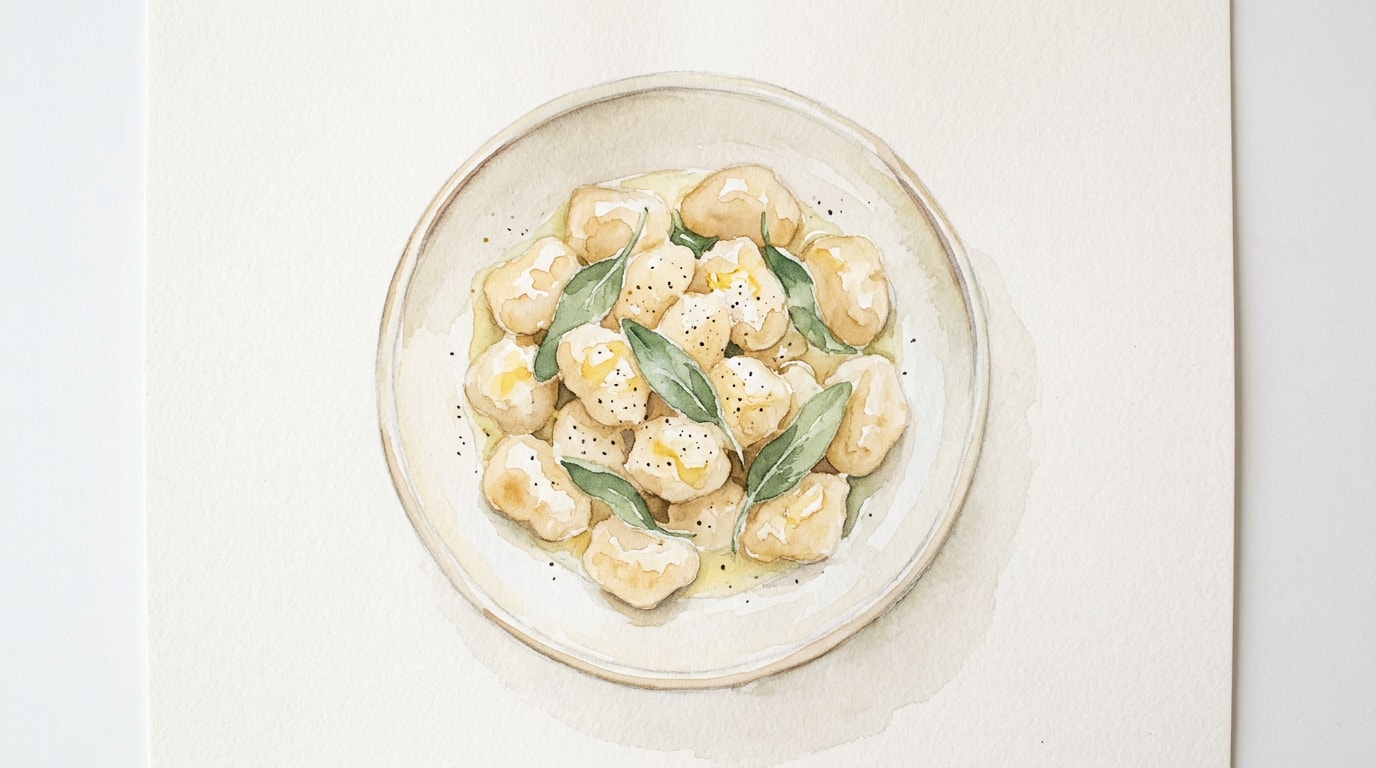
While the gnocchi boil, melt the butter in a large skillet over medium heat. Once it foams, add the fresh sage leaves. Cook until the butter turns golden brown and gives off a nutty aroma.
Using a slotted spoon, scoop the floating gnocchi directly from the boiling water into the skillet with the brown butter sauce. Toss gently to coat the dumplings completely.
Divide the gnocchi among serving plates. Garnish with the grated parmesan cheese and freshly cracked black pepper.
Chef's Notes
- Always use starchy, floury potatoes like Russets. Waxy potatoes require too much flour to form a dough, which results in leaden, heavy dumplings.
- Ricing the potatoes while they are still hot ensures the starch remains fluffy. If you wait until they are completely cold, the mash becomes gluey.
- When transferring gnocchi to the pan sauce, allowing a small amount of the starchy pasta water to cling to the dumplings helps emulsify the brown butter into a glossy sauce.
- If your dough feels too wet, resist the urge to add massive amounts of flour. Dust the surface and your hands instead to keep the dumplings light.
Storage
Refrigerator: 3 days — Store cooked gnocchi and sauce separately if possible. Toss cooked gnocchi in a little oil to prevent sticking.
Freezer: 1 month — Freeze uncooked gnocchi on a floured baking sheet until solid, then transfer to an airtight bag.
Reheating: Pan-fry directly from the fridge in butter, or drop frozen uncooked gnocchi straight into boiling water without thawing.
Troubleshooting
Gnocchi are dense, heavy, or gummy
Cause: The dough was over-kneaded, causing gluten to develop, or the potatoes retained too much water
Fix: Cannot be fixed
Prevention: Boil potatoes in their skins to prevent water logging, and knead the dough only until the flour is just incorporated
Gnocchi fall apart in the boiling water
Cause: Not enough flour was added to bind the dough, or the water was boiling too vigorously
Fix: Remove immediately and pan-fry the remaining uncooked gnocchi in butter instead of boiling them
Prevention: Ensure the dough is tacky but holds its shape, and boil water at a gentle roll rather than a violent boil
Cultural Context
Gnocchi have been part of Italian cuisine since Roman times, but the famous potato version became widespread in Northern Italy only after the introduction of potatoes from the Americas in the 16th century. Pairing them with burro e salvia (butter and sage) is a traditional Lombardy technique that elegantly enhances, rather than overpowers, the delicate flavor of the potato.


