Equipment
* optional
Ingredients
Yeast cake dough
- 250 g bread flour, room temperature
- 30 g granulated sugar
- 5 g fine sea salt
- 7 g instant yeast
- 120 g whole milk, warmed to 38 degrees Celsius
- 2 large eggs, room temperature
- 60 g unsalted butter, softened to 20 degrees Celsius, pliable but still cool
- 5 g vanilla extract
- 2 g lemon zest, freshly grated
- 20 g unsalted butter, melted, for greasing molds
Rum syrup
- 500 ml water
- 300 g granulated sugar
- 100 ml dark rum
- 1 vanilla bean, split lengthwise, seeds scraped
- 3 g lemon zest, in wide strips, removed before soaking
Chantilly cream
- 250 ml heavy cream, cold, 35 to 40 percent milk fat
- 25 g powdered sugar, sifted
- 5 g vanilla extract, or seeds from half a vanilla bean
- 1 g fine sea salt
Fruit and garnish
- 320 g mixed fresh fruit, rinsed, dried, and prepped
- 8 fresh mint leaves, small leaves picked from stems
- 15 g powdered sugar, for dusting
- 1 g lemon zest, finely grated
Nutrition (per serving)
Nutrition is estimated per serving. Nutrients without complete source data are omitted.
Full nutrition
Only basic nutrition values are available for this recipe. More detailed nutrient data is incomplete.
- Calories
- 535 kcal
- Protein
- 7 g
- Carbohydrates
- 74 g
- Fat
- 21 g
Sources: Aggregated Public Data, USDA FoodData Central
Method
Warm the milk to 38 degrees Celsius (100 degrees Fahrenheit). If using active dry yeast, stir it into the warm milk with a pinch of the measured sugar and let it sit for 5 to 8 minutes until foamy. If using instant yeast, this step can be skipped.
In the bowl of a stand mixer, whisk together the bread flour, granulated sugar, salt, and instant yeast (if not bloomed). Add the warm milk mixture, lightly beaten eggs, vanilla extract, and lemon zest if using. Fit the dough hook and mix on low speed for 2 minutes until a shaggy dough forms.
With the mixer on medium speed, add the softened butter one tablespoon at a time, waiting until each piece is fully incorporated before adding the next. Continue kneading for 8 to 10 minutes total, until the dough is smooth, glossy, and elastic. It should pull cleanly from the sides of the bowl and pass the windowpane test (stretch a small piece thin enough to see light through without tearing).
Shape the dough into a smooth ball, place it in a lightly oiled bowl, cover with a damp kitchen towel or plastic film, and let it rise at 24 to 26 degrees Celsius (75 to 79 degrees Fahrenheit) for 1 to 1.5 hours, until doubled in volume.
Brush the molds thoroughly with melted butter, getting into every crevice. Turn the dough out onto a lightly floured surface, deflate gently, and divide into 8 equal pieces using a bench scraper and scale (each piece should be about 70 g). Roll each piece into a smooth ball, then place seam-side down into a buttered mold, filling each about one-third full.
Cover the molds loosely with a clean kitchen towel and let them proof at 24 to 26 degrees Celsius (75 to 79 degrees Fahrenheit) for 35 to 45 minutes, until the dough has risen just to the rim of each mold and looks puffy.
Position a rack in the lower third of the oven and preheat to 190 degrees Celsius (375 degrees Fahrenheit). Bake the cakes on the lower rack for 16 to 20 minutes, rotating the pan once at the halfway mark, until the tops are deep golden brown and an instant-read thermometer inserted into the center reads 93 to 96 degrees Celsius (200 to 205 degrees Fahrenheit).
While the cakes bake, make the syrup. Combine the water, granulated sugar, split vanilla bean, and lemon zest strips in a medium saucepan. Bring to a gentle simmer over medium heat, stirring until the sugar fully dissolves, then simmer for 3 minutes. Remove from heat, lift out the vanilla bean and lemon zest, and stir in the dark rum. Keep the syrup warm, around 60 degrees Celsius (140 degrees Fahrenheit), so it absorbs quickly without cooking the cakes further.
Unmold the warm cakes onto a wire rack set over a tray. Pour the warm syrup into a heatproof bowl wide enough to submerge one cake. Place a cake into the syrup and let it soak for 30 seconds on the first side, then flip and soak 30 seconds on the second side. Lift the cake out with a slotted spoon or spider, let it drip for a few seconds, and place it back on the rack. Repeat with the remaining cakes. If the syrup cools below 50 degrees Celsius (120 degrees Fahrenheit), rewarm it gently so the cakes absorb evenly.
Just before serving, make the Chantilly. Chill the mixing bowl and whisk attachment in the freezer for 5 minutes. Pour the cold cream into the chilled bowl, add the sifted powdered sugar, vanilla, and salt if using. Whip on medium speed until soft to medium peaks form, about 2 to 3 minutes. Stop the moment the cream holds a soft curl at the tip of the whisk; over-whipping turns it grainy.
Prepare the fruit: halve or quarter berries as needed, slice stone fruit into 5 mm (about one-quarter inch) wedges, and pat everything dry with paper towels. Excess moisture will dilute the cream and weep color across the plate.
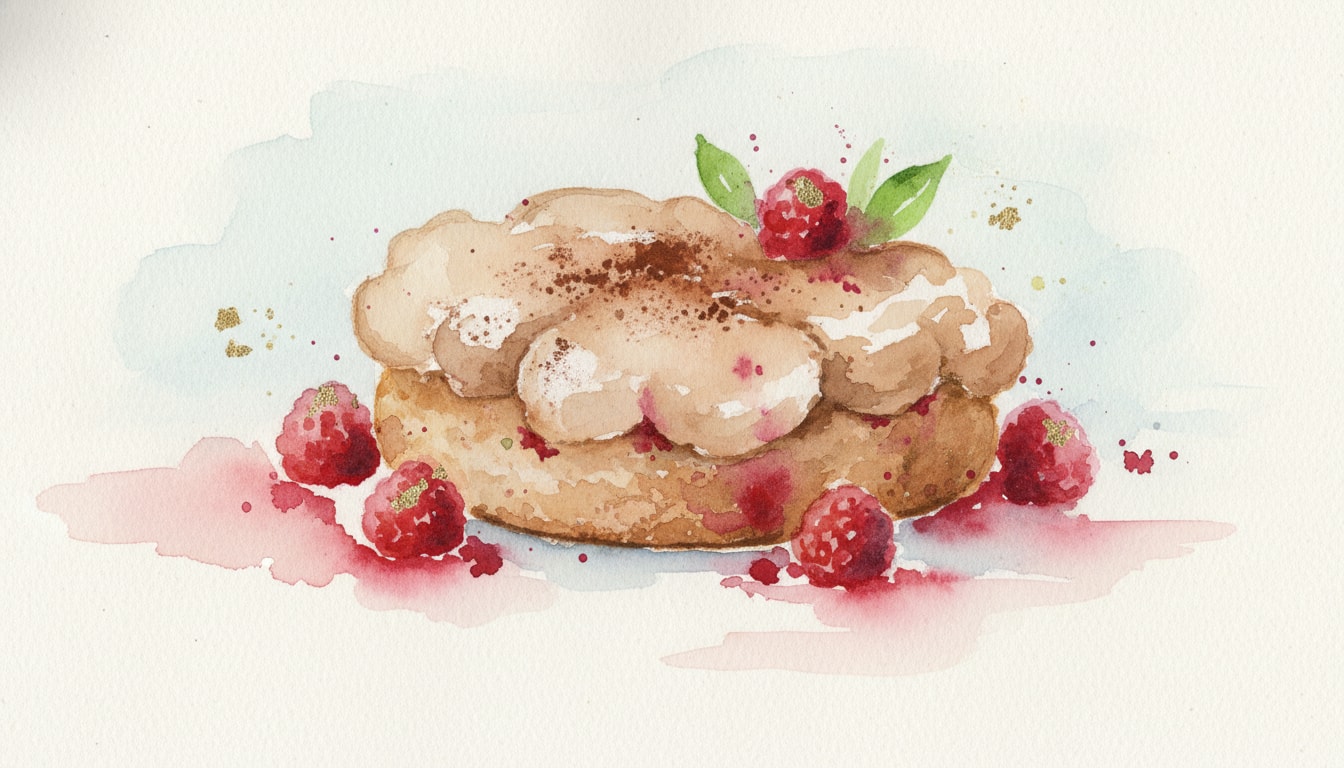
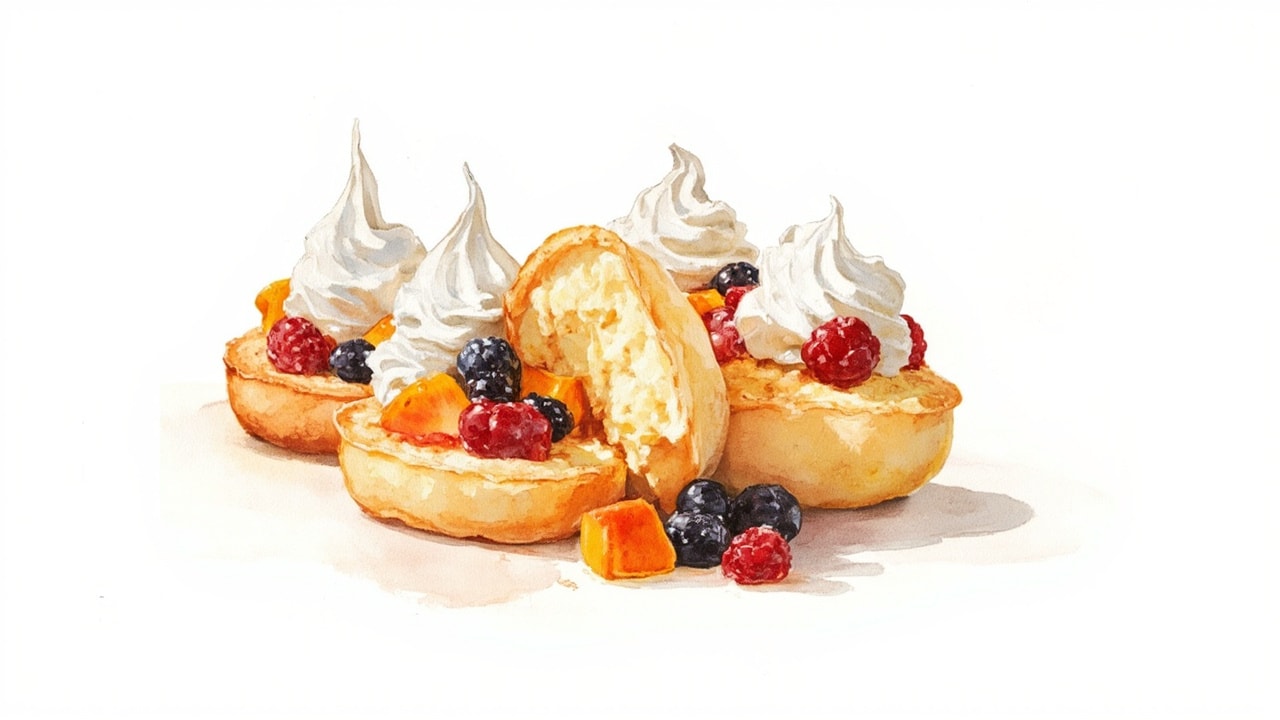
Place one soaked cake on each serving plate. Spoon or pipe about 30 g of Chantilly onto the center of each cake, letting it drape slightly over one side. Arrange 40 to 50 g of mixed fruit around and over the cream. Finish with a few small mint leaves, a light dusting of powdered sugar, and a whisper of lemon zest if desired. Serve within 15 minutes for the best contrast between cool cream and room-temperature cake.
Chef's Notes
- Bread flour is worth seeking out here: its higher protein content gives the dough enough structure to absorb the full syrup without falling apart, while still keeping the interior tender and feathery.
- Temperature contrast is the soul of this dessert. Aim to serve the soaked cake at 18 to 22 degrees Celsius (room temperature) alongside cream straight from the refrigerator. The cool-warm interplay is what makes each bite feel lifted rather than heavy.
- Pour the rum into the syrup off the heat and only after the sugar has fully dissolved. Adding alcohol to a boiling liquid boils off most of its fragrance; folding it in at 60 degrees Celsius preserves the bright top notes that define the dish.
- When selecting fruit, mix one soft fruit (raspberries, ripe peach) with one firmer fruit (blackberries, blueberries, sliced plum) for visual and textural variation. A single acid note, like passion fruit pulp drizzled over the cream, brightens the whole plate.
- For a make-ahead path, bake and freeze the unsoaked cakes. Thaw at room temperature for 30 minutes, then proceed with the warm syrup soak and finish with freshly whipped cream and fruit the day of serving.
Storage
Refrigerator: 1 day — Assembled cakes are best eaten within 6 hours. Store soaked undecorated cakes and whipped cream separately in airtight containers for up to 24 hours; assemble just before plating.
Freezer: 1 month — Freeze only the unsoaked, undecorated baked cakes. Wrap tightly in two layers of plastic film. Thaw at room temperature for 30 minutes before soaking.
Reheating: Do not reheat assembled cakes. Bring refrigerated soaked cakes to 18 to 20 degrees Celsius room temperature for 20 to 30 minutes before topping with cream and fruit.
Troubleshooting
Cakes are dense and dry even after soaking
Cause: Dough was under-kneaded or under-proofed, leaving an insufficient gluten and gas network to absorb liquid
Fix: Pierce the cakes several times with a skewer and return them to the warm syrup for an extra 2 minutes; serve with extra syrup spooned alongside
Prevention: Knead until the dough passes the windowpane test and proof until the dough visibly doubles rather than relying on time alone
Cakes collapse or deflate in the oven or when unmolded
Cause: Over-proofing, oven temperature too low, or removing from the mold before the structure has set
Fix: Cannot be fixed. Reserve collapsed cakes for trifle: cube them, layer with cream and fruit in a glass.
Prevention: Proof only until the dough just reaches the mold rim; preheat the oven fully; rest cakes in the mold for 3 minutes after baking
Cake bottoms are gummy or raw after baking
Cause: Molds were under-greased, oven rack was too high, or cakes were removed before the internal temperature reached 93 degrees Celsius
Fix: Return unmolded cakes directly to a parchment-lined sheet pan and bake at 160 degrees Celsius (320 degrees Fahrenheit) for 5 to 8 minutes to dry out the base
Prevention: Coat every surface of the mold with melted butter, bake on the lower third of the oven, and confirm with an instant-read thermometer
Cakes split or crumble when soaked
Cause: Syrup was too hot, cakes were too cold, or the crumb was already over-baked and brittle
Fix: Reduce remaining syrup to a thicker glaze and brush it onto broken pieces; reassemble as a deconstructed trifle
Prevention: Cool baked cakes for only 5 minutes before soaking and keep the syrup between 55 and 65 degrees Celsius
Chantilly weeps or turns to butter
Cause: Cream was over-whipped, or bowl and cream were not cold enough
Fix: If it just begins to turn grainy, fold in 15 to 30 ml of cold unwhipped cream by hand to bring it back. If it has separated into butter and buttermilk, it cannot be saved as Chantilly but can be used as cultured butter.
Prevention: Chill the bowl and whisk for at least 5 minutes; stop whipping at soft to medium peaks
Fruit releases colored juice that bleeds into the cream
Cause: Fruit was not patted dry, or particularly juicy berries sat too long on the cream
Fix: Wipe the cream surface with a clean paper towel and add fresh fruit and a new spoon of cream on top before serving
Prevention: Pat fruit dry after washing and assemble only the portion that will be eaten immediately
Cultural Context
These small yeast cakes belong to a family of rum-soaked sponge desserts that spread across European courts in the seventeenth and eighteenth centuries, when Caribbean sugar and rum made their way into northern pastry shops. The technique of enriching a yeasted dough with eggs and butter, then saturating it with aromatized syrup, became a fixture of French pâtisserie under names like baba and savarin. The combination of cream and seasonal fruit layered on top is a more modern bistro interpretation that lets the syrup-soaked cake act as a sweet, boozy foundation rather than the whole performance.