
Equipment
Ingredients
Pork
- 600 g pork fillet, trimmed of silver skin
- 15 ml olive oil
- 3 g smoked paprika
- 5 g salt, kosher or sea salt
- 2 g black pepper, freshly ground
Chorizo and Bean Sauce
- 150 g spanish cured chorizo, diced
- red onion, finely diced
- garlic, minced
- 240 g cannellini beans, drained and rinsed
- 200 g cherry tomatoes, halved
- 150 ml chicken stock, warm
- 15 ml sherry vinegar
- 10 g fresh parsley, roughly chopped
Nutrition (per serving)
Nutrition is estimated per serving. Nutrients without complete source data are omitted.
Full nutrition
- Calories
- 486 kcal
- Protein
- 48 g
- Carbohydrates
- 21 g
- Fat
- 22 g
- Fiber
- 7 g
- Sugar
- 4 g
- Sodium
- 937 mg
- Saturated Fat
- 3 g
- Trans Fat
- 0 g
- Monounsaturated Fat
- 4 g
- Polyunsaturated Fat
- 1 g
- Cholesterol
- 98 mg
- Potassium
- 1356 mg
- Calcium
- 65 mg
- Iron
- 4.4 mg
- Magnesium
- 57 mg
- Phosphorus
- 441 mg
- Zinc
- 3.5 mg
- Vitamin A
- 29 mcg
- Vitamin C
- 14 mg
- Vitamin D
- 0.3 mcg
- Vitamin E
- 1.1 mg
- Vitamin K
- 45 mcg
- Vitamin B6
- 1.3 mg
- Vitamin B12
- 0.8 mcg
- Thiamin
- 1.54 mg
- Riboflavin
- 0.56 mg
- Niacin
- 11.0 mg
- Folate
- 13 mcg
- Water
- 186 g
Sources: Aggregated Public Data, USDA FoodData Central
Method
Preheat the oven to 200°C/400°F.
Pat the pork fillet dry with paper towels. Rub evenly with the olive oil, smoked paprika, salt, and black pepper.
Heat the oven-proof cast iron skillet over medium-high heat. Add the pork and sear until a dark, caramelized crust forms on all sides.
Transfer the skillet with the pork to the preheated 200°C/400°F oven. Roast until the internal temperature reaches 63°C/145°F.
Remove the pork from the skillet and place it on a cutting board using tongs. Tent loosely with foil and let it rest.
While the pork rests, return the skillet to the stove over medium heat. Do not wipe it out. Add the diced chorizo and cook until the brilliant red oil renders out and the edges crisp up.
Add the diced red onion and minced garlic to the rendered chorizo fat. Cook, stirring frequently, until the onions soften.
Stir in the drained cannellini beans, cherry tomatoes, chicken stock, and sherry vinegar. Scrape the bottom of the skillet to release any browned bits. Simmer until the tomatoes begin to burst and the liquid reduces into a thick, glossy sauce.
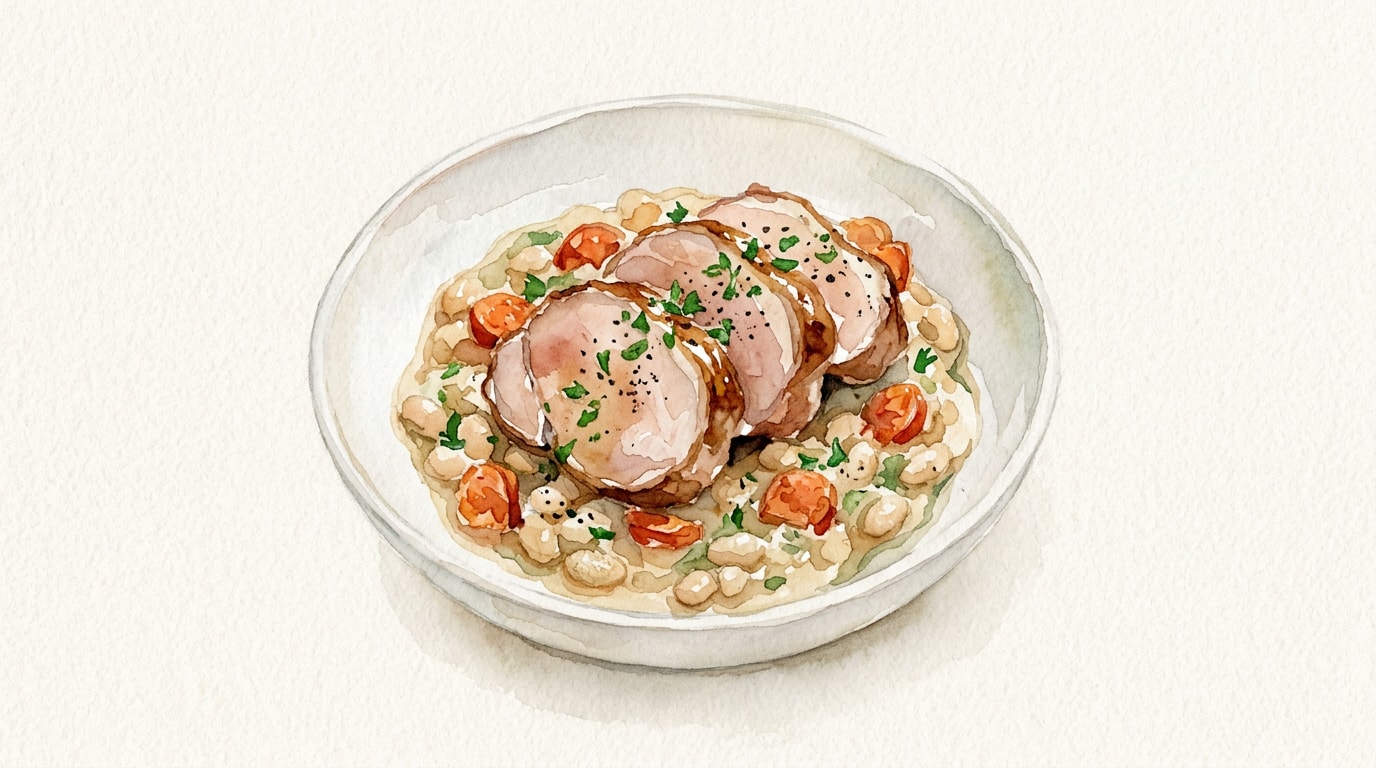
Slice the rested pork into thick medallions. Spoon the rich chorizo and bean stew onto warmed shallow bowls or plates, arrange the pork slices on top, and garnish with fresh chopped parsley.
Chef's Notes
- Silver skin on the pork fillet must be removed before cooking. It is a tough connective tissue that will not break down during a quick roast, causing the fillet to buckle and cook unevenly.
- Do not wash your skillet between cooking the pork and the sauce. The fond (browned bits) left over from searing the meat contains deep, savory flavors that build the foundation of the stew.
- Resting the pork is non-negotiable. Cutting into it immediately will cause the juices to flood the cutting board instead of remaining locked within the muscle fibers.
- The quality of the sherry vinegar dramatically impacts the final dish. It provides a sharp, complex acidity that perfectly counterbalances the heavy, spiced fat of the cured chorizo.
Storage
Refrigerator: 3 days — Store pork and sauce together in an airtight container to keep the meat moist.
Freezer: 1 month — The bean sauce freezes beautifully, but the pork may lose its tender texture upon thawing.
Reheating: Gently warm the sauce on the stovetop over low heat. Slice the pork thinly and lay it over the simmering sauce for just a couple of minutes until heated through to avoid overcooking.
Troubleshooting
Pork is dry, chewy, and tough
Cause: The pork fillet was overcooked past the safe temperature of 63°C/145°F
Fix: Slice the pork as thinly as possible and toss the slices thoroughly through the warm bean and chorizo sauce to coat them in the rich fat and mask the dry texture
Prevention: Use an instant-read meat thermometer and pull the meat exactly when it hits temperature, trusting the carryover cooking during the resting phase
Sauce is too oily or broken
Cause: The chorizo released an excessive amount of fat, throwing off the sauce ratio
Fix: Stir in a splash of warm chicken stock or an extra teaspoon of sherry vinegar to help emulsify the fat back into the stew
Prevention: If your specific brand of chorizo yields more than 2 tablespoons of fat, drain the excess before adding the onions and stock
Cultural Context
This dish draws heavy inspiration from the rustic cooking of the Iberian Peninsula, where the pairing of cured pork and legumes has sustained communities for centuries. The use of smoked paprika and sherry vinegar nods specifically to Spanish culinary traditions, transforming humble pantry staples into a sophisticated, highly satisfying meal.


