Equipment
Ingredients
Base
- 400 g raw cashews, unsalted
- 2 g sea salt, fine
- 15 ml neutral oil
Nutrition (per serving)
Nutrition is estimated per serving. Nutrients without complete source data are omitted.
Full nutrition
- Calories
- 180 kcal
- Protein
- 6 g
- Carbohydrates
- 9 g
- Fat
- 15 g
- Fiber
- 1 g
- Sugar
- 2 g
- Sodium
- 63 mg
- Saturated Fat
- 3 g
- Monounsaturated Fat
- 7 g
- Polyunsaturated Fat
- 2 g
- Potassium
- 203 mg
- Calcium
- 11 mg
- Iron
- 2.1 mg
- Magnesium
- 90 mg
- Phosphorus
- 182 mg
- Zinc
- 1.8 mg
- Vitamin C
- 0 mg
- Vitamin E
- 0.3 mg
- Vitamin K
- 10 mcg
- Vitamin B6
- 0.1 mg
- Thiamin
- 0.13 mg
- Riboflavin
- 0.02 mg
- Niacin
- 0.3 mg
- Folate
- 8 mcg
- Water
- 2 g
Sources: Aggregated Public Data, USDA FoodData Central
Method
Preheat your oven to 165°C/330°F.
Spread the raw cashews in a single layer on a baking sheet. Roast for 10 to 12 minutes, shaking the pan halfway through.
Remove the cashews from the oven and allow them to cool on the baking sheet for 10 minutes. They should remain slightly warm, which greatly assists in releasing their natural oils during blending.
Transfer the warm cashews to a food processor. Process on high speed. Initially, the nuts will break down into a fine meal, then eventually clump together into a thick paste or ball.
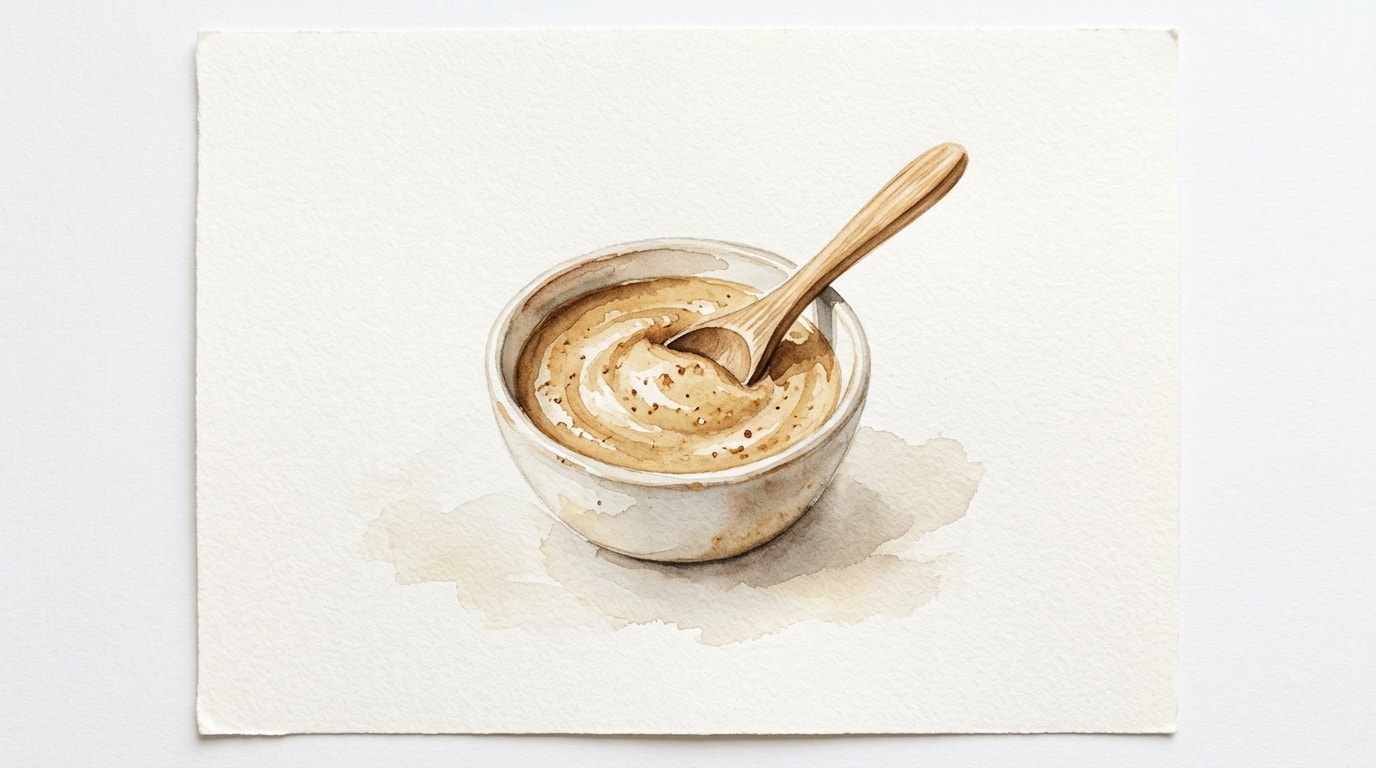
Continue processing for 5 to 10 minutes. Stop the machine every couple of minutes to thoroughly scrape down the sides of the bowl with a spatula. The friction from the blades will eventually melt the fats, turning the clump into a smooth, liquid butter.
Add the sea salt and, if the butter is still too thick for your preference, the optional neutral oil. Blend for a final 30 seconds until fully incorporated.
Chef's Notes
- Patience is the single most important ingredient. The friction heat generated by the food processor blades is what ultimately melts the natural fats, transitioning the mixture from a dry clump into a flowing liquid.
- Do not skip the roasting step. While raw cashew butter exists, roasting drastically cuts down processing time, reduces moisture, and provides the essential Maillard reaction that builds complex flavor.
- For a chunky texture, pulse a small handful of roasted cashews into small pieces, set them aside, and manually stir them into the finished smooth butter at the very end.
- If using a high-speed blender instead of a food processor, use the tamper tool continuously to push the nuts down into the blades, but monitor the engine heat closely to avoid overheating your machine.
Storage
Refrigerator: 2 months — Store in an airtight jar. Refrigeration prevents the natural oils from going rancid.
Freezer: 6 months — Thaw overnight in the refrigerator and stir well before using.
Troubleshooting
Mixture forms a stiff ball and refuses to become creamy after 10 minutes of blending
Cause: The food processor lacks sufficient continuous power, or the cashews were completely cold, making the fats stubborn to melt
Fix: Drizzle in the optional neutral oil one tablespoon at a time to help the blades catch and jumpstart the emulsion
Prevention: Always process cashews while they are still slightly warm from the roasting step
Cashew butter suddenly becomes gritty and stiff
Cause: A water-based ingredient or liquid was introduced, causing the nut butter to seize
Fix: Cannot be restored to a completely liquid state, but can be used as a thick spread or truffle base
Prevention: Never add water, maple syrup, or liquid extracts to pure nut butter during blending
Cultural Context
While peanut butter has dominated American pantries for over a century, the artisan nut butter movement of the early twenty-first century elevated alternative seeds and nuts like cashews and almonds. Roasted cashew butter offers a significantly creamier texture and a sweeter, more delicate flavor profile than its peanut counterpart, making it highly prized in modern plant-based cooking and baking applications.