Equipment
* optional
Ingredients
Whole Wheat Crust
- 150 g whole wheat flour
- 100 g all-purpose flour
- 150 g unsalted butter, cold and cut into small cubes
- 3 g salt
- 60 ml ice water
Roasted Vegetables
- 250 g asparagus, woody ends removed, cut into 3cm pieces
- 100 g scallions, chopped into 2cm pieces
- 15 ml olive oil
- 2 g salt
- 1 g black pepper
Cheese and Custard
- 100 g gruyère cheese, freshly grated
- 30 g parmesan cheese, freshly grated
- 4 eggs, room temperature
- 120 ml whole milk
- 120 ml heavy cream
- 4 g salt
- 2 g black pepper
- 1 g ground nutmeg
Nutrition (per serving)
Nutrition is estimated per serving. Nutrients without complete source data are omitted.
Full nutrition
- Calories
- 433 kcal
- Protein
- 13 g
- Carbohydrates
- 27 g
- Fat
- 31 g
- Fiber
- 4 g
- Sugar
- 2 g
- Sodium
- 622 mg
- Saturated Fat
- 17 g
- Trans Fat
- 0 g
- Monounsaturated Fat
- 10 g
- Polyunsaturated Fat
- 2 g
- Cholesterol
- 168 mg
- Potassium
- 277 mg
- Calcium
- 243 mg
- Iron
- 2.3 mg
- Magnesium
- 45 mg
- Phosphorus
- 273 mg
- Zinc
- 1.9 mg
- Vitamin A
- 297 mcg
- Vitamin C
- 4 mg
- Vitamin D
- 1.0 mcg
- Vitamin E
- 1.7 mg
- Vitamin K
- 43 mcg
- Vitamin B6
- 0.1 mg
- Vitamin B12
- 0.6 mcg
- Thiamin
- 0.15 mg
- Riboflavin
- 0.32 mg
- Niacin
- 1.6 mg
- Folate
- 48 mcg
- Water
- 101 g
Sources: Aggregated Public Data, USDA FoodData Central
Method
Combine the whole wheat flour, all-purpose flour, and salt in a large mixing bowl.
Add the cold cubed butter to the flours. Cut the butter into the flour using a pastry blender or rubbing it quickly between your fingers until the mixture resembles coarse meal with some pea-sized butter pieces remaining.
Drizzle the ice water over the mixture, 15ml at a time, tossing gently until the dough just begins to clump together. Gather the dough into a cohesive disk, wrap tightly in plastic wrap, and chill in the refrigerator for at least 1 hour.
Preheat the oven to 200°C/400°F.
Roll out the chilled dough on a lightly floured surface to a 30cm circle. Gently transfer and press it into a 23cm tart pan. Trim the excess edges evenly and chill the lined pan in the refrigerator for 30 minutes.
Line the chilled dough with parchment paper and fill entirely with pie weights. Blind bake in the 200°C/400°F oven for 20 minutes. Remove the weights and parchment carefully, then bake for another 5 minutes until the bottom appears dry and pale golden. Remove from oven and set aside.
While the crust blind bakes, toss the asparagus pieces and scallions with olive oil, salt, and black pepper on a baking sheet. Roast in the 200°C/400°F oven for 15 minutes until tender and slightly caramelized. Remove and let cool slightly.
Lower the oven temperature to 175°C/350°F.
In a mixing bowl, aggressively whisk together the eggs, whole milk, heavy cream, salt, black pepper, and ground nutmeg until the mixture is completely homogeneous and slightly frothy.
Scatter the roasted asparagus, scallions, grated Gruyère cheese, and Parmesan cheese evenly across the bottom of the warm, blind-baked crust.
Pour the egg custard mixture gently over the vegetables and cheese, filling the crust to just below the brim.
Bake the quiche at 175°C/350°F for 35 to 40 minutes. The edges should be firmly set, but the very center should still register a slight jiggle when nudged. The internal temperature of the custard should reach 74°C/165°F.
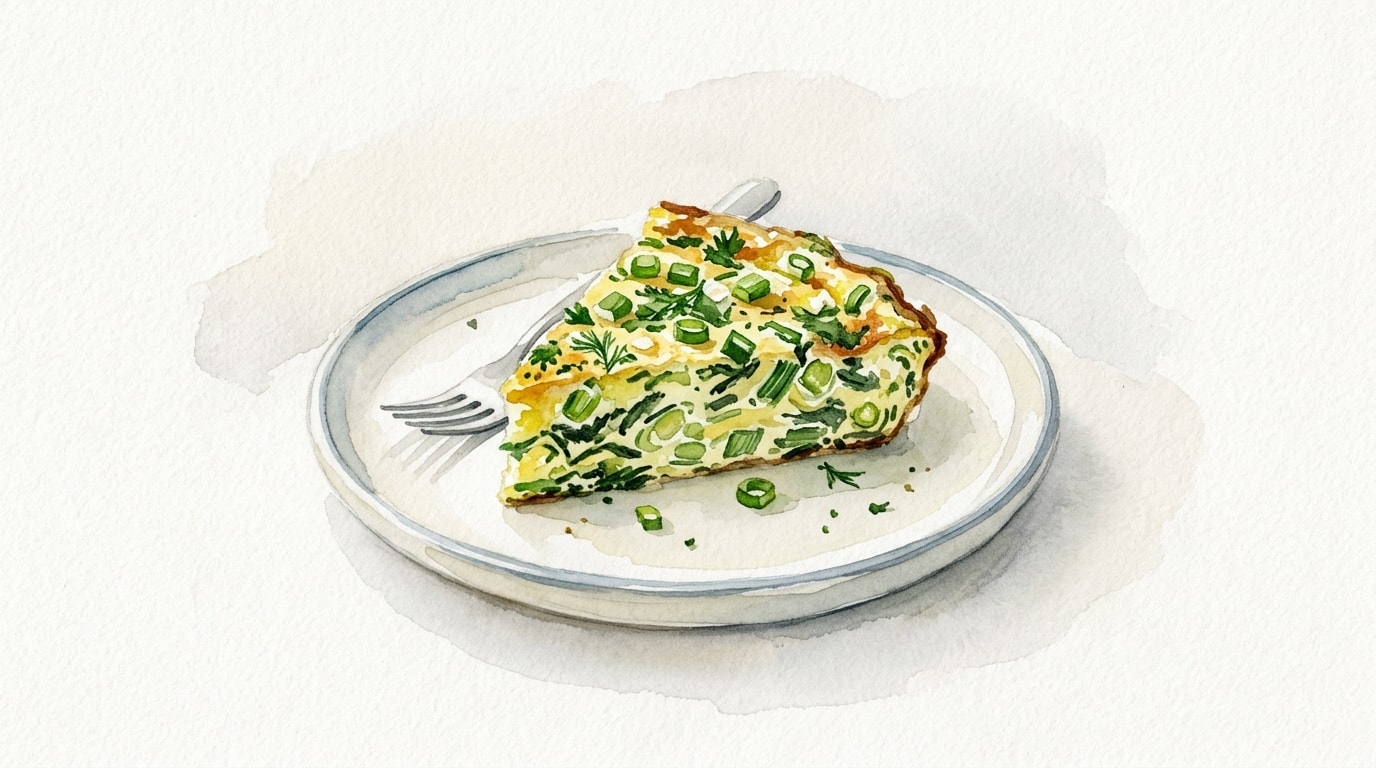
Transfer the baked quiche to a wire rack. Let it rest and cool for at least 20 minutes before slicing to allow the custard to properly set.
Chef's Notes
- Roasting the asparagus and scallions before adding them to the filling is non-negotiable; it concentrates their inherent sweetness and prevents them from leaching excess water into your delicate custard.
- For the flakiest whole wheat crust, temperature is everything. Ensure your butter and water are ice cold. The visible flecks of butter in your final dough disk will translate directly to flaky steam pockets during the bake.
- Placing your tart pan on a preheated baking sheet while the quiche bakes helps conduct radiant heat directly to the bottom crust, providing an extra layer of insurance against a soggy base.
- Resting the quiche is as important as baking it. Slicing too early will result in the custard weeping and the slice collapsing. It needs time to set structurally.
Storage
Refrigerator: 4 days — Store tightly wrapped or in an airtight container to prevent the crust from absorbing moisture.
Freezer: 2 months — Freeze fully baked slices individually wrapped tightly in plastic wrap and aluminum foil.
Reheating: Reheat slices in a 175°C/350°F oven for 10-15 minutes to revive the crust's flakiness. Microwaving is not recommended as it causes a soggy crust.
Troubleshooting
Soggy or gummy bottom crust
Cause: Insufficient blind baking time or excessive moisture weeping from raw vegetables.
Fix: Cannot be fully fixed once baked, but reheating individual slices in a hot, dry skillet or directly on a hot baking sheet can help crisp the bottom.
Prevention: Ensure the blind-baked crust is completely dry before adding filling, and strictly adhere to pre-roasting the vegetables to cook off their internal water.
Custard appears grainy or weeps liquid when sliced
Cause: The quiche was overbaked, causing the egg proteins to tightly coagulate and squeeze out trapped liquids.
Fix: Cannot be fixed.
Prevention: Remove the quiche from the oven while the center still has a distinct wobble. Carryover cooking will finish setting the custard during the resting phase.
Cultural Context
Quiche is deeply rooted in French culinary tradition, originally hailing from the historical region of Lorraine. While a classic Quiche Lorraine relies purely on eggs, cream, and rich pork lardons, the dish has long served as a versatile canvas for seasonal produce. The Mediterranean influence of roasted spring asparagus, sweet scallions, and a nutty whole wheat pastry bridges traditional French technique with a lighter, vibrant, vegetable-forward approach.