
Equipment
* optional
Ingredients
Roast and Vegetables
- 15 ml vegetable oil
- 6800 g loin of veal
- 8 garlic, unpeeled
- 910 g potatoes, peeled and cut into 4cm pieces
- 3 g rosemary, fresh
Pan Sauce
- 240 ml veal or chicken stock
- 120 ml red wine
- 5 g salt, to taste
- 2 g pepper, to taste
Nutrition (per serving)
Nutrition is estimated per serving. Nutrients without complete source data are omitted.
Full nutrition
- Calories
- 2397 kcal
- Protein
- 323 g
- Carbohydrates
- 25 g
- Fat
- 111 g
- Fiber
- 4 g
- Sugar
- 1 g
- Sodium
- 1373 mg
- Saturated Fat
- 39 g
- Trans Fat
- 4 g
- Monounsaturated Fat
- 50 g
- Polyunsaturated Fat
- 6 g
- Cholesterol
- 897 mg
- Potassium
- 3324 mg
- Calcium
- 256 mg
- Iron
- 14.6 mg
- Magnesium
- 404 mg
- Phosphorus
- 2441 mg
- Zinc
- 21.2 mg
- Vitamin A
- 1 mcg
- Vitamin C
- 20 mg
- Vitamin D
- 12.5 mcg
- Vitamin E
- 5.0 mg
- Vitamin K
- 18 mcg
- Vitamin B6
- 7.7 mg
- Vitamin B12
- 31.2 mcg
- Thiamin
- 0.86 mg
- Riboflavin
- 3.62 mg
- Niacin
- 87.1 mg
- Folate
- 97 mcg
- Water
- 881 g
- Alcohol
- 2 g
Sources: USDA FoodData Central
Method
Preheat your oven to 160°C (325°F).
Pour 15ml of vegetable oil into the bottom of a large roasting pan.
Place the 6800g veal loin and 8 unpeeled garlic cloves into the roasting pan.
Cover the roasting pan tightly with tin foil.
Roast the veal at 160°C (325°F) for 1 hour, basting the meat frequently with the pan juices.
While the meat roasts, peel 910g of potatoes and cut them into 4cm (1.5-inch) pieces.
Remove the foil from the roasting pan after the first hour of cooking.
Pat the potato pieces thoroughly dry using paper towels.
Arrange the dried potatoes around the veal in the pan and sprinkle them with 3g of rosemary.
Return the uncovered pan to the oven and roast for another hour, or until the veal reaches an internal temperature of 63°C (145°F) for medium-rare.
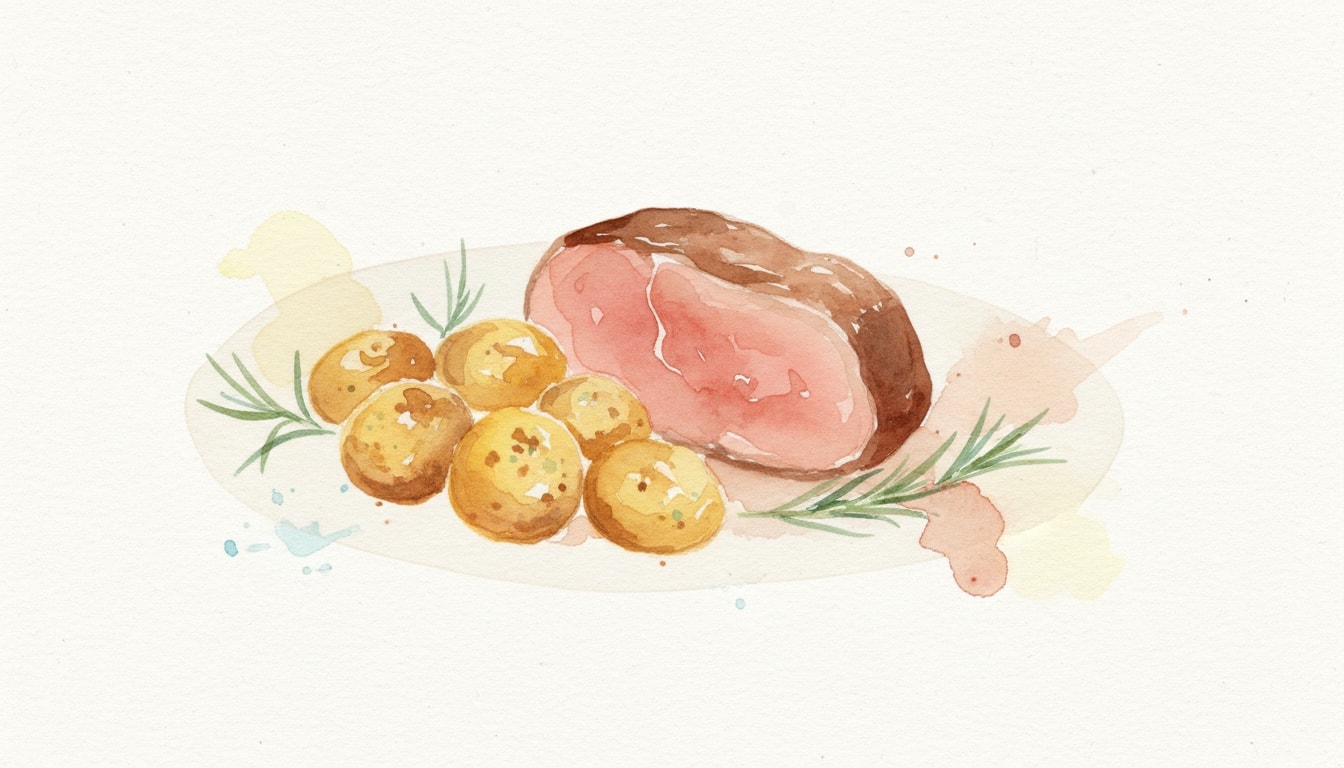
Transfer the veal to a warmed serving dish and arrange the potatoes around it; let the meat rest while you prepare the sauce.
Pour off and discard the excess fat from the roasting pan.
Add 240ml stock and 120ml red wine to the roasting pan over medium heat.
Bring the liquid to a boil and simmer for several minutes, scraping the bottom of the pan to release browned bits, until the sauce thickens slightly.
Season the sauce with salt and pepper to taste and transfer to a heated sauceboat for serving.
Chef's Notes
- For a more evenly cooked veal, consider tying the loin with butcher's twine to ensure a uniform shape before roasting.
- Don't skip drying the potatoes thoroughly; this is crucial for achieving crispy, golden-brown results, not soggy ones.
- Basting the veal frequently during the initial covered roasting period helps to keep the meat incredibly moist and tender.
- When making the pan sauce, ensure you scrape up all the 'fond' (browned bits) from the bottom of the pan; this is where much of the flavor resides.
- Allowing the veal to rest for at least 15 minutes after cooking is vital for the juices to redistribute, ensuring a more succulent final dish.
Storage
Refrigerator: 3 days — Store meat and potatoes in an airtight container.
Freezer: 3 months — Freeze meat and sauce separately for best texture.
Reheating: Reheat sliced veal gently in the sauce over low heat to prevent toughening.
Troubleshooting
Potatoes are soft or soggy instead of crisp.
Cause: Potatoes were not dried sufficiently before adding to the pan or the pan was overcrowded.
Fix: Increase oven temperature to 200°C (400°F) for the last 10 minutes of roasting.
Prevention: Ensure potatoes are very dry with paper towels and use a large enough pan so they are in a single layer.
The pan sauce is too thin.
Cause: The sauce was not simmered long enough to reduce.
Fix: Continue to simmer until the volume reduces further, or whisk in a small cornstarch slurry.
Prevention: Maintain a steady boil while reducing the liquid.
Cultural Context
Roast veal is a classic dish across many European cuisines, particularly in Italy where it's often prepared for special occasions and Sunday dinners. The use of rosemary and garlic is quintessential to Italian cooking, infusing the meat with robust, aromatic flavors that speak to the region's rich culinary heritage.


