
Equipment
* optional
Ingredients
Potato Gnocchi
- 800 g russet potatoes, whole, unpeeled
- 200 g all-purpose flour
- 1 egg yolk
- 5 g kosher salt
Vegetables and Nuts
- 400 g butternut squash, peeled and diced into 1.5cm cubes
- 150 g cooked peeled chestnuts, roughly chopped
- 30 ml olive oil
Salmon
- 600 g salmon fillets, divided into four 150g portions, skin on or off based on preference
- 15 ml olive oil
- kosher salt
Brown Butter Sage Sauce
- 80 g unsalted butter
- 10 g fresh sage leaves, whole
- 15 ml lemon juice, freshly squeezed
Nutrition (per serving)
Nutrition is estimated per serving. Nutrients without complete source data are omitted.
Full nutrition
- Calories
- 1053 kcal
- Protein
- 43 g
- Carbohydrates
- 108 g
- Fat
- 50 g
- Fiber
- 9 g
- Sugar
- 8 g
- Sodium
- 788 mg
- Saturated Fat
- 17 g
- Monounsaturated Fat
- 19 g
- Polyunsaturated Fat
- 8 g
- Cholesterol
- 166 mg
- Potassium
- 2044 mg
- Calcium
- 154 mg
- Iron
- 4.7 mg
- Magnesium
- 155 mg
- Phosphorus
- 617 mg
- Zinc
- 2.1 mg
- Vitamin A
- 770 mcg
- Vitamin C
- 50 mg
- Vitamin D
- 16.7 mcg
- Vitamin E
- 9.2 mg
- Vitamin K
- 17 mcg
- Vitamin B6
- 2.0 mg
- Vitamin B12
- 5.0 mcg
- Thiamin
- 0.74 mg
- Riboflavin
- 0.42 mg
- Niacin
- 17.4 mg
- Folate
- 140 mcg
- Water
- 371 g
Sources: Aggregated Public Data, USDA FoodData Central
Method
Preheat the oven to 200C (400F). Pierce the unpeeled potatoes several times with a fork and place them on a baking sheet. Bake until completely tender to the center.
Toss the diced butternut squash with the olive oil and a pinch of salt. Place on a separate baking sheet and roast in the same 200C (400F) oven alongside the potatoes during their final 25 minutes of cooking.
Remove the potatoes from the oven. While still extremely hot, slice them in half, scoop out the flesh, and press it immediately through a potato ricer onto a clean work surface. Spread the potato slightly and allow steam to escape and cool for 5 minutes.
Sprinkle the salt and flour evenly over the cooled, riced potatoes. Create a small well in the center and add the egg yolk. Use a bench scraper or your hands to gently fold the mixture together, kneading just until a cohesive dough forms.
Divide the dough into four equal pieces. Roll each piece into a rope about 1.5 cm thick. Use a bench scraper or knife to cut the ropes into 2 cm pillows. Lightly toss the cut gnocchi in additional flour and set aside on a baking sheet.
Rub the salmon fillets with olive oil and season generously with salt. Roast on a parchment-lined baking sheet in the 200C (400F) oven until the internal temperature reaches 52C (125F) for medium-rare, or 63C (145F) if you prefer fully cooked fish.
Bring a large pot of heavily salted water to a gentle boil. Drop the gnocchi into the water in two batches. They are ready exactly 1 minute after they float to the surface. Carefully remove them with a slotted spoon.
In a large skillet, melt the butter over medium heat until it foams and begins to smell nutty. Add the fresh sage leaves, roasted butternut squash, chopped chestnuts, and the boiled gnocchi. Toss everything in the brown butter to crisp the edges slightly.
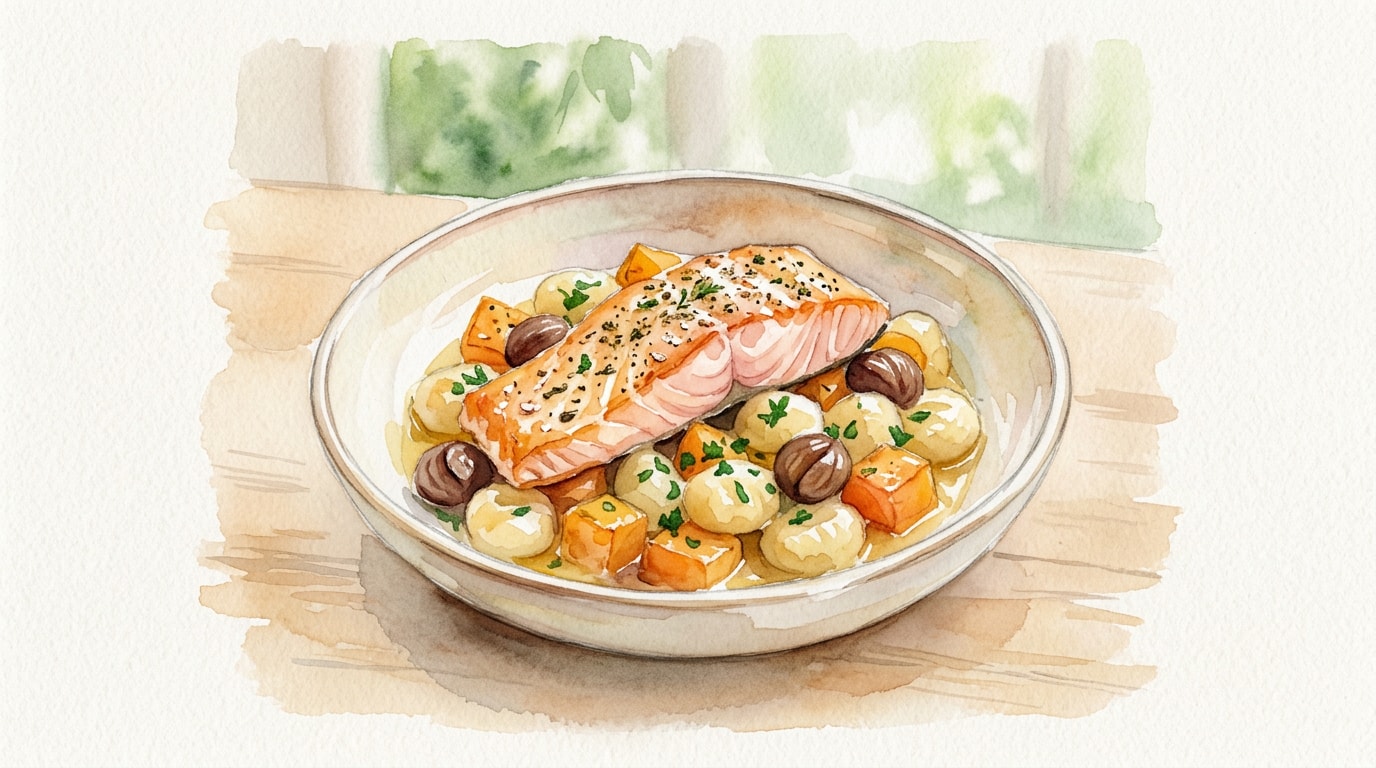
Remove the skillet from the heat and stir in the freshly squeezed lemon juice to cut the richness of the butter. Divide the gnocchi and vegetable mixture among four warmed plates. Top each mound with a piece of the roasted salmon.
Chef's Notes
- Baking potatoes on a bed of rock salt can draw out even more moisture, resulting in the fluffiest possible gnocchi dough. The drier the potato, the less flour you need.
- When making the brown butter, watch it closely once the foaming subsides. The milk solids transition from perfectly toasted and nutty to acrid and burnt in a matter of seconds.
- Allowing the riced potatoes to steam off for a few minutes before adding the flour is crucial. This cools them enough so the egg yolk will not scramble upon contact, while letting excess water evaporate.
- To scale this recipe, remember the classic gnocchi ratio: generally 4 parts baked potato flesh to 1 part flour by weight, binding with just enough egg yolk to bring it together.
Storage
Refrigerator: 2 days — Store cooked salmon separately from the gnocchi and vegetable mixture in airtight containers.
Freezer: 1 month — Freeze uncooked gnocchi only. Arrange on a floured tray until solid, then transfer to a sealed container. Cooked components do not freeze well.
Reheating: Reheat gnocchi and vegetables in a skillet with a splash of water and butter over medium heat. Gently warm salmon in a 120C oven until just heated through to prevent drying.
Troubleshooting
Gnocchi are dense and chewy instead of light and pillowy
Cause: The potatoes retained too much moisture, or the dough was overworked during kneading
Fix: Cannot be fixed structurally once boiled, but pan-frying them longer in the brown butter to create a crispy exterior will improve the overall eating experience
Prevention: Always bake rather than boil your potatoes, rice them while piping hot, and mix the flour in gently until just barely combined
Salmon is dry and chalky
Cause: The fish was left in the oven too long and overcooked
Fix: Flake the overcooked salmon gently and fold it directly into the brown butter sauce so it can absorb moisture and fat before serving
Prevention: Use a digital meat thermometer and pull the salmon at 52C (125F), keeping in mind carryover cooking will raise the temperature slightly as it rests
Cultural Context
Potato gnocchi became a staple in Northern Italy following the introduction of the potato to Europe in the 16th century. Historically considered a peasant dish, or cucina povera, it relies on inexpensive, hearty ingredients to provide deep sustenance. Pairing gnocchi with autumn harvest items like sweet butternut squash and earthy chestnuts reflects the deep Italian tradition of cooking strictly with seasonal, regional produce.


