Equipment
Ingredients
Dairy and Eggs
- 250 ml whole milk
- 250 ml heavy cream
- 5 egg yolks, separated
Flavor Base
- 250 g semisweet chocolate chips
- 50 g granulated sugar
- 5 ml vanilla extract
- 1 g salt, fine
Nutrition (per serving)
Nutrition is estimated per serving. Nutrients without complete source data are omitted.
Full nutrition
- Calories
- 161 kcal
- Protein
- 2 g
- Carbohydrates
- 14 g
- Fat
- 12 g
- Fiber
- 1 g
- Sugar
- 12 g
- Sodium
- 38 mg
- Saturated Fat
- 7 g
- Trans Fat
- 0 g
- Monounsaturated Fat
- 4 g
- Polyunsaturated Fat
- 1 g
- Cholesterol
- 82 mg
- Potassium
- 94 mg
- Calcium
- 39 mg
- Iron
- 0.6 mg
- Magnesium
- 20 mg
- Phosphorus
- 63 mg
- Zinc
- 0.5 mg
- Vitamin A
- 90 mcg
- Vitamin C
- 0 mg
- Vitamin D
- 0.7 mcg
- Vitamin E
- 0.3 mg
- Vitamin K
- 1 mcg
- Vitamin B6
- 0.0 mg
- Vitamin B12
- 0.2 mcg
- Thiamin
- 0.03 mg
- Riboflavin
- 0.10 mg
- Niacin
- 0.1 mg
- Folate
- 12 mcg
- Water
- 25 g
- Alcohol
- 0 g
- Caffeine
- 9 mg
Sources: USDA FoodData Central
Method
Measure the semisweet chocolate chips and place them into a large heatproof mixing bowl. Set the fine mesh strainer on top of the bowl.
In a separate medium bowl, combine the egg yolks and granulated sugar. Whisk vigorously until the mixture lightens in color and becomes slightly thick.
In the medium saucepan, combine the whole milk and heavy cream. Bring the mixture to a gentle simmer over medium heat until it reaches approximately 85°C (185°F). Remove from heat immediately.
Gradually pour about one third of the hot milk mixture into the egg yolks while whisking continuously. This tempers the yolks, gently raising their temperature without cooking them.
Pour the tempered egg mixture back into the saucepan with the remaining hot milk and cream. Cook over medium-low heat, stirring constantly with a silicone spatula in a figure-eight motion, until the custard thickens enough to coat the back of the spatula and reaches exactly 82°C to 84°C (180°F to 183°F). This step safely pasteurizes the eggs and creates the foundational creme anglaise.
Immediately remove the saucepan from the heat and pour the hot custard through the fine mesh strainer directly over the semisweet chocolate chips. Let it sit undisturbed for 60 seconds to soften and melt the chocolate.
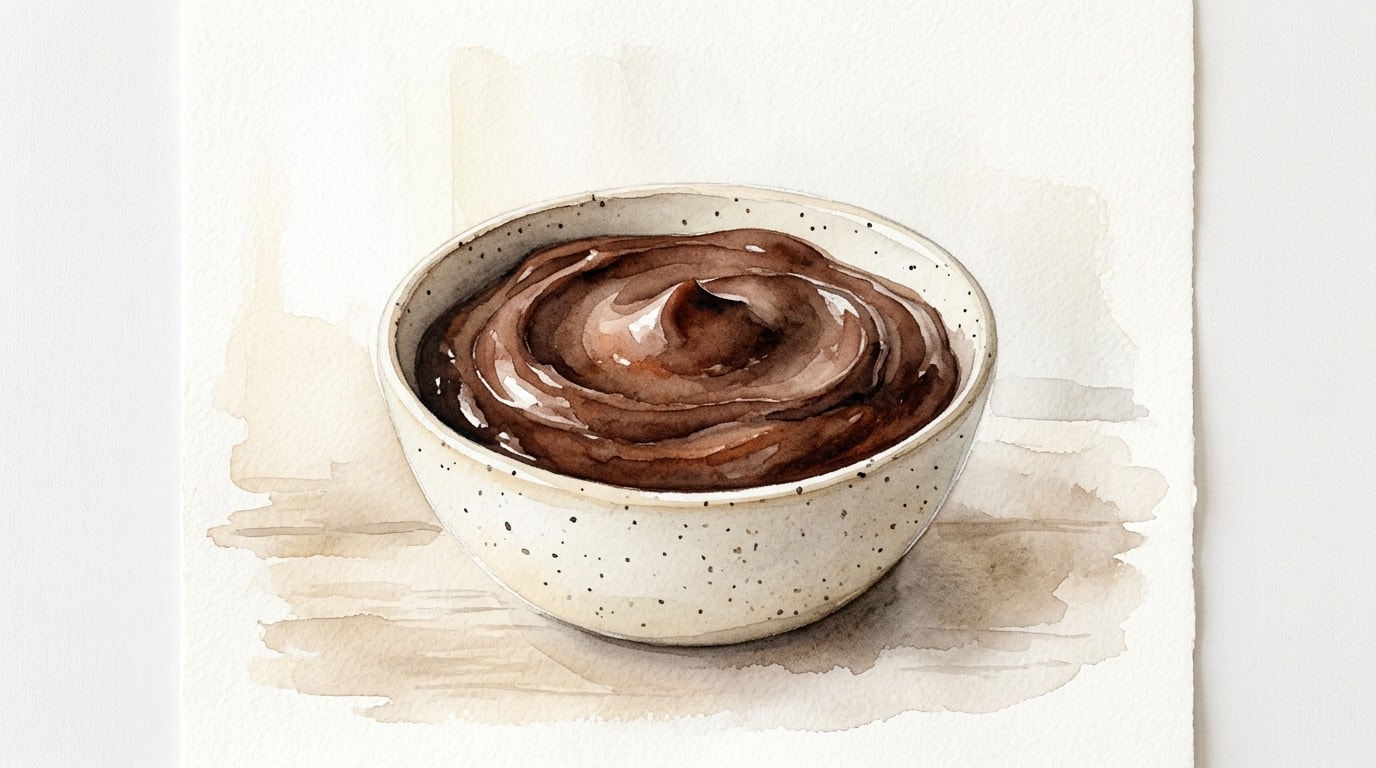
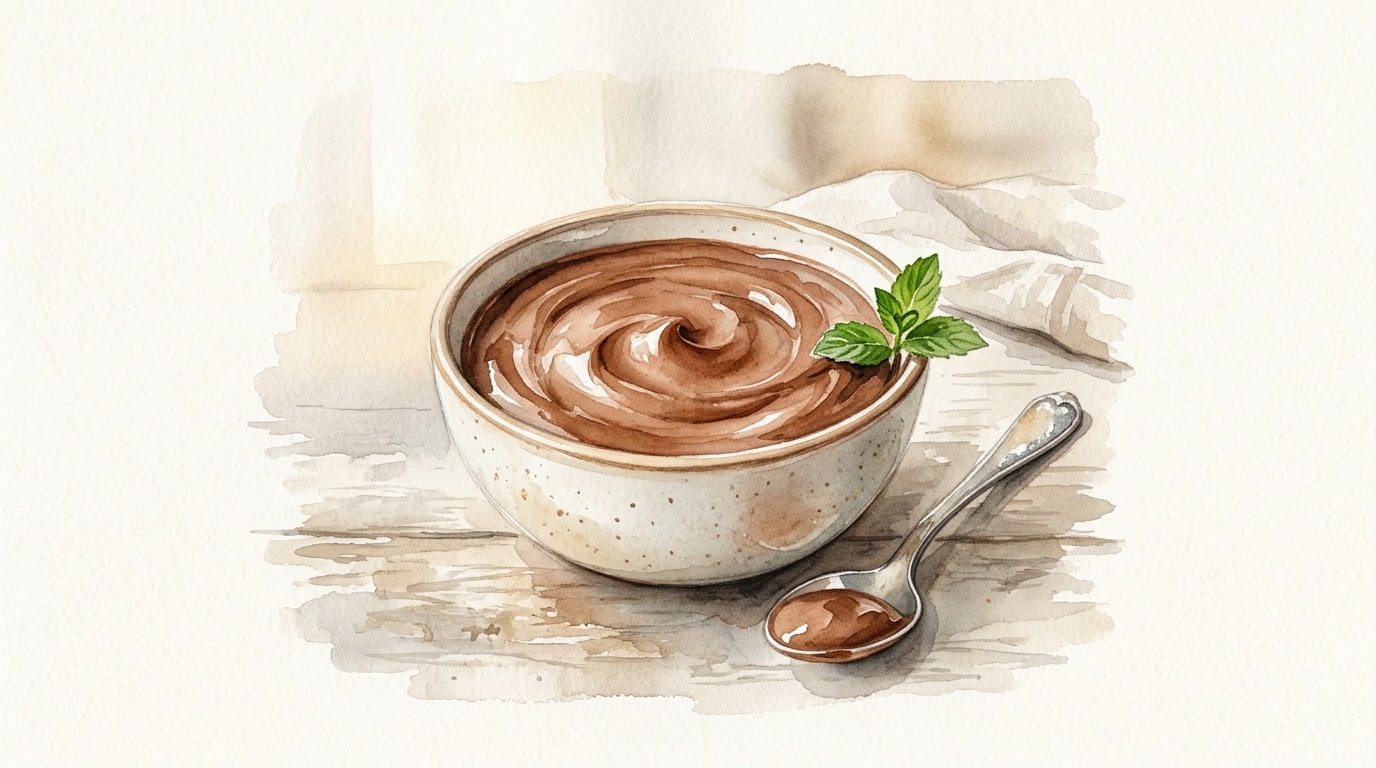
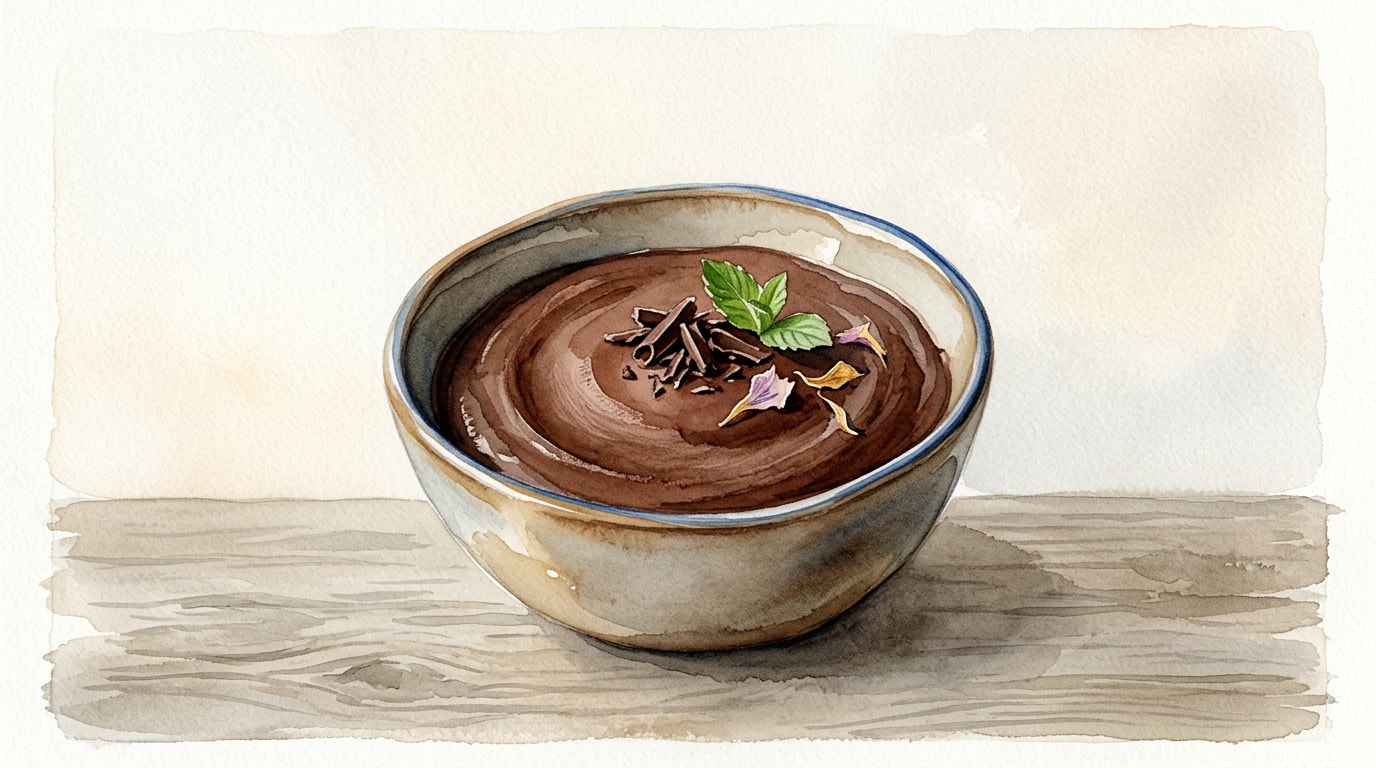
Add the vanilla extract and salt. Using an immersion blender, begin blending from the bottom center of the bowl. Once a dark, elastic core forms, slowly move the blender outward until the entire mixture is completely smooth and glossy. Keep the blade submerged at all times to avoid incorporating air bubbles.
Press a sheet of plastic wrap directly onto the surface of the cremeux to prevent a skin from developing. Chill in the refrigerator for at least 4 hours, or until completely set and firm enough to pipe into your chosen pastry.
Chef's Notes
- For the silkiest texture, an immersion blender is superior to a standard whisk as it perfectly homogenizes the fat and water molecules without aerating the mixture, yielding a denser, richer mouthfeel.
- The quality of your semisweet chocolate dictates the final flavor profile. Opt for couverture chocolate, which has a higher percentage of cocoa butter compared to standard baking chips, providing superior structural stability when chilled.
- Cooking the creme anglaise past 84 degrees Celsius will cause the egg proteins to seize. Always keep a digital food thermometer on hand to ensure precision.
- When piping this cream into cakes or macarons, allow it to sit at room temperature for 10 to 15 minutes to soften slightly if it has been thoroughly chilled overnight.
Storage
Refrigerator: 5 days — Keep covered with plastic wrap directly touching the surface to prevent a skin from forming.
Freezer: 1 month — Thaw overnight in the refrigerator. Texture may alter slightly; paddle gently with a spatula to restore smoothness before piping.
Troubleshooting
Custard has a grainy or curdled texture
Cause: The egg yolks were overheated during the cooking phase and coagulated
Fix: If only slightly grainy, vigorous blending with the immersion blender immediately after straining can rescue the texture. If fully scrambled, it cannot be fixed.
Prevention: Maintain medium-low heat, stir continuously, and remove from heat immediately upon reaching 84 degrees Celsius
Cremeux appears split, oily, or lacks gloss
Cause: The emulsion between the water in the custard and the fat in the chocolate broke, or the chocolate was too cold to melt thoroughly
Fix: Add a splash of cold heavy cream and blend continuously until the mixture comes back together into a tight, glossy emulsion.
Prevention: Ensure the custard is poured hot over the chocolate and allow it to sit for a full minute before blending
Cultural Context
Cremeux directly translates to creamy in French and represents a fundamental pillar of modern pastry construction. Born out of the desire for a filling richer than traditional pastry cream but structurally denser than a pure ganache, it leverages a classic creme anglaise base set perfectly with the cocoa butter naturally present in high-quality chocolate.