Equipment
Ingredients
Chicken
- 1200 g bone-in skin-on chicken thighs, rinsed, loose skin and excess fat trimmed
- 500 g chicken wings, rinsed
Aromatics
- 1 yellow onion, peeled and halved
- 1 leek, rinsed, white and pale green parts only, roughly chopped
- 80 g fresh ginger, scrubbed and smashed with the side of a knife
- 6 garlic, peeled and lightly crushed
Vegetables for the Broth
- 200 g carrots, scrubbed, cut into 5cm pieces
- 150 g celery stalks, cut into 5cm pieces
Citrus and Spices
- 1 large orange, peel removed in wide strips with a vegetable peeler (avoid white pith); juice reserved separately
- 3 bay leaves, dried
- 2 star anise, whole pods
- 4 g black peppercorns, whole, lightly cracked
- 15 g fine sea salt, plus more to taste
Liquid
- 3000 ml cold water, cold
Garnish
- 15 g fresh flat-leaf parsley, leaves chopped
- 2 scallions, thinly sliced on the diagonal
Nutrition (per serving)
Nutrition is estimated per serving. Nutrients without complete source data are omitted.
Full nutrition
Only basic nutrition values are available for this recipe. More detailed nutrient data is incomplete.
- Calories
- 907 kcal
- Protein
- 67 g
- Carbohydrates
- 19 g
- Fat
- 60 g
- Fiber
- 4 g
- Sugar
- 8 g
- Sodium
- 1463 mg
Sources: Aggregated Public Data, USDA FoodData Central
Method
Prepare the aromatics. Peel the onion and cut it in half. Trim the leek, halve it lengthwise, rinse well between the layers, and roughly chop the white and pale green parts. Scrub the ginger and smash it firmly with the flat side of your chef's knife to release its juices. Peel the garlic cloves and crush them lightly with the blade.
Prepare the citrus and vegetables. Use a vegetable peeler to remove the orange peel in four wide strips, taking care to leave the bitter white pith behind on the fruit. Set the peeled orange aside for juicing later. Scrub the carrots and celery and cut them into 5cm pieces. Juice the peeled orange and set the juice aside in a small bowl.
Rinse the chicken thighs and wings under cold running water and pat them dry with paper towels. Trim any loose skin or large pockets of fat from the thighs.
Combine the chicken, onion, leek, ginger, garlic, carrots, celery, orange peel strips, bay leaves, star anise, and peppercorns in the 8L stockpot. Pour in the cold water, making sure everything is submerged by at least 2cm. Set the pot over high heat and bring the liquid slowly to a boil, watching for foam to gather at the surface.
As soon as the liquid reaches a boil, drop the heat to the lowest setting that maintains a gentle simmer. Use a slotted spoon to skim off the grey foam and any pale fat that collects at the surface and discard it. Continue skimming for the first 10 minutes of simmering.
Partially cover the pot with the lid and simmer gently for 1 hour 30 minutes, stirring once or twice. The chicken should slip away from the bone and the broth should turn a pale, golden colour. Check the internal temperature of a thigh at its thickest point; it must read at least 74°C/165°F.
Use tongs or a slotted spoon to lift the chicken pieces out of the pot and transfer them to the large heatproof bowl to cool slightly. Leave the broth uncovered and simmer for another 15 minutes to concentrate the flavour.
Set the fine-mesh strainer over a large clean pot or heatproof bowl. Carefully pour the broth through the strainer, discarding the spent vegetables, aromatics, and spices. You should be left with roughly 2.5L of clear, golden broth.
When the chicken is cool enough to handle, pull the meat from the bones in bite-sized pieces and discard the bones, skin, and any gristle. Spoon off and discard the fat from the surface of the broth, then return the broth to the cleaned stockpot and bring it back up to a gentle simmer.
Season the broth with the 15g of fine sea salt, stirring to dissolve, then taste and adjust with more salt if needed. Pull the pot off the heat and stir in the reserved orange juice; adding the citrus at the end preserves its bright, fragrant top notes.
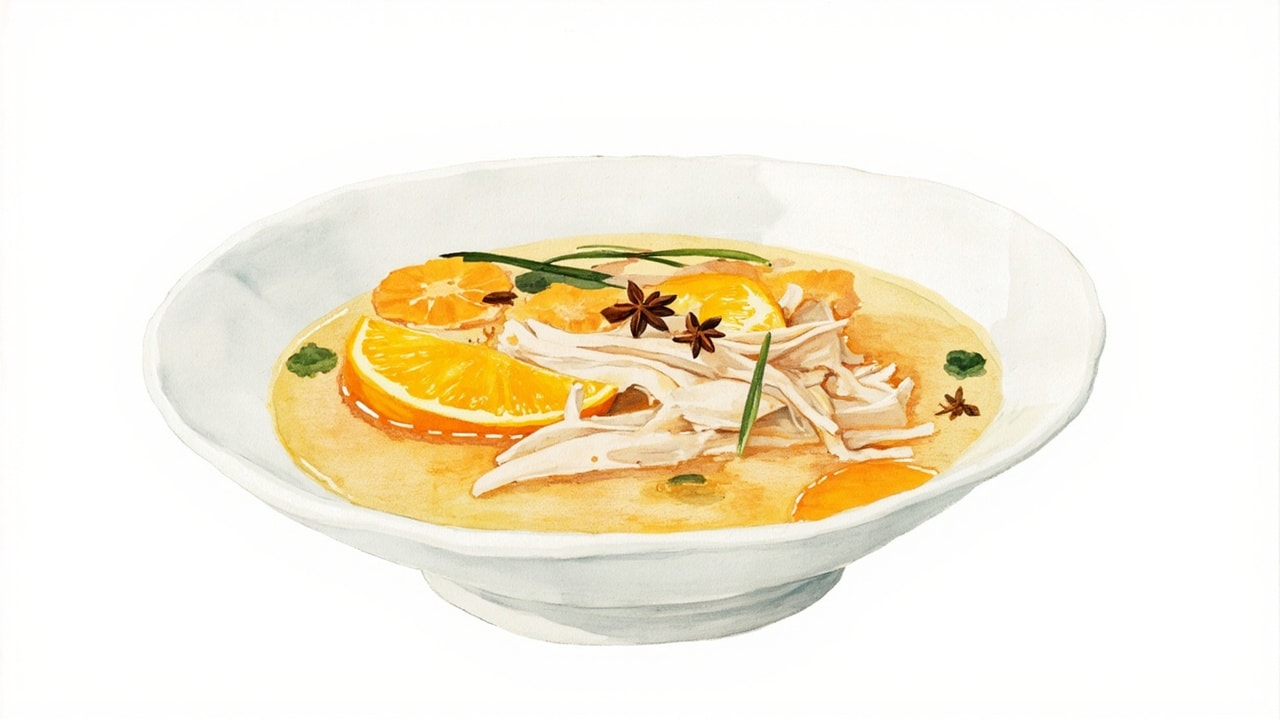
Ladle the broth and shredded chicken into warmed bowls. Scatter the chopped parsley and sliced scallions over the top. Serve immediately while steaming hot, with a final grind of black pepper at the table if you like.
Chef's Notes
- Cold water is your ally: starting with cold liquid lets proteins and impurities coagulate slowly and rise as foam, which you can skim away for a cleaner-tasting broth.
- Wings, backs, and feet are inexpensive powerhouses of gelatin. If you ever roast a chicken, freeze the carcass and add it here for an even silkier texture.
- Salt is added only at the end because salt concentration tightens proteins and slows flavour extraction if it sits in the pot from the start.
- The strained broth itself is a versatile base for the week: cook rice or noodles in it, use it to moisten grains, or pour it over roasted vegetables.
- Star anise is optional but quietly transformative; a single pod lends a faint liquorice warmth that plays beautifully against the citrus and ginger.
Storage
Refrigerator: 4 days — Cool to room temperature within 2 hours, then refrigerate in a covered container. Lift off the solidified fat cap before reheating.
Freezer: 3 months — Freeze the broth in 500ml portions for easy use as a base for other soups; freeze the shredded chicken meat separately to preserve its texture.
Reheating: Reheat gently on the stovetop over low heat until the broth reaches 74°C/165°F throughout. Do not boil vigorously.
Troubleshooting
Broth is cloudy and grey rather than clear and golden
Cause: The pot was boiled too vigorously, emulsifying fat and proteins into the liquid, or the foam was not skimmed off in the early minutes.
Fix: Chill the broth overnight, lift off the solidified fat, and gently reheat through a coffee filter or a paper-towel-lined strainer to clarify it further.
Prevention: Bring the pot up to temperature slowly, skim diligently for the first 10 minutes of simmering, and hold the liquid at a bare quiver rather than a rolling boil.
Broth tastes flat or watery
Cause: Insufficient simmer time, not enough bony pieces, or under-seasoning.
Fix: Simmer the strained broth down by a further 20 percent to concentrate flavour, then adjust salt and stir in the orange juice.
Prevention: Use a generous proportion of wings and skin-on thighs for collagen, simmer for the full 1 hour 30 minutes, and salt to taste at the end.
Orange flavour is bitter or soapy
Cause: Some of the white pith was cooked along with the peel, or the orange juice was boiled and lost its freshness.
Fix: Cannot be fully fixed once bitter pith compounds have infused. Dilute with additional unseasoned broth and add a little extra fresh orange juice to lift it.
Prevention: Peel the orange carefully leaving all pith behind, and only stir the fresh juice in off the heat at the very end.
Greasy layer on top of the finished broth
Cause: Skin-on chicken and wings released more fat than expected during the long simmer.
Fix: Skim with a ladle, or chill and lift off the solid fat layer before reheating.
Prevention: Trim excess skin before cooking, or chill the finished broth so the fat solidifies on top for easy removal.
Cultural Context
Across cultures, chicken broth has long straddled the line between food and remedy, from the Chinese ginger-chicken soup (鸡汤 ji tang) traditionally served to those recovering from illness, to the Italian brodo that anchors cucina povera, to the Ashkenazi 'Jewish penicillin' handed down through generations of home cooks. The pairing of orange and ginger here brings together the warming spice traditions of East Asia with the bright citrus notes common in Mediterranean broths, while the one-pot method honours a universal truth that the most nourishing meals are often the simplest.