Equipment
* optional
Ingredients
Aromatics and Vegetables
- 30 g unsalted butter
- 1 yellow onion, diced
- 4 celery ribs, sliced into 1cm pieces
- 2 carrots, peeled and diced
- 3 garlic cloves, minced
- 250 g frozen pearl onions
Liquid and Thickener
- 30 g all-purpose flour
- 750 ml low-sodium turkey or chicken broth
- 60 ml dry white wine
- 4 fresh thyme sprigs
- 1 bay leaf
- 5 g kosher salt
- 2 g black pepper, freshly ground
Turkey and Finishers
- 500 g cooked turkey meat, cut into 2cm chunks
- 150 g frozen peas
- 80 g dried cranberries
- 10 g fresh flat-leaf parsley, chopped
- 10 ml lemon juice, freshly squeezed
Nutrition (per serving)
Nutrition is estimated per serving. Nutrients without complete source data are omitted.
Full nutrition
Only basic nutrition values are available for this recipe. More detailed nutrient data is incomplete.
- Calories
- 317 kcal
- Protein
- 29 g
- Carbohydrates
- 29 g
- Fat
- 8 g
Sources: Aggregated Public Data, USDA FoodData Central
Method
Dice the yellow onion, slice the celery into 1cm pieces, peel and dice the carrots if using, and mince the garlic. Cut the cooked turkey into roughly 2cm chunks. Measure the broth, wine, and remaining ingredients so they are ready to add in sequence.
Melt the butter in a Dutch oven over medium heat (about 175°C / 350°F burner setting) until the foaming subsides. Add the diced onion, sliced celery, and the optional carrots. Sauté for 6 to 8 minutes, stirring occasionally, until the vegetables soften and the onion turns translucent.
Add the minced garlic and stir constantly for 30 seconds until fragrant, taking care not to let it brown.
Sprinkle the flour over the vegetables and stir with a wooden spoon until everything is evenly coated. Cook for 1 to 2 minutes, stirring constantly, until the raw flour smell dissipates and the mixture looks like a thick, pale paste.
Pour in the white wine and scrape the bottom of the pot with the wooden spoon to release any browned bits. Simmer for 1 minute until the wine reduces by about half.
Slowly pour in the broth while whisking continuously to prevent any lumps from forming. Add the thyme sprigs, bay leaf, salt, and pepper. Stir in the thawed pearl onions. Bring the pot to a gentle boil, then reduce the heat so the surface barely trembles (about 95°C / 205°F burner temperature).
Partially cover and simmer for 10 minutes, until the pearl onions are tender when pierced and the gravy has thickened enough to lightly coat the back of a spoon.
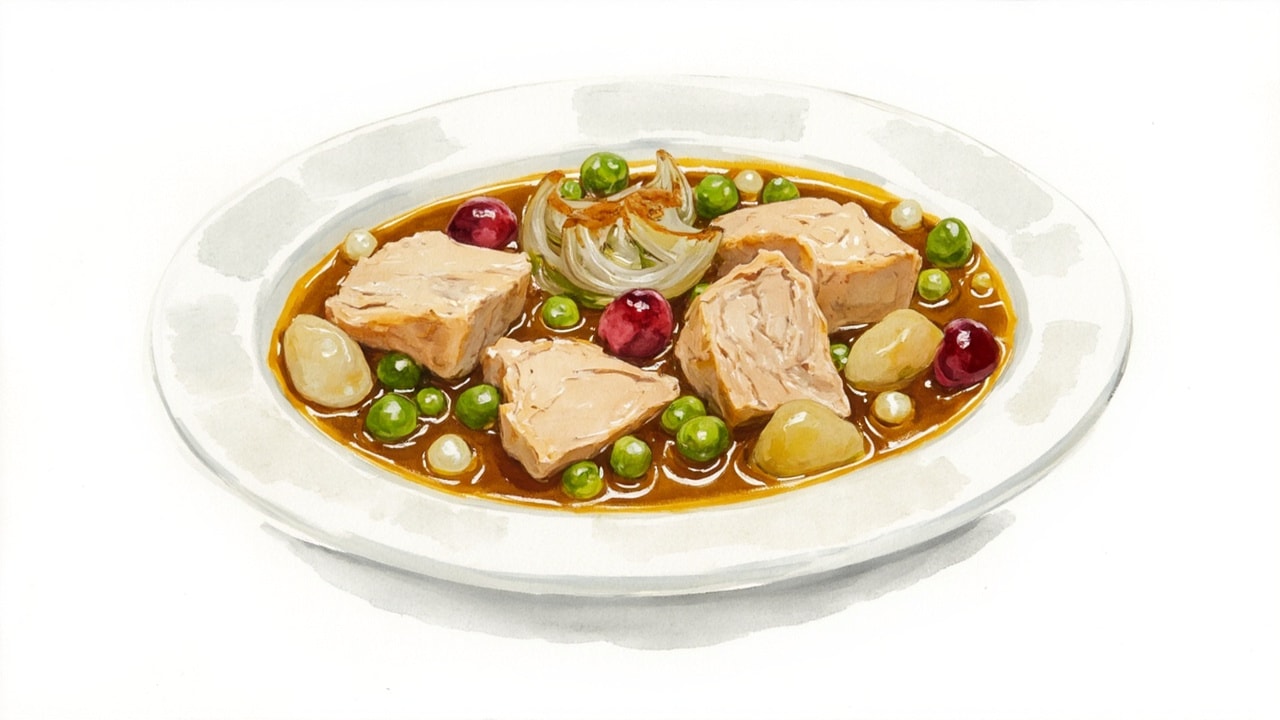
Add the cooked turkey chunks, frozen peas, and dried cranberries. Stir gently and simmer uncovered for 4 to 5 minutes, until the turkey is heated through to 74°C (165°F) and the peas are bright green and tender.
Remove the pot from the heat. Discard the thyme stems and bay leaf. Stir in the chopped parsley and fresh lemon juice. Taste and adjust with more salt and pepper as needed.
Ladle into warmed bowls and serve immediately, with crusty bread, buttered egg noodles, or a scoop of mashed potatoes on the side.
Chef's Notes
- A combination of white and dark leftover turkey gives the best balance of flavor and moisture; dark meat stays especially tender even when reheated.
- Frozen pearl onions are a major time saver and cook evenly without the tedious peeling that fresh ones require.
- Adding the lemon juice off heat preserves its bright aroma; do not skip it as it cuts through the richness of the gravy and balances the sweet cranberries.
- If your leftover turkey is already well seasoned, reduce the initial salt to 3g and adjust at the end after tasting.
- For deeper flavor, deglaze with 15ml brandy or cognac alongside, or instead of, the white wine.
Storage
Refrigerator: 4 days — Cool to room temperature within 2 hours, then refrigerate in an airtight container.
Freezer: 3 months — Freeze without peas and parsley; stir in fresh peas and herbs when reheating for best texture.
Reheating: Reheat gently on the stovetop over medium-low heat to 74°C (165°F), stirring occasionally. Add a splash of broth if the stew has thickened.
Troubleshooting
Stew is too thin and watery
Cause: Insufficient reduction, not enough flour, or the vegetables released more liquid than expected
Fix: Whisk 10g cornstarch into 30ml cold water and stir into the simmering stew; cook 2 minutes until thickened
Prevention: Measure the flour accurately and simmer uncovered for the full 10 minutes in step 7
Stew is too thick or gummy
Cause: Too much flour, or the stew reduced for too long
Fix: Stir in additional warm broth, 60ml at a time, until the desired consistency is reached
Prevention: Use a light hand when measuring flour and stop cooking once the gravy coats a spoon
Turkey pieces are tough, dry, or stringy
Cause: Turkey was added too early and overcooked, or the meat was already overcooked from the original roast
Fix: Cannot be fully reversed; reserve turkey for the very end in future batches and stir gently to avoid shredding
Prevention: Add the turkey only in the final 5 minutes so it just heats through
Stew tastes flat or one-dimensional
Cause: Insufficient salt, lack of acid, or the cranberry sweetness is unbalanced
Fix: Add a pinch of salt, a squeeze of lemon, or a small splash of wine to brighten the overall flavor
Prevention: Season in layers during cooking and finish with acid and fresh herbs
Pearl onions remain crunchy or sharp
Cause: Onions were not simmered long enough, or were added at the same time as the turkey
Fix: Remove the turkey and peas with a slotted spoon, simmer the gravy and onions 5 minutes longer, then return the turkey and peas to warm through
Prevention: Simmer the pearl onions for the full 10 minutes before adding the turkey and peas
Cultural Context
Transforming leftover roast poultry into a one-pot stew is a long-standing tradition in many kitchens, and in American homes it is especially common after Thanksgiving when roasted turkey is abundant. This version reflects the classic Thanksgiving flavor palette, pairing sweet-tart cranberries and earthy thyme with humble pot-stew staples like pearl onions, peas, and celery. It is both a practical and celebratory way to extend the holiday meal into a second comforting dinner during the cooler months.