
Equipment
Ingredients
Sriracha Syrup
- 30 ml maple syrup
- 15 ml sriracha sauce
Omelet Base
- 3 eggs, room temperature
- 15 ml water
- 1 g salt
Filling & Garnish
- 60 g vegetarian kimchi, chopped and well-drained
- 15 g green onions, thinly sliced, white and green parts separated
- 10 ml neutral oil
- 5 ml toasted sesame oil
Nutrition (per serving)
Nutrition is estimated per serving. Nutrients without complete source data are omitted.
Full nutrition
- Calories
- 462 kcal
- Protein
- 20 g
- Carbohydrates
- 27 g
- Fat
- 30 g
- Fiber
- 2 g
- Sugar
- 23 g
- Sodium
- 1277 mg
- Saturated Fat
- 7 g
- Trans Fat
- 0 g
- Monounsaturated Fat
- 7 g
- Polyunsaturated Fat
- 5 g
- Cholesterol
- 558 mg
- Potassium
- 370 mg
- Calcium
- 129 mg
- Iron
- 3.2 mg
- Magnesium
- 30 mg
- Phosphorus
- 311 mg
- Zinc
- 2.5 mg
- Vitamin A
- 271 mcg
- Vitamin C
- 8 mg
- Vitamin D
- 3.0 mcg
- Vitamin E
- 1.7 mg
- Vitamin K
- 32 mcg
- Vitamin B6
- 0.3 mg
- Vitamin B12
- 1.3 mcg
- Thiamin
- 0.09 mg
- Riboflavin
- 1.08 mg
- Niacin
- 0.2 mg
- Folate
- 80 mcg
- Water
- 152 g
Sources: Aggregated Public Data, USDA FoodData Central
Method
In a small bowl, combine the maple syrup and sriracha. Mix thoroughly until perfectly smooth and set aside.
Crack the eggs into a mixing bowl. Add the water and salt, then whisk vigorously until the mixture is completely homogenous and lightly frothy.
Place a non-stick skillet over medium-high heat and add the neutral oil and toasted sesame oil. Once the oil is shimmering, add the chopped kimchi and the white parts of the green onions. Sauté until the moisture evaporates and the kimchi begins to caramelize slightly.
Reduce the heat to medium-low. Pour the beaten eggs directly over the sautéed kimchi. Using a spatula, gently push the set edges of the egg toward the center of the pan, tilting the pan to allow the raw egg to flow underneath into the empty spaces. Cook until the bottom is set but the top remains slightly wet and glossy.
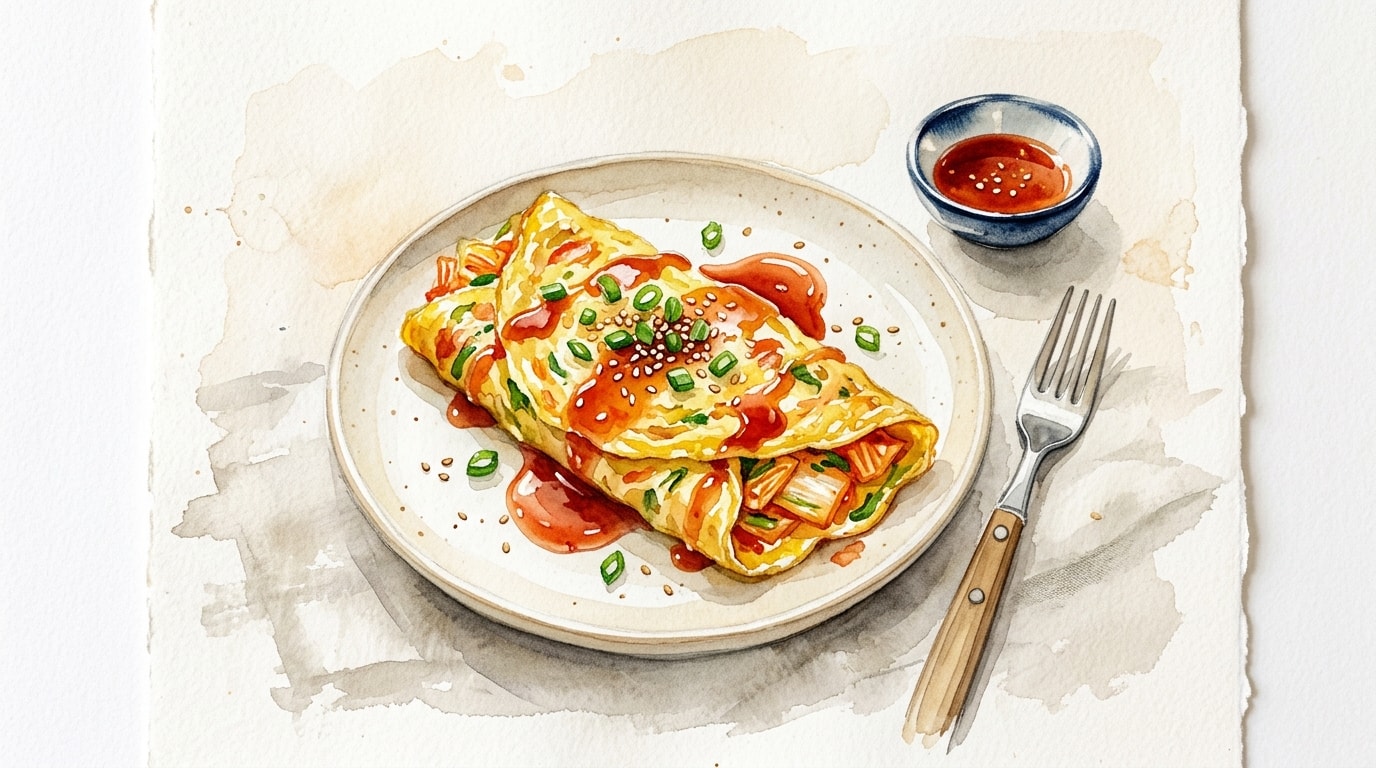
Using the spatula, fold one half of the omelet over the other. Slide it onto a warm serving plate. Drizzle generously with the prepared sriracha syrup and garnish with the reserved green parts of the green onions.
Chef's Notes
- Adding a small amount of water rather than milk or cream to the eggs creates steam when it hits the hot pan, resulting in a lighter, fluffier texture without weighing down the omelet.
- Traditional kimchi relies on fermented shrimp paste or fish sauce for its distinctive umami flavor. Always verify the label explicitly states vegetarian or vegan if you are serving individuals with strict dietary requirements.
- To achieve a true French-style creamy interior (baveuse), remove the pan from the heat while the top layer of egg is still quite runny. The residual heat trapped inside after folding will gently finish cooking the center.
- If raw or softly cooked eggs present a health risk to the diner, ensure the eggs are fully set and opaque before folding, or utilize pasteurized eggs for absolute safety.
Storage
Refrigerator: 1 day — Best eaten fresh. Syrup can be stored separately for up to 1 month.
Reheating: Microwave in 15-second bursts until just warmed through.
Troubleshooting
Omelet is watery or weeping liquid onto the plate
Cause: The kimchi was not drained properly and was not sautéed long enough to evaporate excess moisture
Fix: Blot the excess liquid on the plate with a clean paper towel before serving
Prevention: Squeeze excess brine from the kimchi before chopping, and sauté until the pan looks completely dry before adding eggs
Eggs stick to the pan and tear when folding
Cause: Pan coating is worn, or heat was too high causing the egg proteins to bond with the metal
Fix: Scramble the mixture instead to create a kimchi egg scramble
Prevention: Use a well-maintained non-stick pan and ensure the oil coats the entire bottom evenly before adding eggs
Cultural Context
While the folded omelet is a global culinary staple with roots in French technique, this quick dish heavily borrows from Korean flavor profiles. The combination of fermented, umami-dense kimchi and eggs is deeply comforting and widely enjoyed in Korean cooking, most notably in kimchi bokkeumbap (kimchi fried rice) topped with a fried egg, or in gyeran-mari (rolled omelet). The addition of a sriracha-maple syrup introduces a modern, fusion-style contrast of sticky sweetness and sharp chili heat.


