Equipment
* optional
Ingredients
Gnocchi Dough
- 600 g floury potatoes (e.g., russet or yukon gold), whole, unpeeled, scrubbed
- 180 g 00 flour or all-purpose flour, plus a small extra handful for dusting
- 1 egg yolk, large, room temperature
- 8 g fine sea salt
- ½ g grated nutmeg
Prune Filling
- 200 g pitted prunes
- 150 ml vin santo, for poaching the prunes
- 50 g granulated sugar
- 1 vanilla bean, split lengthwise with seeds scraped out
- 1 cinnamon stick
Vin Santo and Foie Gras Sauce
- 150 g raw foie gras (deveined), fresh, deveined lobe or grade B pieces, brought to cool room temperature for 15 minutes
- 30 g shallot, peeled and minced
- 250 ml vin santo, for the sauce
- 200 ml low-sodium chicken or veal stock
- 50 g unsalted butter, cold, cut into 1cm cubes
- fine sea salt
- g white pepper
Garnish
- 30 g hazelnuts, skinned, toasted, and coarsely chopped
- 16 g fresh chervil or microgreens
- flaky sea salt
Nutrition (per serving)
Nutrition is estimated per serving. Nutrients without complete source data are omitted.
Full nutrition
Only basic nutrition values are available for this recipe. More detailed nutrient data is incomplete.
- Calories
- 881 kcal
- Protein
- 17 g
- Carbohydrates
- 121 g
- Fat
- 32 g
Sources: Aggregated Public Data, USDA FoodData Central
Method
Heat the oven to 190°C (375°F). Pierce each unpeeled potato several times with a fork and bake directly on the oven rack until a thin knife slips in without resistance, about 60 minutes.
While the potatoes bake, combine the pitted prunes, 150ml vin santo, sugar, the split vanilla bean with its scraped seeds, and the cinnamon stick in a small saucepan. Bring to a gentle simmer over medium-low heat and cook until the prunes are plump and very tender, about 12 minutes.
Drain the prunes through a fine mesh strainer set over a small bowl, reserving every drop of the syrup. Pat the prunes dry with paper towels, finely chop them on a cutting board, and return them to a small bowl. Stir in 1 tablespoon of the reduced syrup to bind the fruit into a spreadable paste. Discard the cinnamon stick and vanilla pod.
When the potatoes are just cool enough to handle but still very warm, peel them and pass the flesh through a potato ricer into a large mixing bowl. Spread the riced potato in an even layer and let it steam-dry for 5 minutes to release excess surface moisture.
Sprinkle the salt and nutmeg (if using) over the warm potato, add the egg yolk, then dust on most of the flour. Fold gently with a spatula or your fingertips just until the dough holds together and no dry streaks remain. Add only the extra flour needed to make the dough feel cohesive and only faintly tacky.
Turn the dough onto a lightly floured surface, gather it into a thick log, and cut the log into 6 equal pieces with a bench scraper. Drape a clean kitchen towel over the pieces while you shape to keep the surface from drying out.
Roll each piece under lightly floured palms into a rope about 2 cm thick. Cut each rope into 4 equal pieces for a total of 24 portions, then flatten each piece into a round about 4 cm wide.
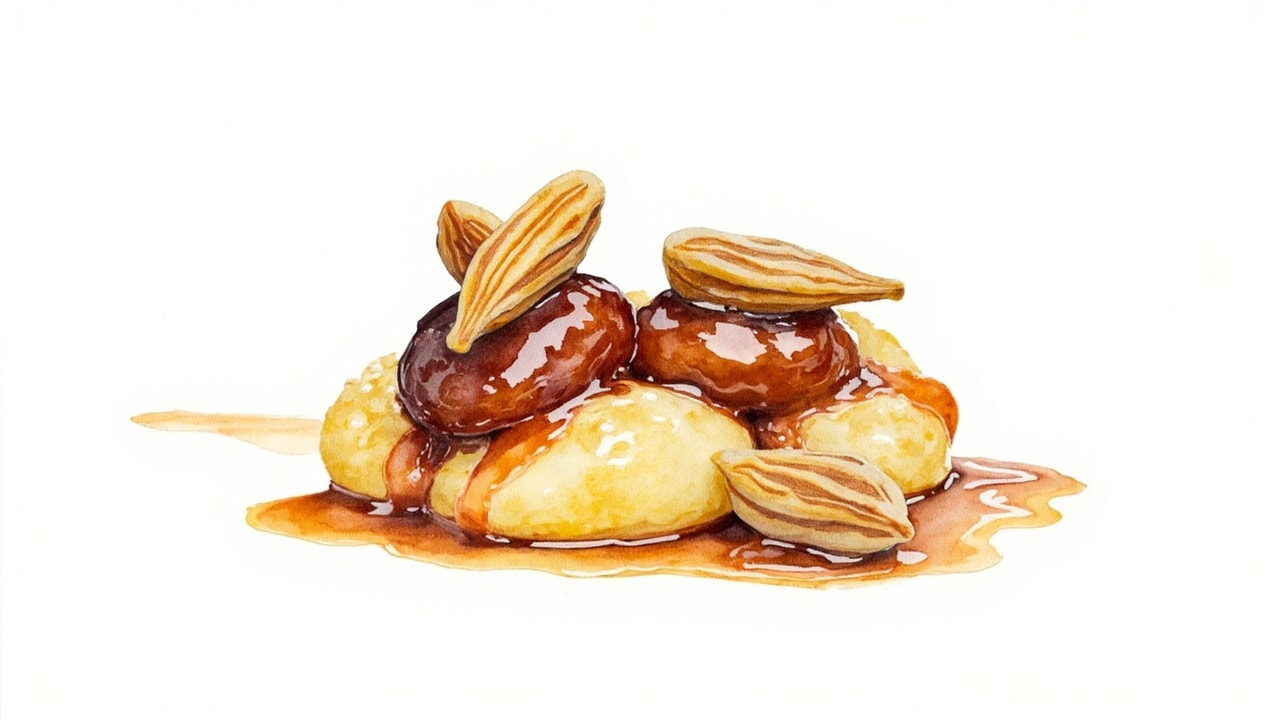
Spoon about 1 heaped teaspoon (around 9g) of the prune filling into the center of each round. Fold the dough up and around the filling, pinch firmly to seal, then roll briefly between floured palms into a smooth oval. Press each oval gently onto the back of a fork to imprint ridges, then place on a parchment-lined tray. Repeat with all 24 portions.
Cover the formed gnocchi loosely with plastic wrap and refrigerate at least 10 minutes, or while you make the sauce, to firm the seals and prevent filling leakage in the boiling water.
Pour 250ml vin santo into a small saucepan over medium heat and reduce by half, about 5 minutes. Add the reserved prune poaching syrup and the stock, then continue to simmer until the sauce is glossy, lightly syrupy, and just coats the back of a spoon, about 8 more minutes.
While the sauce reduces, slice the foie gras into 8 even portions of about 18g each. Season both sides lightly with salt and white pepper. Heat a dry cast iron or stainless steel skillet over medium-high until a drop of water skitters across the surface.
Place the foie gras slices in the hot pan with no added fat; the liver will release its own abundant fat. Sear undisturbed for 45 to 60 seconds until a deep mahogany crust forms, flip carefully, and cook 20 to 30 seconds more. Transfer to a warm plate and reserve.
Pour off all but about 1 tablespoon of the rendered foie gras fat from the skillet. Add the minced shallot and sweat over medium-low heat until translucent and soft, about 3 minutes, scraping up any caramelized bits left from the foie gras.
Stir the shallot and any pan scrapings into the reduced vin santo sauce. Remove the saucepan from the heat and whisk in the cold butter cubes a few at a time, allowing each addition to fully emulsify before adding the next, until the glaze is glossy and slightly thickened. Adjust with salt and white pepper to taste.
Bring a medium saucepan of generously salted water to a gentle boil. Slide the chilled gnocchi into the water in small batches of no more than 6 at a time. When they float to the surface, cook 2 minutes more for a tender, just-set interior.
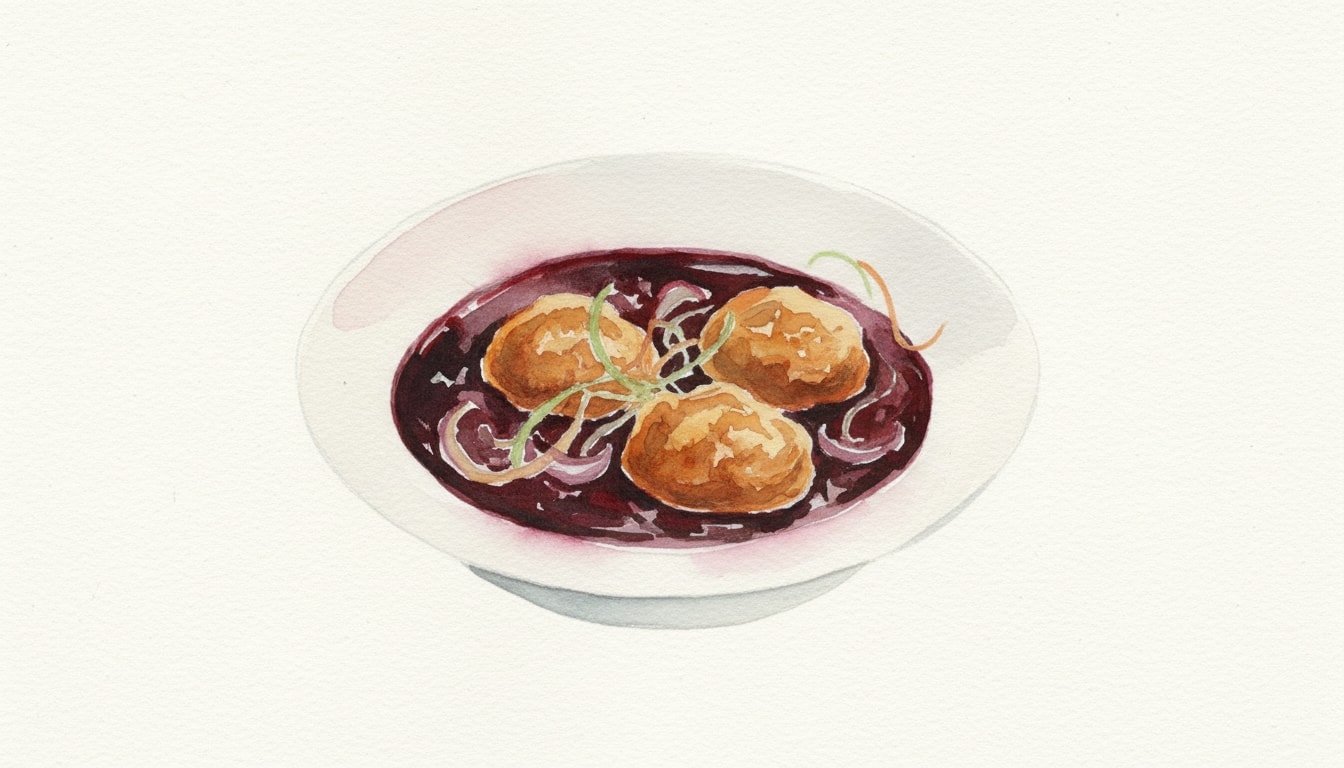
Lift the cooked gnocchi from the water with a slotted spoon, allowing excess water to drip off, and divide between 4 warmed shallow bowls. Spoon the warm vin santo glaze around and lightly over the gnocchi, then arrange 2 seared foie gras slices beside each portion.
Scatter the toasted hazelnuts and chervil over each plate, finish with a small pinch of flaky sea salt if using, and serve immediately while everything is warm.
Chef's Notes
- Baking the potatoes in their skins (rather than boiling) gives a drier flesh with less water absorption, which is essential for a filled gnocchi that holds its seal in boiling water.
- Use the minimum flour that brings the dough together. Adding more out of caution is the most common cause of heavy, leaden gnocchi; the dough should feel only faintly tacky.
- Chilling the filled gnocchi before cooking is non-negotiable here: it firms the dough seal and dramatically reduces filling leaks during boiling.
- Sear foie gras in a dry, very hot pan with no added fat. The liver renders plenty of rich fat on its own, which becomes the cooking medium for the shallot and helps emulsify the final sauce.
- Reducing the vin santo separately before adding the stock concentrates its honeyed, raisin-like aromatics. The two-stage reduction creates noticeably more depth than a single combined reduction.
Storage
Refrigerator: 1 day — Best consumed the day cooked; store leftover cooked gnocchi and sauce separately. Gnocchi texture deteriorates quickly once boiled and refrigerated.
Freezer: 1 month — Freeze raw, formed gnocchi only on a parchment-lined tray until firm, then transfer to a sealed freezer bag. Cooked gnocchi and the butter-based sauce do not freeze well.
Reheating: Briefly simmer leftover or frozen gnocchi in salted simmering water for 2 to 3 minutes until heated through. Rewarm the sauce gently over low heat without boiling to preserve the emulsified butter; whisk briefly before plating.
Troubleshooting
Gnocchi fall apart or leak dark filling into the boiling water
Cause: The dough was too wet, overworked, or pinched too loosely around the filling.
Fix: Cannot be fully repaired once the seals break. Lift out intact gnocchi to serve, and reserve the cloudy cooking liquid as a quick broth base for a small soup.
Prevention: Bake (rather than boil) the potatoes, fold flour in only until just combined, and chill the shaped gnocchi for at least 10 minutes before cooking.
Gnocchi are dense, gummy, or rubbery
Cause: Too much flour was added or the dough was overworked, developing excess gluten.
Fix: Cannot be reversed. Use leftover dough rolled thinner as a pasta, or shape and bake it as a gnocchi gratin.
Prevention: Weigh the flour precisely and fold only until the dough just holds together. Keep tools and hands barely floured rather than dusting heavily.
Sauce breaks and looks greasy or separated
Cause: The pan was too hot when the cold butter was added, or the butter was added too quickly.
Fix: Whisk 1 tablespoon of very hot stock into the broken sauce over low heat to re-emulsify. If it still separates, briefly process with an immersion blender.
Prevention: Mount the butter off direct heat a few cubes at a time, whisking steadily between additions, and keep the sauce below a simmer.
Foie gras sticks and tears when flipped
Cause: The pan was not hot enough, or the slices were moved before a crust formed.
Fix: Cannot be fully repaired. Crumble any torn slices and use them as a garnish over the finished plates.
Prevention: Preheat the pan thoroughly without oil, and resist flipping until a deep crust has set.
Filling seeps out while shaping the gnocchi
Cause: The poached prunes were not patted dry or chopped finely enough, leaving excess moisture and large chunks.
Fix: Cannot be fixed once the filling spreads. Chill the paste briefly in the freezer to firm it, then reform using smaller portions.
Prevention: Pat the poached prunes thoroughly dry, chop them finely, and bind them with a small amount of the reduced syrup into a thick paste.
Cultural Context
Potato gnocchi traces back to Roman kitchens, where the Latin word knoll, meaning lump, gave the dish its name and peasant cooks transformed humble starches into hearty meals. The pairing of dried prunes with rich proteins reflects Tuscan traditions of balancing sweet and savory, especially during autumn and winter celebrations. Vin santo, the region's treasured dessert wine traditionally dunked into cantucci biscuits, finds a modern savory expression here alongside foie gras in a quiet bridge between Italian and French regional cuisines.