
Equipment
Ingredients
Vegetable Topping
- 530 g fennel, julienned
- 450 g red pepper, sliced into small pieces
- 225 g tomato, chopped
- 8 black greek olives, pitted and chopped
- 5 ml olive oil
Polenta Base
- 180 g instant polenta
- 825 ml vegetable broth
- 55 g parmigiano reggiano cheese, grated
- ½ g salt
- black pepper, freshly ground
Nutrition (per serving)
Nutrition is estimated per serving. Nutrients without complete source data are omitted.
Full nutrition
- Calories
- 663 kcal
- Protein
- 24 g
- Carbohydrates
- 115 g
- Fat
- 14 g
- Fiber
- 18 g
- Sugar
- 27 g
- Sodium
- 1948 mg
- Saturated Fat
- 5 g
- Monounsaturated Fat
- 5 g
- Polyunsaturated Fat
- 2 g
- Cholesterol
- 19 mg
- Potassium
- 2082 mg
- Calcium
- 514 mg
- Iron
- 8.3 mg
- Magnesium
- 131 mg
- Phosphorus
- 512 mg
- Zinc
- 2.8 mg
- Vitamin A
- 655 mcg
- Vitamin C
- 337 mg
- Vitamin D
- 0.1 mcg
- Vitamin E
- 6.5 mg
- Vitamin K
- 189 mcg
- Vitamin B6
- 1.1 mg
- Vitamin B12
- 0.3 mcg
- Thiamin
- 0.78 mg
- Riboflavin
- 0.78 mg
- Niacin
- 9.6 mg
- Folate
- 382 mcg
- Water
- 989 g
Sources: USDA FoodData Central
Method
Trim the branches and base from the fennel bulb, slice into thin rounds, and then cut into julienne strips.
Heat olive oil in a nonstick skillet over medium-high heat (approx 200°C/400°F).
Add the fennel to the skillet and cook until it begins to soften and take on a brown color.
Seed and slice the red pepper into small pieces.
Add the peppers to the fennel and sauté over medium heat (approx 150°C/300°F) until they begin to soften.
Add the chopped tomatoes to the skillet, cover with a lid, and simmer on low heat until the vegetables are tender.
Stir in the pitted and chopped olives and continue simmering while you prepare the polenta.
In a separate pot, bring the vegetable broth to a boil (100°C/212°F).
Slowly pour the polenta into the boiling broth while whisking constantly to prevent lumps.
Reduce heat to medium-high and cook for 2 minutes, stirring frequently until the mixture thickens.
Stir in the grated Parmigiano Reggiano, salt, and black pepper.
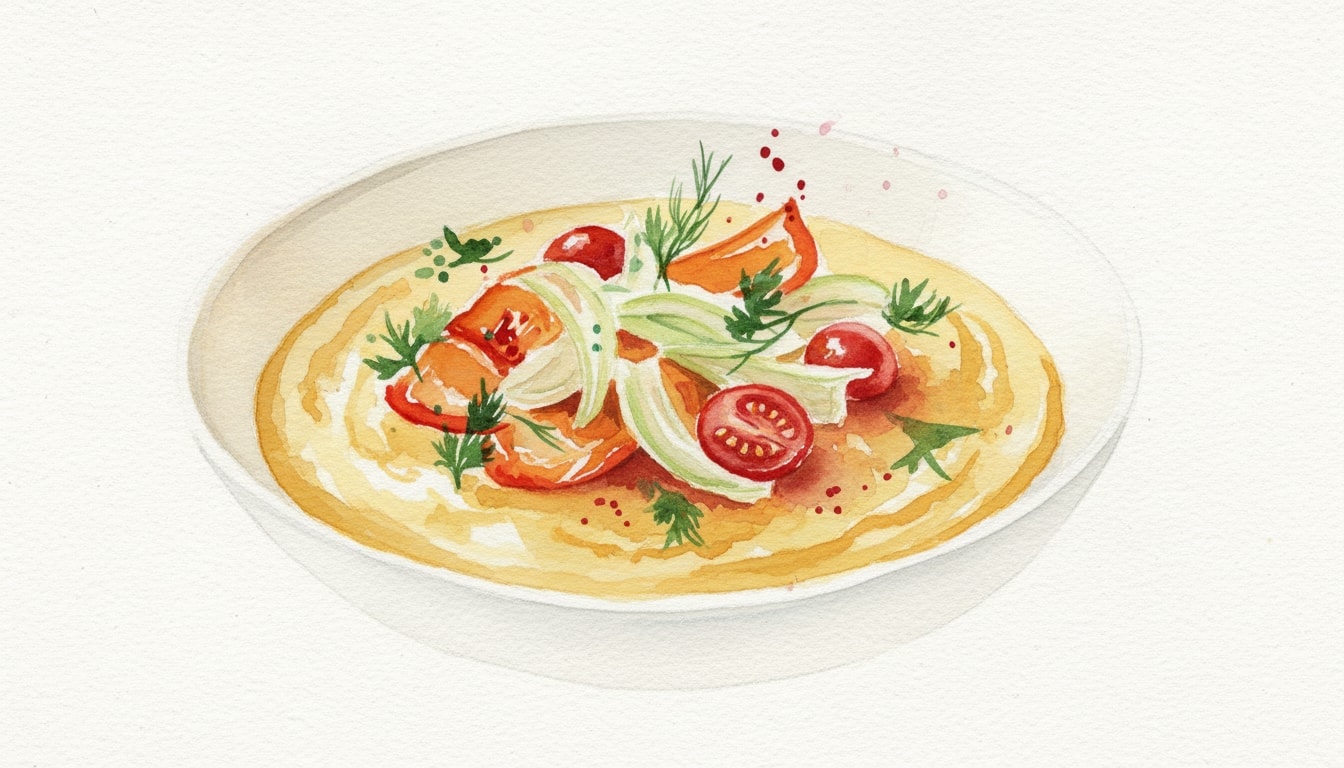
Divide the polenta between bowls and top with the sautéed vegetable mixture.
Chef's Notes
- For a richer polenta, consider using a combination of vegetable broth and milk or cream.
- Don't overcrowd the pan when sautéing the vegetables; cook in batches if necessary to ensure proper browning and softening.
- Taste and adjust seasoning for both the polenta and the vegetable topping before serving. Freshly ground black pepper makes a significant difference.
- If using stone-ground polenta instead of instant, follow package directions as cooking times will vary significantly.
Storage
Refrigerator: 3 days — Store polenta and vegetable topping in separate containers to maintain texture.
Reheating: Reheat polenta on the stovetop with a splash of water or broth, whisking to restore creaminess.
Troubleshooting
Polenta is lumpy
Cause: The polenta was added too quickly or not whisked enough during the initial boil.
Fix: Use an immersion blender to process the polenta until smooth.
Prevention: Pour the polenta in a very slow, steady stream while whisking vigorously.
Vegetables are sticking or burning
Cause: Heat is too high or the skillet lid is not sealing properly, causing moisture loss.
Fix: Add 15-30ml of broth or water to the skillet to deglaze and restore moisture.
Prevention: Keep the heat on low during the simmer phase and ensure the lid fits tightly.
Cultural Context
Polenta, a staple dish originating from Northern Italy, has a rich history as a peasant food, made from boiled cornmeal. Its versatility allows it to be served as a creamy porridge or a firm base, making it adaptable to various regional Italian cuisines. This preparation, with its vibrant vegetables, reflects the abundant produce found in Italian gardens and markets.


