
Equipment
Ingredients
Scallops
- 350 g fresh sea scallops, side muscle removed
- 3 g kosher salt
- 1 g black pepper, freshly ground
Searing and Sauce
- 15 ml olive oil
- 30 g unsalted butter
- 2 garlic, minced
- 1 g red pepper flakes
- 15 ml lemon juice, freshly squeezed
- 5 g fresh parsley, finely chopped
Nutrition (per serving)
Nutrition is estimated per serving. Nutrients without complete source data are omitted.
Full nutrition
- Calories
- 304 kcal
- Protein
- 22 g
- Carbohydrates
- 8 g
- Fat
- 21 g
- Fiber
- 1 g
- Sugar
- 0 g
- Sodium
- 1272 mg
- Saturated Fat
- 9 g
- Trans Fat
- 0 g
- Monounsaturated Fat
- 9 g
- Polyunsaturated Fat
- 1 g
- Cholesterol
- 74 mg
- Potassium
- 403 mg
- Calcium
- 28 mg
- Iron
- 1.5 mg
- Magnesium
- 42 mg
- Phosphorus
- 596 mg
- Zinc
- 1.7 mg
- Vitamin A
- 115 mcg
- Vitamin C
- 7 mg
- Vitamin E
- 1.5 mg
- Vitamin K
- 47 mcg
- Vitamin B6
- 0.2 mg
- Vitamin B12
- 2.5 mcg
- Thiamin
- 0.03 mg
- Riboflavin
- 0.04 mg
- Niacin
- 1.3 mg
- Folate
- 34 mcg
- Water
- 158 g
Sources: Aggregated Public Data, USDA FoodData Central
Method
Place scallops on a plate lined with paper towels. Pat them completely dry on all sides. Moisture is the enemy of a good sear. If present, peel off the tough crescent-shaped muscle on the side of each scallop.
Season the scallops generously on both sides with kosher salt and freshly ground black pepper.
Heat a heavy skillet over medium-high heat. Add the olive oil. Allow the oil to heat until it shimmers and you see the first wisps of smoke.
Carefully add the scallops to the skillet, making sure they do not touch. Sear without moving them for 2 minutes, allowing a deep, golden-brown crust to form.
Flip the scallops. Immediately add the butter, minced garlic, and red pepper flakes to the pan. Cook for 1 to 1.5 minutes, tilting the pan and using a spoon to constantly baste the scallops with the foaming, aromatic butter.
Remove the pan from the heat. Squeeze the fresh lemon juice over the scallops and scatter the chopped parsley into the sauce, stirring briefly to combine.
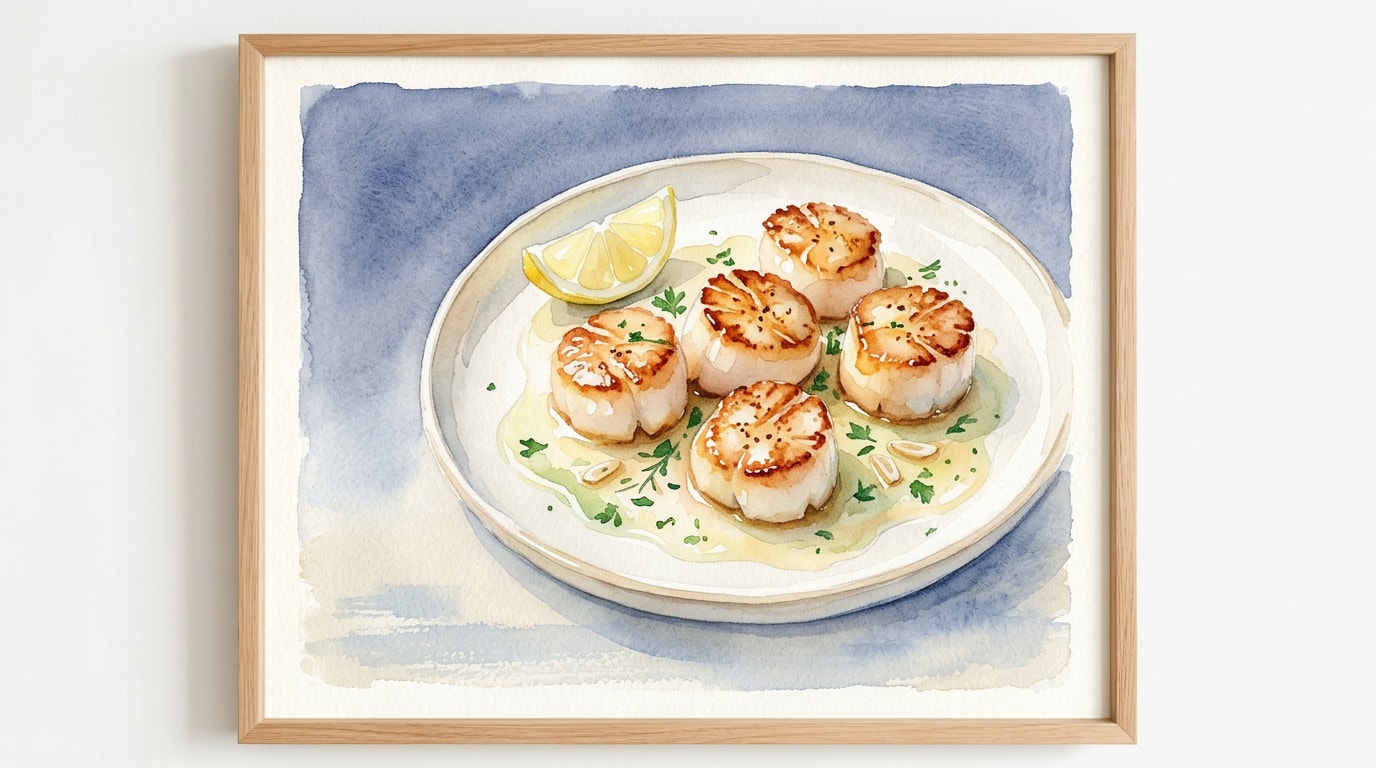
Transfer the scallops to warm plates immediately. Spoon the warm lemon garlic butter pan sauce generously over the top.
Chef's Notes
- Dry vs. Wet Scallops: Always ask your fishmonger for 'dry' or 'dayboat' scallops. 'Wet' scallops are soaked in a phosphate solution that forces them to retain water. This liquid seeps out in the pan, making it impossible to achieve a good sear.
- Basting technique (Arroser): Tilting the pan and spooning foaming butter over the scallops cooks them gently from the top down, resulting in a more even cook and infusing them deeply with flavor.
- Removing the adductor muscle: The small, rectangular tag on the side of the scallop is the adductor muscle. While edible, it is incredibly tough and chewy compared to the rest of the scallop. Always peel it off.
- Carryover cooking: Scallops continue to cook for a minute or two after leaving the heat. Pull them from the pan exactly when they are medium-rare to medium, so they are perfectly cooked by the time they hit the table.
Storage
Refrigerator: 1 day — Best eaten immediately. Leftovers will lose their crust and may become rubbery upon reheating.
Reheating: Reheat very gently in a skillet over low heat just until warmed through, or eat cold atop a salad.
Troubleshooting
Scallops are steaming and releasing water, no crust forms
Cause: Scallops were 'wet-packed' (treated with sodium tripolyphosphate) or not dried sufficiently before cooking
Fix: Remove scallops, pour off excess liquid, wipe pan out, add fresh oil, reheat, and try again
Prevention: Always buy 'dry' sea scallops and pat them aggressively with paper towels before seasoning
Scallops tear when attempting to flip
Cause: The crust has not fully formed or pan wasn't hot enough
Fix: Leave them alone for another 30 seconds; they will release naturally from the pan once a proper crust forms
Prevention: Ensure oil is almost smoking before adding scallops and do not touch them for at least 2 minutes
Texture is tough and rubbery
Cause: Scallops were overcooked
Fix: Cannot be fixed
Prevention: Cook for only 1.5 to 2 minutes per side; internal temperature should not exceed 52C/125F to 54C/130F
Cultural Context
Pan-seared sea scallops are a hallmark of fine dining and coastal American cuisine, celebrated for their natural sweetness and luxurious texture. Finishing them in a rapid pan sauce of butter, garlic, and citrus is a classic French-inspired technique that enhances their delicate ocean flavor while keeping the preparation elegant and incredibly swift.


