
Equipment
Ingredients
Main
- 500 g potato gnocchi, fresh or vacuum-packed
- 60 g unsalted butter, cubed
- 10 g fresh sage leaves
Finishing
- 30 g parmesan cheese, finely grated
- flaky sea salt
- black pepper, freshly cracked
Nutrition (per serving)
Nutrition is estimated per serving. Nutrients without complete source data are omitted.
Full nutrition
- Calories
- 641 kcal
- Protein
- 19 g
- Carbohydrates
- 96 g
- Fat
- 31 g
- Fiber
- 8 g
- Sugar
- 5 g
- Sodium
- 1856 mg
- Saturated Fat
- 17 g
- Monounsaturated Fat
- 8 g
- Polyunsaturated Fat
- 1 g
- Cholesterol
- 75 mg
- Potassium
- 554 mg
- Calcium
- 334 mg
- Iron
- 3.9 mg
- Magnesium
- 28 mg
- Phosphorus
- 112 mg
- Zinc
- 0.8 mg
- Vitamin A
- 535 mcg
- Vitamin C
- 6 mg
- Vitamin D
- 0.1 mcg
- Vitamin E
- 0.7 mg
- Vitamin K
- 3 mcg
- Vitamin B6
- 0.0 mg
- Vitamin B12
- 0.2 mcg
- Thiamin
- 0.01 mg
- Riboflavin
- 0.06 mg
- Niacin
- 0.1 mg
- Folate
- 2 mcg
- Water
- 9 g
Sources: Aggregated Public Data, USDA FoodData Central
Method
Bring a large pot of generously salted water to a rolling boil at 100C/212F. Add the gnocchi and cook just until they float to the surface.
Remove the floating gnocchi with a slotted spoon. Transfer them to a clean kitchen towel and pat them completely dry to prevent oil splatters and ensure a crispy sear.
Place a light-colored frying pan over medium heat. Add the cubed butter and allow it to melt completely.
Add the fresh sage leaves to the foaming butter in a single layer. Fry until the leaves turn dark green and crisp up.
Carefully remove the crispy sage leaves with a slotted spoon and transfer them to a paper towel to drain.
Continue cooking the butter over medium heat, swirling the pan frequently, until golden brown flecks appear at the bottom and the aroma becomes nutty.
Add the dried gnocchi to the brown butter in a single layer. Sear undisturbed until a deep golden crust forms on the bottom, then toss to coat and crisp the remaining sides.
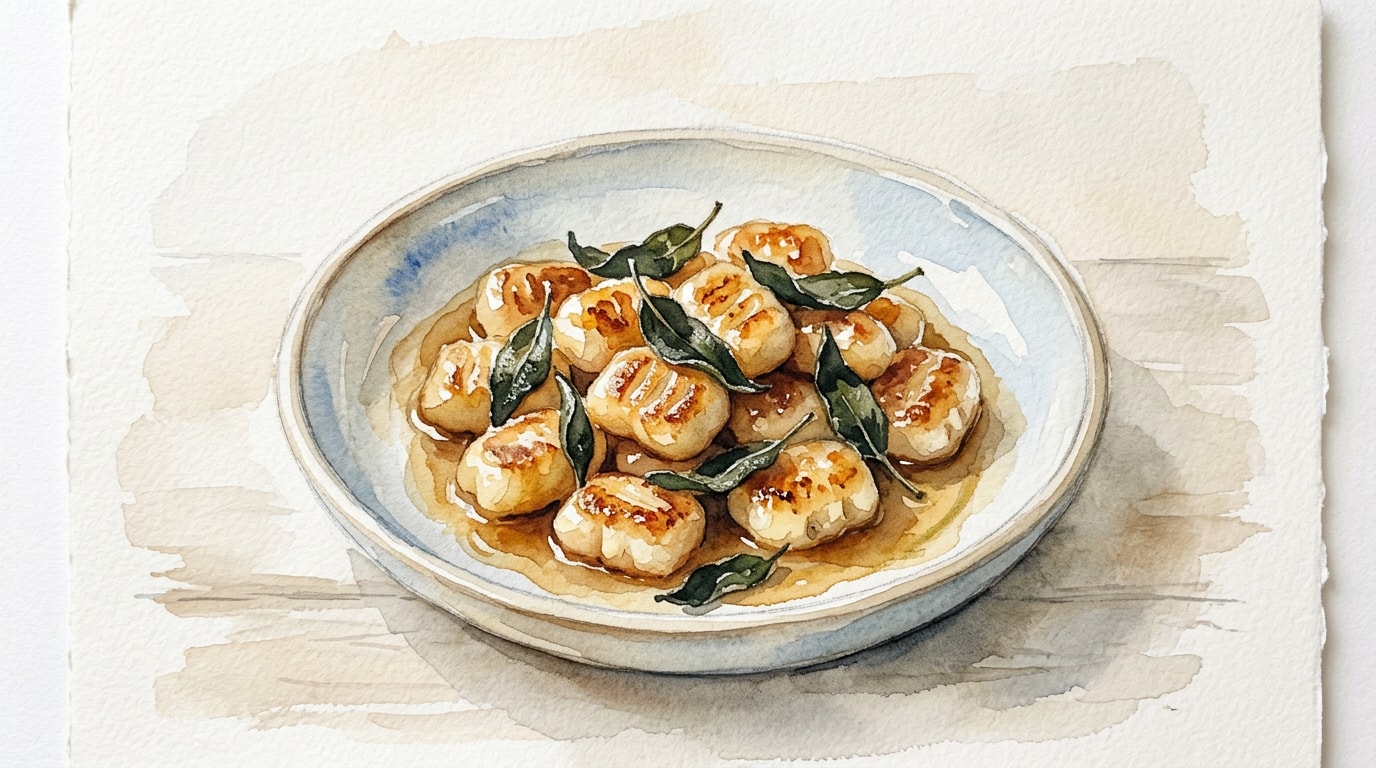
Remove the pan from the heat. Divide the crispy gnocchi between serving bowls, drizzle with the remaining brown butter from the pan, and garnish with the reserved crispy sage, grated parmesan, flaky sea salt, and black pepper.
Chef's Notes
- Using a light-colored stainless steel or enameled pan is crucial for browning butter. Dark non-stick pans obscure the color of the milk solids, making it incredibly easy to cross the line from beautifully browned to acrid and burnt.
- Water is the enemy of a good sear. Taking the extra minute to pat your boiled gnocchi bone-dry with a lint-free towel guarantees a crisp, glass-like exterior and prevents dangerous oil splatters.
- Listen to your sage. Fresh herbs contain significant water. When dropped in hot fat, they will crackle loudly. The precise moment that crackling sound stops is when the moisture has cooked out, indicating perfect crispness.
- Do not crowd the pan. If the gnocchi are piled on top of each other, they will steam rather than fry. Cook in batches if your frying pan is not large enough to hold them in a single layer.
Storage
Refrigerator: 3 days — Store in an airtight container.
Reheating: Reheat in a skillet over medium heat with a splash of water until warmed through, then let the water evaporate to regain some crispness.
Troubleshooting
Butter burns and turns black instead of browning
Cause: Heat was too high or butter was left unattended after foaming
Fix: Cannot be fixed. Discard the burnt butter, wipe the pan, and start over to avoid a bitter taste.
Prevention: Use medium heat, rely on a light-colored pan to monitor color changes, and keep swirling the pan.
Gnocchi sticks to the pan and tears
Cause: Gnocchi were too wet or moved too early before a crust could form
Fix: Lower the heat slightly and wait another minute; a proper crust naturally releases from the pan.
Prevention: Pat gnocchi completely dry after boiling and let them sear undisturbed for at least 2 minutes.
Sage leaves are limp and greasy
Cause: Leaves were not dried properly after washing, or removed from butter too early
Fix: Return to the hot butter for another 30 seconds until crisp.
Prevention: Ensure sage is completely dry before frying, and wait for the crackling sound of evaporating moisture to cease before removing.
Cultural Context
Gnocchi translates loosely to lumps or knots, with roots stretching back to the Roman Empire. While early iterations were made from breadcrumbs or semolina, potato gnocchi became the dominant style in Northern Italy after the Spanish introduced potatoes from the Americas in the 16th century. Tossing these delicate dumplings in burro fuso (brown butter) and sage is a quintessential Italian technique designed to sauce the pasta lightly without overpowering its fundamental potato flavor.


