Equipment
* optional
Ingredients
Chicken
- 4 bone-in skin-on chicken thighs, patted dry, trimmed of loose skin and excess surface fat
Rice
- 400 g jasmine long-grain rice, rinsed under cool water until water runs nearly clear, then drained
Aromatics
- 25 g fresh ginger, peeled and sliced into thin coins, about 8 slices
- 4 garlic cloves, smashed with the side of a knife and roughly chopped
- 3 scallions, white and pale green parts cut into 3cm lengths; dark green tops thinly sliced and reserved for garnish
Seasoning Liquid
- 600 ml low-sodium chicken stock
- 45 ml light soy sauce
- 15 ml dark soy sauce
- 30 ml shaoxing wine
- 8 g granulated sugar
- 1 g ground white pepper
For Cooking and Finishing
- 15 ml neutral oil, vegetable, canola, or peanut oil
- 20 ml toasted sesame oil, divided: 10ml for cooking the aromatics, 10ml reserved for finishing
- 2 g fine sea salt
Nutrition (per serving)
Nutrition is estimated per serving. Nutrients without complete source data are omitted.
Full nutrition
Only basic nutrition values are available for this recipe. More detailed nutrient data is incomplete.
- Calories
- 827 kcal
- Protein
- 45 g
- Carbohydrates
- 89 g
- Fat
- 32 g
Sources: Aggregated Public Data, USDA FoodData Central
Method
Pat the chicken thighs thoroughly dry with paper towels, trimming any loose skin or large pieces of surface fat. Season both sides evenly with the salt and white pepper. Set aside at room temperature while you prepare the remaining ingredients.
Place the rice in a fine-mesh strainer and rinse under cool running water, gently agitating with your hand, until the water runs nearly clear. Drain well and set aside.
Slice the ginger into thin coins, smash the garlic cloves with the side of your knife, and separate the scallions: cut the white and pale green parts into 3cm lengths, then thinly slice the dark green tops for garnish. Keep the two scallion piles separate.
In a measuring jug, combine the chicken stock, light soy sauce, dark soy sauce, Shaoxing wine, sugar, and white pepper. Stir until the sugar dissolves and set aside.
Heat the neutral oil in a heavy-bottomed pot over medium-high heat until shimmering, about 180°C/350°F. Place the chicken thighs skin-side down in a single layer, working in two batches if needed to avoid crowding. Press down gently to ensure full contact with the pot surface.
Sear the chicken undisturbed for 6-7 minutes, until the skin is deeply golden and releases easily from the pot with no sticking. Flip and sear the second side for 3-4 minutes. Transfer the chicken to a plate and reserve the rendered fat in the pot.
Pour off all but about 2 tablespoons of the rendered fat from the pot. Reduce the heat to medium-low (around 150°C/300°F). Add 10ml of the toasted sesame oil, then add the ginger, garlic, and scallion whites. Cook, stirring constantly, for 45-60 seconds until fragrant and the garlic edges turn pale gold.
Add the drained rice to the pot and stir to coat each grain in the seasoned fat. Toast for 90 seconds, stirring frequently, until the rice looks slightly translucent at the edges and smells faintly nutty.
Pour the seasoned stock mixture into the pot and stir once to distribute the rice evenly across the base. Bring to a gentle simmer over medium heat, scraping up any browned bits from the bottom. Nestle the chicken thighs skin-side up on top of the rice in a single layer, leaving small gaps between pieces.
Cover the pot with a tight-fitting lid, reduce the heat to the lowest setting your stove allows (about 95°C/200°F), and cook undisturbed for 25 minutes. Do not lift the lid during this time; the trapped steam is what cooks the rice evenly through.
Turn off the heat and keep the lid on. Let the pot rest off the heat for 10 minutes. This resting period allows the rice grains to firm up and finish absorbing any residual steam.
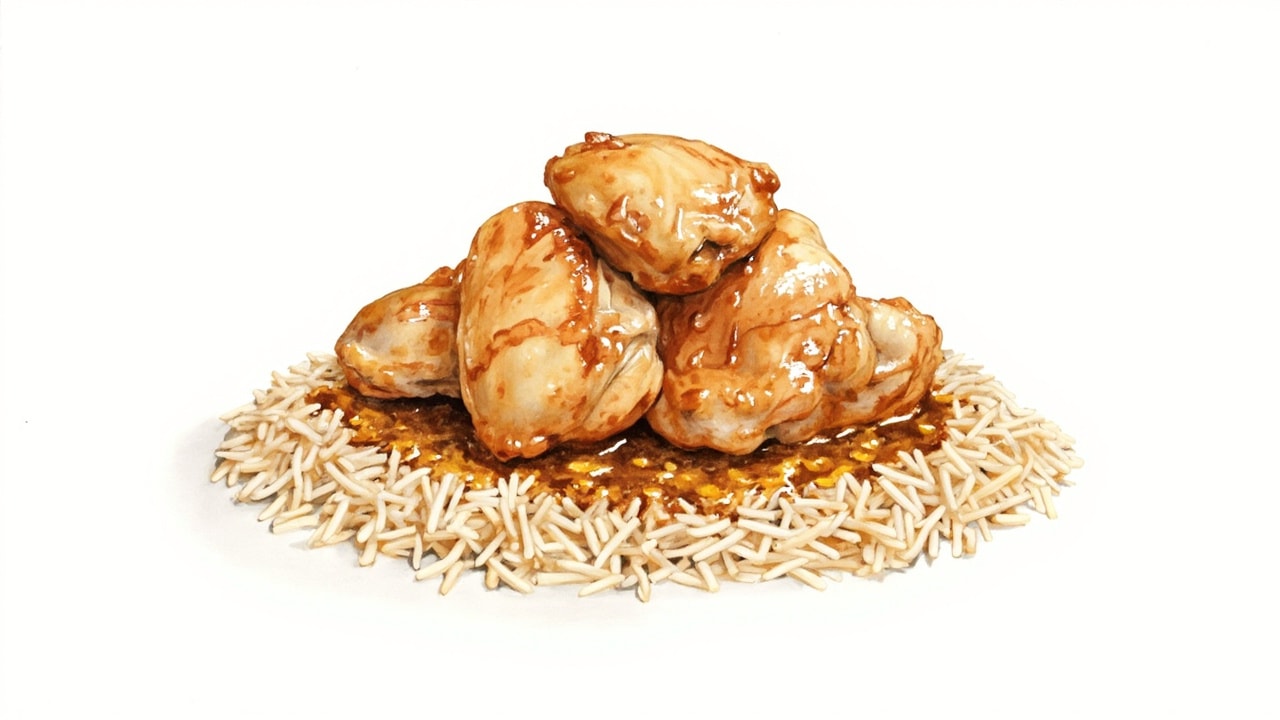
Remove the lid; the chicken skin should be taut and glossy, and the rice should be puffed with a thin golden crust on the base. Drizzle the remaining 10ml of toasted sesame oil over the top and scatter the reserved scallion greens across the surface.
Transfer the chicken to a cutting board and slice the meat off the bones into bite-sized pieces. Fluff the rice gently with a rice paddle, scraping up the golden crust from the base. Divide the rice among four bowls, top with the chicken, and spoon any pan juices over the top. Serve hot.
Chef's Notes
- Toasting the raw rice in the rendered chicken fat before adding liquid is what gives this dish its signature nutty depth; do not skip this step even when pressed for time.
- Dark soy sauce is added primarily for color and a subtle caramel sweetness; if you only have light soy, add an extra 5g of sugar and accept that the finished rice will be a paler amber rather than mahogany.
- A heat diffuser placed between the burner and the pot is the single best investment for any one-pot rice dish; it prevents the bottom from scorching during the long covered simmer.
- The thin, crackly golden crust at the base of the rice is considered the best part by many Chinese home cooks; make sure to scrape it up and incorporate it into each serving.
- Sesame oil is highly fragrant but volatile; heating it gently with the aromatics releases its flavor into the rice, while a final raw drizzle preserves its bright top note.
Storage
Refrigerator: 3 days — Store chicken and rice together in an airtight container once cooled to room temperature.
Freezer: 1 month — Freeze in portioned containers; thaw overnight in refrigerator before reheating.
Reheating: Add 15ml water per portion, cover, and microwave on high for 2-3 minutes stirring once, or warm gently in a covered pan over low heat for 8-10 minutes until steaming throughout and chicken reaches 74°C/165°F internal temperature.
Troubleshooting
Rice turns out gummy or mushy, with grains that have lost their individual definition
Cause: Too much liquid was used, the lid was lifted during the covered simmer releasing steam, or the rice was stirred after the liquid was added
Fix: Spread the rice on a baking sheet and place under a low broiler at 150°C/300°F for 5-8 minutes to dry out excess surface moisture; texture will partially recover
Prevention: Measure the liquid precisely, keep the lid sealed for the full 25 minutes, and never stir once the rice and liquid have combined
The bottom layer of rice is burnt or tastes bitter
Cause: Heat was too high during the covered simmer, or a thin-walled pot conducted heat unevenly
Fix: Scoop out the burnt layer with a spoon; the rice above should still be salvageable; the bitter flavor in the affected grains cannot be reversed
Prevention: Use the lowest possible burner setting, ideally with a heat diffuser; a heavy-bottomed Dutch oven distributes heat most evenly
Chicken skin comes out pale and rubbery rather than golden and taut
Cause: Chicken was not dried thoroughly before searing, or the pot was overcrowded causing the skin to steam instead of sear
Fix: Cannot be reversed once the rice is cooked; next time ensure surfaces are bone-dry and the pot is properly preheated before adding the chicken
Prevention: Pat the skin completely dry with paper towels and sear in batches if necessary; the skin must contact the hot fat directly to crisp
Rice is undercooked with hard centers even after the resting period
Cause: Stove heat was too low so rice could not cook through, or liquid measurement was inaccurate and the rice was under-absorbed
Fix: Drizzle 60-90ml of hot water around the inner edges of the rice, re-cover, and cook on low for an additional 8-10 minutes
Prevention: Verify your stove's lowest setting produces a gentle simmer with visible condensation on the lid; add an extra 30-50ml of stock if your rice variety tends to absorb more
Cultural Context
This dish draws from the Cantonese tradition of clay pot rice, where rice is cooked directly in seasoned liquid beneath a protein so the grains absorb the cooking juices while a prized crispy crust forms at the base. The combination of Shaoxing wine, ginger, and soy sauce reflects the everyday flavor vocabulary of southern Chinese home cooking, where soy-braised meats and steamed rice appear on family tables multiple times a week. The single-pot method here adapts that traditional clay pot technique for modern stovetop cookware while preserving its essential character.