Equipment
* optional
Ingredients
Salmon
- 1000 g salmon fillet, skin on, pin bones removed, sushi-grade, fresh
Cure
- 60 g kosher salt
- 50 g granulated sugar
- 25 g fresh dill, whole fronds and tender stems
- 4 g white pepper, freshly ground
- 5 g juniper berries, lightly crushed with the flat of a knife
- 30 ml aquavit or vodka
Mustard-Dill Sauce
- 45 g dijon mustard
- 15 g granulated sugar
- 15 ml white wine vinegar
- 60 ml olive oil
- 10 g fresh dill, finely chopped
- 2 g kosher salt
To Serve
- rye crispbread
- capers
- red onion
Nutrition (per serving)
Nutrition is estimated per serving. Nutrients without complete source data are omitted.
Full nutrition
Only basic nutrition values are available for this recipe. More detailed nutrient data is incomplete.
- Calories
- 239 kcal
- Protein
- 14 g
- Carbohydrates
- 12 g
- Fat
- 14 g
- Sodium
- 2106 mg
Sources: Aggregated Public Data, USDA FoodData Central
Method
Rinse the salmon fillet under cold water and pat completely dry with paper towels. Inspect the flesh side for any pin bones and pull them out with tweezers at a slight angle. The surface should feel cool, dry, and slightly tacky when ready.
In a small mixing bowl, combine the kosher salt, sugar, freshly ground white pepper, and lightly crushed juniper berries. Whisk until the mixture is uniform in color and texture, with no pockets of unmixed sugar.
Scatter roughly one-third of the cure mixture across the bottom of a glass or ceramic baking dish just large enough to cradle the fillet in a single layer. Lay the salmon skin-side down on the cure bed. Pack the remaining cure generously over the flesh side, pressing gently so the salt-sugar mixture adheres. Tuck most of the dill fronds over and around the fillet, reserving a small handful for garnish. If using, drizzle the aquavit or vodka evenly over the surface; the alcohol will mellow during curing and leave only a faint botanical note.
Wrap the salmon tightly in several layers of plastic wrap, pressing out any air pockets and sealing the edges completely so no cure can escape during pressing.
Place the wrapped salmon back in the dish and set a heavy weight on top, such as a foil-wrapped brick or two large cans, applying roughly 1 to 2 kilograms of pressure. Refrigerate at 1 to 4°C (34 to 39°F) for 48 to 72 hours, flipping the salmon carefully once at the 24-hour mark so both sides cure evenly. The salmon is ready when the flesh feels firm to the touch and has deepened to a richer translucent pink.
Unwrap the salmon and briefly rinse under cold running water to remove the surface cure. Pat completely dry with paper towels. The fillet should feel firm, with the flesh appearing translucent and slightly darkened compared to its raw state.
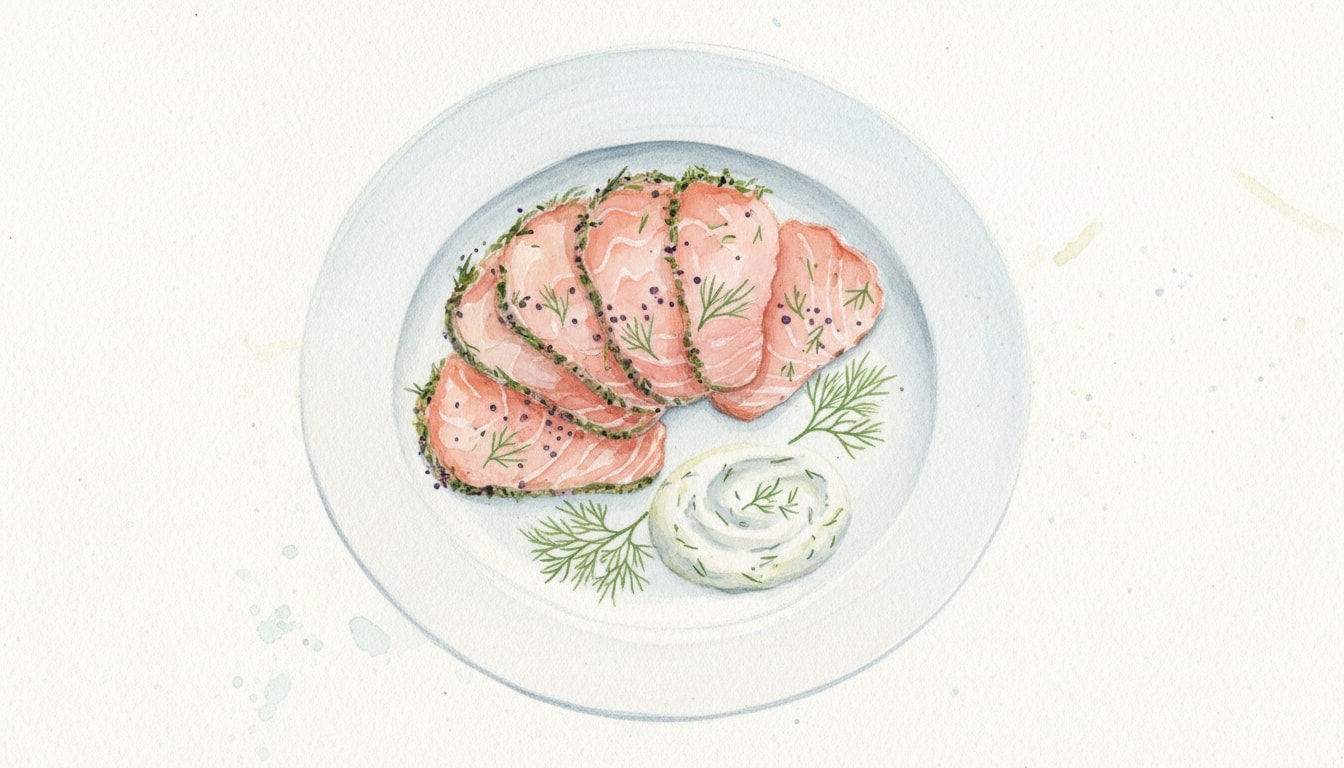
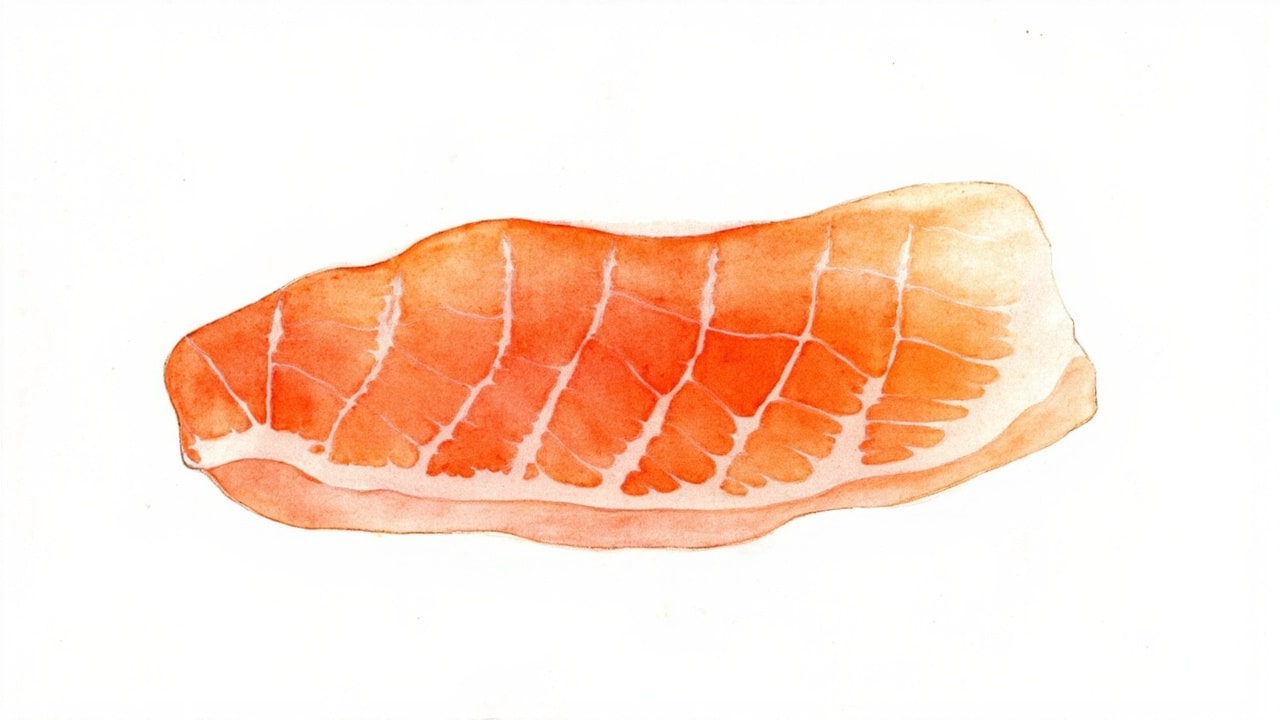
Place the fillet skin-side down on a cutting board. Using a long, sharp knife held at a low angle, slice the salmon on a steep bias into thin, almost translucent shavings, cutting down to but not through the skin. Work in long, smooth strokes without sawing.
In a small bowl, whisk together the Dijon mustard, sugar, white wine vinegar, olive oil, chopped dill, and salt until smooth and lightly emulsified. Arrange the salmon slices in a loose fan on a chilled plate. Spoon a small amount of sauce alongside or in a separate dish, scatter the reserved dill fronds over the top, and serve immediately with rye crispbread, capers, and shaved red onion if desired.
Chef's Notes
- Source the freshest sushi-grade salmon you can find and confirm it has been previously frozen to at least -20°C (-4°F) for 7 days or -35°C (-31°F) for 15 hours to neutralize parasites; this is standard practice for any raw or lightly cured fish preparation.
- Even curing depends on uniform thickness. If the center of your fillet is much thicker than the tail, butterfly it slightly or extend curing by 12 hours so the dense middle firms up to match the thinner end.
- A small splash of aquavit or vodka is traditional and lends a faint caraway-and-coriander note, but the cure is fully effective without it and the dish is equally delicious when omitted for an alcohol-free version.
- Resist the urge to slice aggressively. The cleanest presentation comes from long, single strokes with a freshly wiped blade, producing paper-thin shavings that drape softly on the plate.
- The flavor continues to develop and integrate after the cure is complete, so plan to slice and serve the salmon 12 to 24 hours after unwrapping for the very best balance of sweet, salt, and dill.
Storage
Refrigerator: 1 week — Wrap tightly in plastic after curing; slice only as needed for the cleanest texture.
Freezer: 1 month — Wrap tightly in plastic then foil. Slice before freezing for the cleanest results.
Reheating: Do not reheat. Serve chilled at around 4°C (39°F) or briefly at cool room temperature.
Troubleshooting
Salmon tastes harshly salty with no balancing sweetness
Cause: Cure ratio skewed toward salt, or curing time was too long for the fillet's thickness
Fix: Soak thin slices in cold water or milk for 10 to 15 minutes, then pat dry. Sweetness cannot be restored once fully cured.
Prevention: Weigh salt and sugar precisely and reduce curing time by 12 to 24 hours for fillets under 3 cm thick.
Flesh is soft and mushy, especially near the surface
Cause: Insufficient weighting or too short a curing time, so the proteins did not fully denature
Fix: Cannot be fixed once the texture has set; repurpose by folding into softened butter or stirring into scrambled eggs.
Prevention: Apply firm, even weight during curing and allow the full 48 to 72 hours.
Salmon surface looks dull, gray, or yellowed
Cause: Oxidation or contact with a reactive metal such as aluminum or copper during curing
Fix: Trim the discolored surface layer before slicing; the interior will still be properly cured.
Prevention: Always cure in glass, ceramic, or stainless steel, and wrap tightly to limit air exposure.
Cure liquid leaked and the edges of the salmon feel tough or overly firm
Cause: Wrap was not sealed tightly enough, allowing moisture to evaporate and concentrate the salt at the edges
Fix: Trim the tough outer edges before slicing; the interior should be unaffected.
Prevention: Use multiple layers of plastic wrap and press firmly to seal every edge against the dish.
Cultural Context
Gravlax takes its name from the Old Norse words gravr, meaning a hole dug in sand, and lax, meaning salmon, referring to the medieval Scandinavian practice of burying salmon in the sand just above the high-tide line where it lightly fermented before being dug up and eaten. Modern gravlax is simply salt-cured in the refrigerator, but the spirit of preservation and the bright, herbal Nordic flavor profile remain unchanged. Today it is a fixture of Midsummer celebrations and smörgåsbord tables across Sweden, Denmark, and Norway, traditionally served with mustard sauce and dark bread.