
Equipment
Ingredients
Roasted Aubergine
- 2 aubergine, diced into 2cm cubes
- 30 ml olive oil
- 3 g salt
Stew Base
- 15 ml olive oil
- 1 yellow onion, finely diced
- 3 garlic, minced
- 10 g fresh ginger, peeled and grated
- 30 g harissa paste
- 30 g tomato paste
- 4 g ground cumin
- 4 g ground coriander
- 3 g smoked paprika
- 2 g ground cinnamon
- 400 g canned diced tomatoes
- 250 ml vegetable broth
- 400 g canned chickpeas, drained and rinsed
- 50 g dried apricots, roughly chopped
Couscous
- 200 g dry couscous
- 250 ml vegetable broth
- 15 ml olive oil
- 2 g salt
Serving
- 120 g plain whole milk yogurt
- 10 g fresh coriander, roughly chopped
- 1 lemon, cut into wedges
Nutrition (per serving)
Nutrition is estimated per serving. Nutrients without complete source data are omitted.
Full nutrition
- Calories
- 635 kcal
- Protein
- 20 g
- Carbohydrates
- 96 g
- Fat
- 22 g
- Fiber
- 19 g
- Sugar
- 25 g
- Sodium
- 1180 mg
- Saturated Fat
- 3 g
- Monounsaturated Fat
- 12 g
- Polyunsaturated Fat
- 3 g
- Cholesterol
- 4 mg
- Potassium
- 1000 mg
- Calcium
- 166 mg
- Iron
- 4.1 mg
- Magnesium
- 97 mg
- Phosphorus
- 283 mg
- Zinc
- 2.0 mg
- Vitamin A
- 129 mcg
- Vitamin C
- 38 mg
- Vitamin D
- 0.0 mcg
- Vitamin E
- 3.8 mg
- Vitamin K
- 27 mcg
- Vitamin B6
- 0.5 mg
- Vitamin B12
- 0.1 mcg
- Thiamin
- 0.25 mg
- Riboflavin
- 0.22 mg
- Niacin
- 3.6 mg
- Folate
- 105 mcg
- Water
- 418 g
Sources: Aggregated Public Data, USDA FoodData Central
Method
Preheat the oven to 200°C (400°F). Prepare a baking sheet with parchment paper.
Toss the diced aubergine with 30ml olive oil and 3g salt until evenly coated. Spread in a single layer on the prepared baking sheet.
Roast the aubergine in the preheated oven for 25 to 30 minutes, tossing halfway through, until deeply golden brown and very tender. Remove and set aside.
In a heavy-bottomed Dutch oven, heat 15ml olive oil over medium heat. Add the diced onion and sauté for 5 to 7 minutes until softened and translucent.
Stir in the minced garlic, grated ginger, harissa paste, tomato paste, cumin, coriander, smoked paprika, and cinnamon. Cook for 2 minutes, stirring constantly, until highly fragrant and the tomato paste darkens slightly.
Pour in the canned diced tomatoes, 250ml vegetable broth, drained chickpeas, and chopped dried apricots. Bring the mixture to a gentle simmer, cover partially, and cook for 15 minutes to develop the flavor base.
Gently fold the roasted aubergine into the stew. Simmer for an additional 5 minutes to meld the flavors without turning the aubergine to mush. Keep warm.
While the stew finishes, bring the remaining 250ml vegetable broth, 15ml olive oil, and 2g salt to a rolling boil in a medium saucepan.
Stir the dry couscous into the boiling liquid, cover the saucepan tightly with a lid, and immediately remove from heat. Let it rest undisturbed for 5 minutes.
Remove the lid from the couscous and vigorously fluff the grains with a fork to separate them.
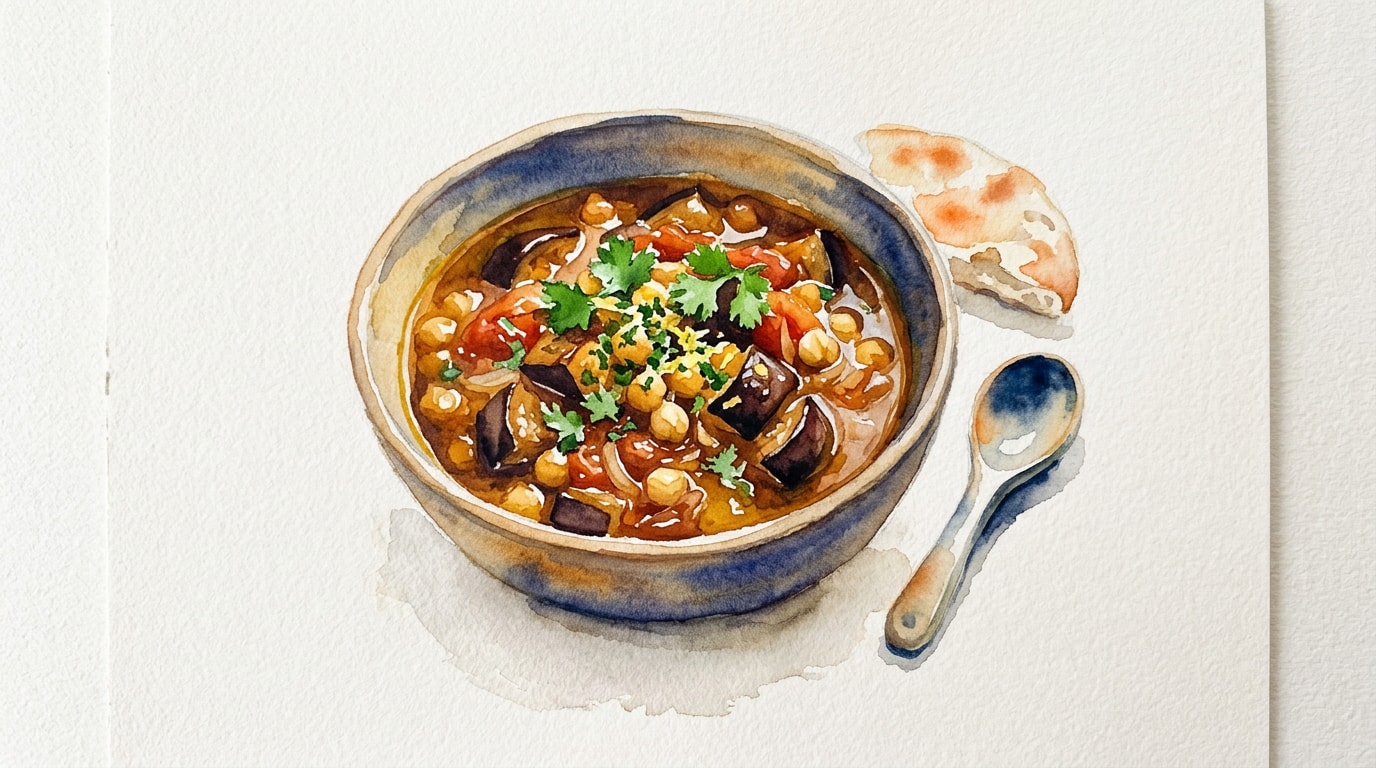
Divide the fluffy couscous among wide, shallow bowls. Ladle the hot spiced aubergine and chickpea stew over the top. Garnish each bowl with a spoonful of yogurt, fresh coriander, and serve with a lemon wedge.
Chef's Notes
- Roasting the aubergine separately before adding it to the stew prevents it from acting like a sponge and absorbing too much oil, yielding a superior, creamy texture.
- Harissa is the backbone of this dish's heat profile. If you are sensitive to spice, substitute half the harissa with mild red pepper paste or additional tomato paste.
- For maximum fluffiness, do not stir the couscous while it hydrates. Leave it strictly covered, then aggressively fluff with a fork only after the resting period.
- The dried apricots provide a crucial sweet counterpoint to the savory, spicy tomato base. If you dislike apricots, golden raisins or chopped dates make an excellent substitution.
Storage
Refrigerator: 4 days — Store the stew, couscous, and yogurt in separate airtight containers.
Freezer: 2 months — Freeze the stew only. Couscous and yogurt do not freeze well.
Reheating: Gently reheat the stew in a saucepan over medium heat until bubbling. Microwave couscous with a splash of water to steam and revive.
Troubleshooting
Stew is overwhelmingly spicy
Cause: Harissa paste brands vary wildly in heat levels.
Fix: Stir in an extra dollop of plain yogurt, a splash of heavy cream, or a teaspoon of honey to mellow the capsaicin.
Prevention: Start with half the recommended harissa paste and taste the broth before adding the remainder.
Aubergine is completely mushy and disintegrated
Cause: The aubergine was simmered in the liquid for too long.
Fix: Cannot be fixed. The stew will have a thicker, more rustic texture but will still taste excellent.
Prevention: Ensure you only fold the roasted aubergine into the stew for the final 5 minutes of cooking.
Couscous is clumpy and dense
Cause: Too much liquid or stirring the couscous before it finished steaming.
Fix: Drizzle with a tiny amount of olive oil and rake firmly with a fork to break apart the clumps.
Prevention: Maintain a strict 1:1.25 volume ratio of couscous to liquid, and do not disturb the pan while resting.
Cultural Context
Tagines and spiced stews are central to Moroccan cuisine, traditionally cooked slowly in conical clay pots that circulate moisture. This dish mimics those deep, complex flavor profiles by combining earthy North African spices, sweet dried fruit, and savory vegetables. It is historically served with couscous, a Berber staple of steamed semolina that acts as a perfect canvas for aromatic sauces.


