
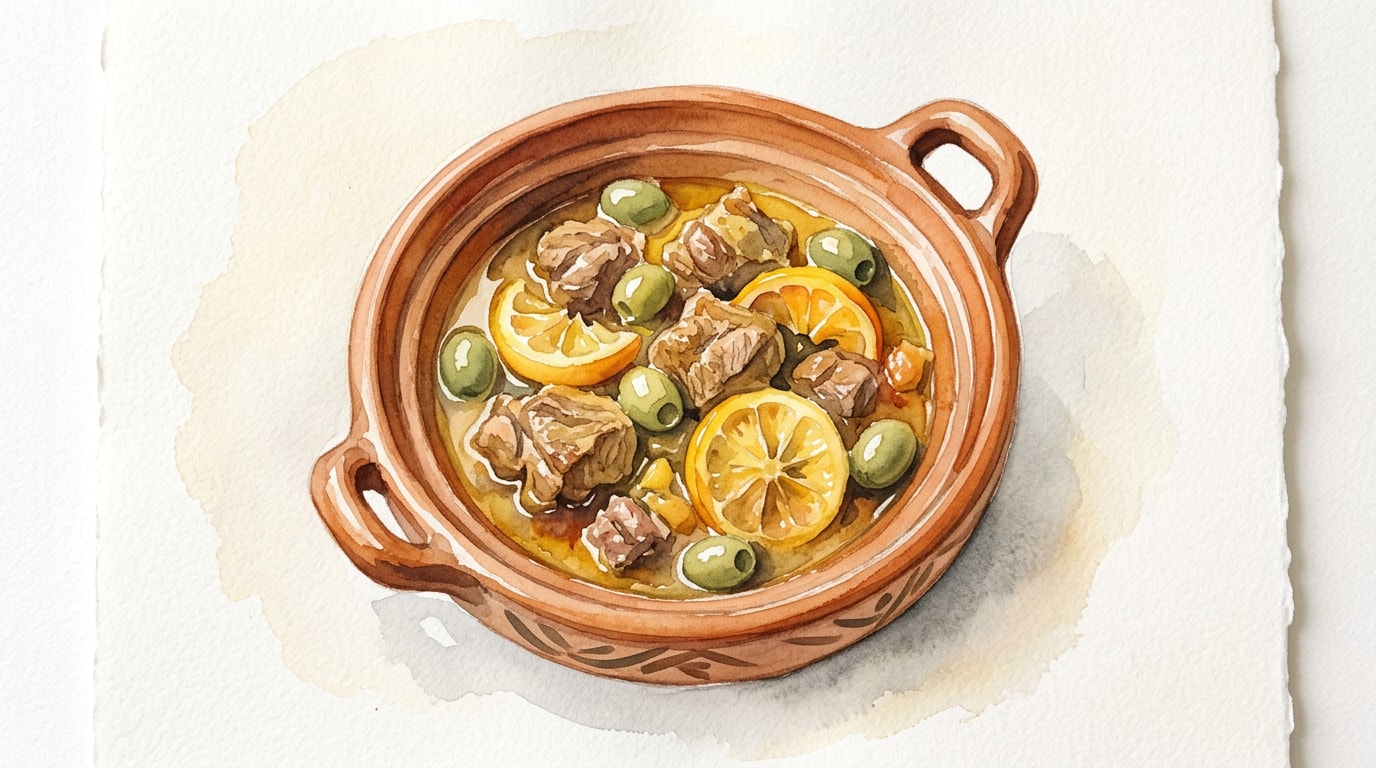
Equipment
Ingredients
Meat & Marinade
- 800 g lamb shoulder, trimmed and cut into 4cm cubes
- 10 g ras el hanout
- 5 g ground cumin
- 5 g ground coriander
- 5 g sweet paprika
- 3 g ground ginger
- 2 g ground cinnamon
- 10 g kosher salt
- 3 g black pepper, freshly ground
Aromatics & Braising Liquid
- 30 ml olive oil
- 250 g yellow onion, finely grated or minced
- 4 garlic, minced
- 0.2 g saffron threads
- 400 ml lamb or vegetable stock, warm
Additions & Garnish
- 1 preserved lemon
- 100 g pitted green olives
- 15 g fresh cilantro, roughly chopped
- 15 g fresh flat-leaf parsley, roughly chopped
Nutrition (per serving)
Nutrition is estimated per serving. Nutrients without complete source data are omitted.
Full nutrition
- Calories
- 1236 kcal
- Protein
- 128 g
- Carbohydrates
- 14 g
- Fat
- 95 g
- Fiber
- 5 g
- Sugar
- 4 g
- Sodium
- 2698 mg
- Saturated Fat
- 19 g
- Monounsaturated Fat
- 6 g
- Polyunsaturated Fat
- 1 g
- Cholesterol
- 0 mg
- Potassium
- 780 mg
- Calcium
- 124 mg
- Iron
- 6.0 mg
- Magnesium
- 64 mg
- Phosphorus
- 364 mg
- Zinc
- 10.0 mg
- Vitamin A
- 64 mcg
- Vitamin C
- 13 mg
- Vitamin E
- 1.6 mg
- Vitamin K
- 79 mcg
- Vitamin B6
- 0.1 mg
- Thiamin
- 0.03 mg
- Riboflavin
- 0.04 mg
- Niacin
- 0.4 mg
- Folate
- 9 mcg
- Water
- 11 g
Sources: Aggregated Public Data, USDA FoodData Central
Method
In a large bowl, toss the lamb cubes with ras el hanout, cumin, coriander, paprika, ginger, cinnamon, salt, and black pepper. Massage the spices into the meat until evenly coated.
Place the Dutch oven or tagine over medium-high heat. Add the olive oil and heat until shimmering.
Working in batches if necessary, add the lamb to the hot oil. Sear until well browned on all sides, then use tongs to transfer the meat to a plate. Leave the rendered fat in the pot.
Reduce the heat to medium. Add the grated onion and sauté, scraping up any browned bits from the bottom of the pot. Cook until the onions are deeply softened and translucent.
Add the minced garlic and cook for an additional minute until fragrant. Return the seared lamb and any accumulated juices to the pot.
Pour in the warm stock and the saffron along with its steeping liquid. Bring the mixture to a gentle boil.
Reduce the heat to the lowest setting, cover the pot tightly, and simmer gently for 1.5 to 2 hours. Stir occasionally to ensure the bottom does not scorch. The internal temperature of the lamb should exceed 90°C/195°F for maximum tenderness.
Remove the lid and gently stir in the preserved lemon strips and green olives. Increase the heat to medium and simmer uncovered for 10-15 minutes to reduce and thicken the sauce to a rich, glossy consistency.
Remove the pot from the heat. Stir in half of the chopped cilantro and parsley. Sprinkle the remaining fresh herbs over the top to garnish.
Allow the tagine to rest for 5 minutes before serving directly from the pot alongside couscous or crusty bread.
Chef's Notes
- Grating the onion, rather than dicing it, is a traditional Moroccan technique that ensures the allium melts entirely into the sauce, creating a naturally velvety body without the need for flour or thickeners.
- Always discard the flesh of preserved lemons; it is overly salty, mushy, and bitter. The aromatic essential oils responsible for the prized floral flavor reside entirely in the rind.
- Blooming saffron in a small amount of warm water before adding it to the stew ensures optimal extraction of its vibrant color and delicate, earthy aroma.
- Lamb shoulder is vastly superior to leg for braising. The shoulder contains abundant collagen that slowly melts into gelatin, creating a luscious mouthfeel that leaner cuts simply cannot achieve.
Storage
Refrigerator: 4 days — Flavor improves on the second day.
Freezer: 3 months — Freeze without the fresh herbs. Add fresh herbs upon reheating.
Reheating: Gently reheat on the stovetop over medium-low heat until bubbling, adding a splash of water or stock if the sauce has over-reduced.
Troubleshooting
Lamb is tough, chewy, or rubbery.
Cause: The meat has not been braised long enough to break down the dense connective tissue in the shoulder cut.
Fix: Return the pot to low heat, cover, and continue cooking for another 30 to 45 minutes until fork-tender. Add 50ml of water if the sauce has reduced too far.
Prevention: Ensure a very gentle, continuous simmer and allocate sufficient cooking time.
Sauce is too watery or thin.
Cause: Too much steam trapped during the braise or too much initial liquid.
Fix: Remove the meat using a slotted spoon and boil the liquid uncovered over medium-high heat until heavily reduced, then return the meat.
Prevention: Measure braising liquid carefully; it should only come halfway up the meat.
Sauce is overly salty or intensely sour.
Cause: Preserved lemons and olives contributed excess sodium and acid.
Fix: Stir in a small pinch of granulated sugar or a drizzle of honey to balance the acidity. Dilute with a little unsalted stock if necessary.
Prevention: Thoroughly rinse preserved lemon rinds and discard the salty flesh. Use salt sparingly during the initial seasoning phase.
Cultural Context
The word 'tagine' refers interchangeably to the iconic conical earthenware vessel and the succulent, slow-simmered stew cooked within it. Historically designed by the Berber peoples of North Africa to tenderize tough cuts of meat over low charcoal fires with minimal water, this dish remains a cornerstone of Moroccan hospitality, traditionally served communally with khobz (flatbread) used to scoop up the rich, spiced sauce.


