
Equipment
Ingredients
Chicken & Marinade
- 800 g bone-in skin-on chicken thighs, patted dry
- 30 ml olive oil
- 4 garlic, minced
- 3 g ground ginger
- 4 g ground cumin
- 3 g ground turmeric
- 4 g sweet paprika
- 2 g black pepper, freshly ground
Braise & Finish
- 1 yellow onion, finely diced
- 250 ml chicken broth, low sodium
- 1 preserved lemon, flesh removed, rind rinsed and quartered
- 100 g green olives, pitted
- 15 g fresh coriander, roughly chopped
Nutrition (per serving)
Nutrition is estimated per serving. Nutrients without complete source data are omitted.
Full nutrition
- Calories
- 587 kcal
- Protein
- 35 g
- Carbohydrates
- 10 g
- Fat
- 45 g
- Fiber
- 3 g
- Sugar
- 3 g
- Sodium
- 791 mg
- Saturated Fat
- 11 g
- Trans Fat
- 0 g
- Monounsaturated Fat
- 22 g
- Polyunsaturated Fat
- 8 g
- Cholesterol
- 197 mg
- Potassium
- 611 mg
- Calcium
- 68 mg
- Iron
- 3.4 mg
- Magnesium
- 56 mg
- Phosphorus
- 352 mg
- Zinc
- 2.9 mg
- Vitamin A
- 89 mcg
- Vitamin C
- 11 mg
- Vitamin D
- 0.2 mcg
- Vitamin E
- 3.0 mg
- Vitamin K
- 23 mcg
- Vitamin B6
- 0.9 mg
- Vitamin B12
- 1.3 mcg
- Thiamin
- 0.21 mg
- Riboflavin
- 0.36 mg
- Niacin
- 9.8 mg
- Folate
- 18 mcg
- Water
- 262 g
Sources: USDA FoodData Central
Method
In a mixing bowl, combine 15ml of the olive oil with the minced garlic, ground ginger, ground cumin, ground turmeric, sweet paprika, and black pepper to form a paste. Add the patted-dry chicken thighs and toss well until completely and evenly coated. Let sit at room temperature for 15 minutes.
Heat the remaining 15ml of olive oil in a Dutch oven or tagine over medium-high heat. Once the oil is shimmering, add the chicken thighs skin-side down. Sear undisturbed for 6 to 8 minutes until the skin is deeply browned and crisp. Flip using tongs and sear for 2 more minutes, then transfer the chicken to a plate.
Lower the heat to medium. Add the finely diced yellow onion to the residual fat in the pan. Sauté for 5 to 7 minutes, stirring frequently, until the onions are thoroughly softened, translucent, and have absorbed the remaining spices from the bottom of the pan.
Pour the chicken broth into the pan to deglaze, using a wooden spoon to scrape up any browned fond stuck to the bottom. Bring the liquid to a gentle boil.
Return the chicken thighs to the pan, arranging them skin-side up so the skin remains exposed above the liquid. Reduce the heat to low, cover with a tight-fitting lid, and braise gently for 30 minutes.
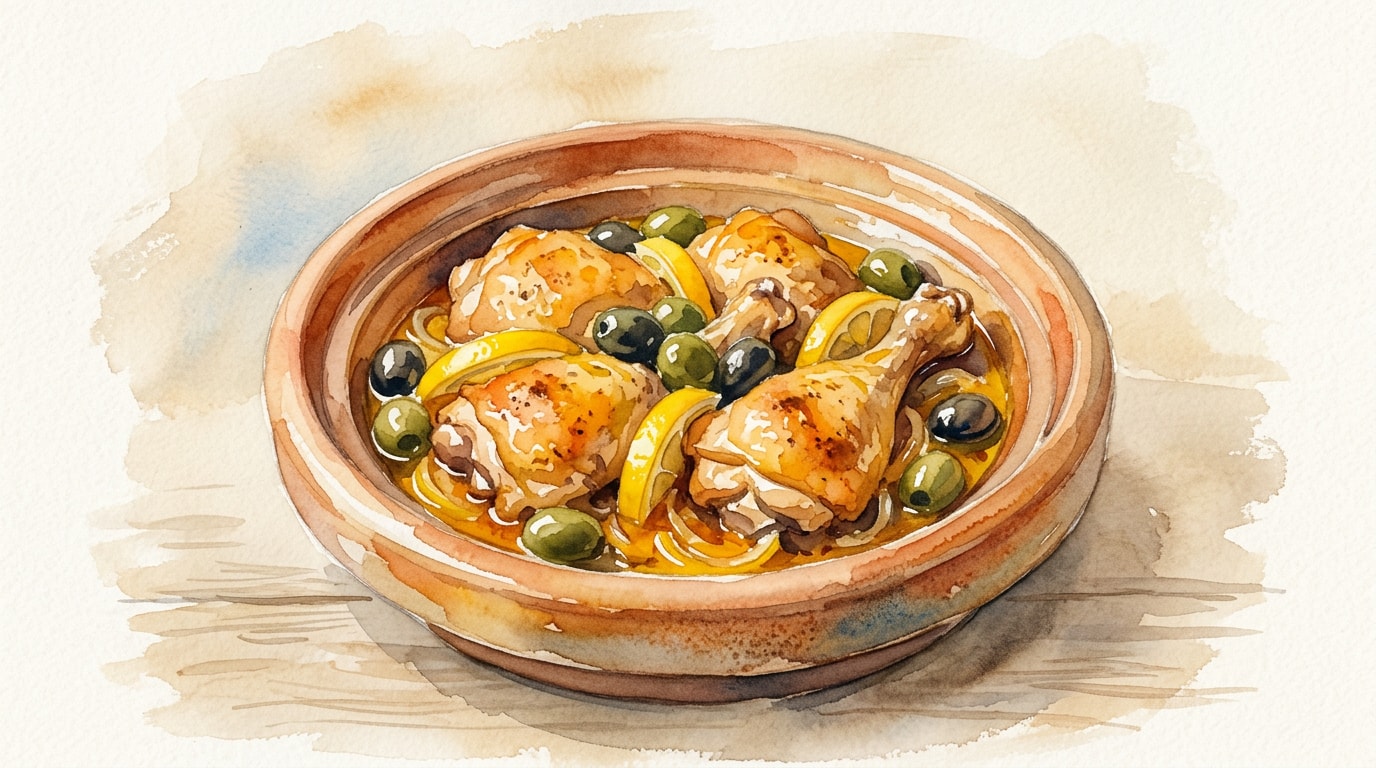
Remove the lid. Nestle the rinsed preserved lemon quarters and pitted green olives into the sauce around the chicken. Simmer uncovered for 10 to 15 minutes. This allows the sauce to thicken and the chicken to reach a safe internal temperature of 74C/165F.
Remove the pan from the heat and let the dish rest for 5 minutes. Scatter the roughly chopped fresh coriander over the top of the chicken and sauce just before serving.
Chef's Notes
- Preserved lemons are a cornerstone of Moroccan cooking. Only use the rind for this braise; the flesh is overly salty and pithy. Rinsing the rind is essential to prevent ruining the dish with excess sodium.
- If you own an authentic clay tagine, you must use a heat diffuser over your stove burner to prevent the clay from cracking under direct heat. The conical lid works by trapping steam and returning it to the base, resulting in incredibly tender meat.
- Do not add additional salt to the chicken or the marinade. The combination of olives, preserved lemon, and chicken broth provides more than enough seasoning for the entire dish.
- Blooming the spices in the residual fat alongside the onions intensifies their fat-soluble flavor compounds, creating a much more robust and aromatic final sauce.
Storage
Refrigerator: 4 days — Store in an airtight container. The flavors will deepen and improve by the second day.
Freezer: 3 months — Freeze in airtight containers or vacuum-sealed bags. Thaw overnight in the refrigerator before reheating.
Reheating: Reheat gently in a covered saucepan over medium-low heat until the chicken reaches 74C/165F.
Troubleshooting
Dish is overwhelmingly salty
Cause: Preserved lemons and commercial olives carry a very high brine content, and the chicken broth added extra sodium.
Fix: Add a splash of fresh water and a tiny pinch of sugar to balance the salt. Serve alongside unseasoned couscous or plain flatbread.
Prevention: Thoroughly rinse preserved lemons and olives under cold water before using, and always select unsalted or low-sodium chicken broth.
Chicken skin is rubbery and pale
Cause: The chicken was not seared long enough initially, or it was submerged completely in the braising liquid.
Fix: Remove the chicken from the sauce, place on a foil-lined tray, and broil for 2 to 3 minutes until crisp, then return to the sauce.
Prevention: Allow the chicken skin to render and brown deeply before flipping, and ensure the braising liquid only reaches halfway up the thighs.
Sauce is too thin and watery
Cause: The chicken released excess moisture and the pan was not left uncovered long enough at the end to evaporate the liquid.
Fix: Remove the chicken to a plate, turn the heat up to medium-high, and briskly boil the sauce for 3 to 5 minutes until reduced and thickened.
Prevention: Ensure you simmer the dish uncovered for the final 15 minutes to properly reduce the sauce.
Cultural Context
The tagine is both the name of the iconic conical clay cooking vessel and the slow-simmered Maghrebi stews cooked within it. Historically, the shape of the lid was designed to promote condensation in arid climates where water was scarce, allowing tough cuts of meat to braise meltingly tender with minimal liquid. This specific combination of chicken, preserved lemons, and olives (Djej Makalli) is a beloved classic across Morocco, frequently served at gatherings alongside crusty khobz bread to soak up the spiced, aromatic oils.


