Equipment
Ingredients
Egg Sheet
- 12 large eggs, room temperature
- 60 ml whole milk, room temperature
- 15 ml extra-virgin olive oil
- 2 garlic, minced
- 4 g kosher salt
- 2 g freshly ground black pepper
- 2 g dried oregano
Add-ins
- 200 g fresh baby spinach, rinsed and stems trimmed
- 80 g sun-dried tomatoes in oil, drained, patted dry, chopped
- 150 g feta cheese, crumbled and divided
Wraps and Optional Fillings
- 8 lavash bread or flour tortillas, soft and at room temperature
- 120 g hummus, plain or roasted red pepper
- 80 g baby arugula or extra spinach, fresh and patted dry
- 15 ml extra-virgin olive oil, for drizzling
- red pepper flakes or hot sauce
Nutrition (per serving)
Nutrition is estimated per serving. Nutrients without complete source data are omitted.
Full nutrition
Only basic nutrition values are available for this recipe. More detailed nutrient data is incomplete.
- Calories
- 421 kcal
- Protein
- 20 g
- Carbohydrates
- 44 g
- Fat
- 20 g
- Fiber
- 4 g
Sources: Aggregated Public Data, USDA FoodData Central
Method
Preheat the oven to 175°C (350°F) with a rack in the center position.
Line a rimmed half sheet pan (about 46x33 cm / 18x13 inches) with parchment, leaving overhang on two long sides so you can lift the sheet out later. Brush a thin film of olive oil over the parchment.
Heat 10ml of olive oil in a skillet over medium heat (about 175°C / 350°F surface temp). Add the minced garlic and sauté for 30 seconds until fragrant but not browned.
Add the spinach to the skillet in batches, stirring until just wilted, about 2 minutes total. Transfer to a plate, then squeeze firmly in a clean towel to remove excess moisture.
Pat the drained sun-dried tomatoes dry with a paper towel and chop into 5mm pieces. Crumble the feta cheese, setting aside 30g for the topping.
In a large mixing bowl, whisk the eggs, milk, salt, pepper, and dried oregano until fully combined and slightly frothy, about 45 seconds.
Stir the wilted spinach, chopped sun-dried tomatoes, and most of the crumbled feta (120g) into the egg mixture until evenly distributed.
Pour the egg mixture onto the prepared sheet pan. Use a heatproof spatula to spread it evenly to about 1 cm thick, nudging it into the corners so the sheet bakes uniformly.
Sprinkle the reserved 30g of feta evenly over the top, pressing lightly so the crumbles adhere.
Bake on the center rack for 20 to 25 minutes, until the center is just set and the edges turn pale gold. The internal temperature should reach 74°C (165°F) in the thickest part.
Cool in the pan for 10 minutes, then use the parchment overhang to lift the sheet out onto a cutting board and cool for 5 more minutes so it firms up for slicing.
Slice the egg sheet into 8 rectangles about 15x10 cm (6x4 inches), the right shape to fit inside a lavash or tortilla.
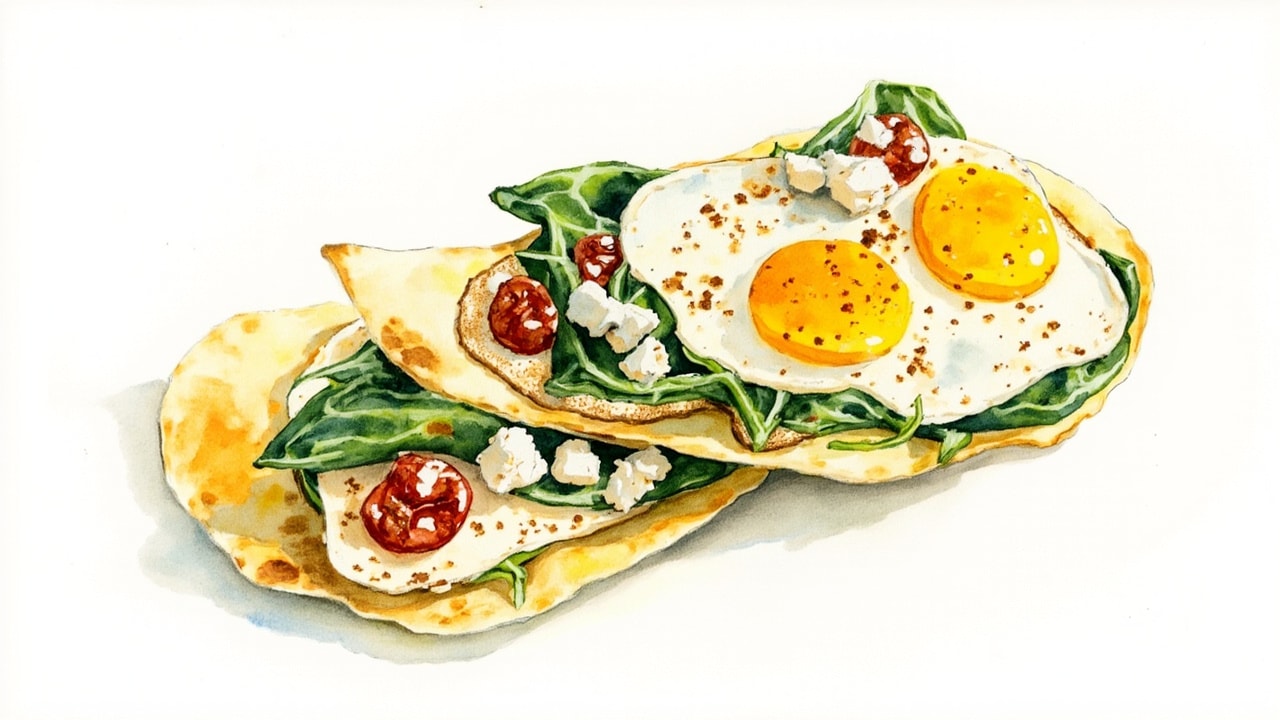
To assemble each wrap, lay a lavash or tortilla flat. Spread with 15g of hummus, scatter a small handful of arugula, then lay one egg strip in the center. Drizzle with olive oil and a pinch of red pepper flakes if you like heat.
Fold the bottom edge of the lavash over the filling, tuck in the sides, and roll tightly away from you. Slice in half diagonally to serve now, or wrap snugly in parchment and refrigerate or freeze for later.
Chef's Notes
- Bring the eggs and milk to room temperature before whisking; cold eggs cool the pan and make the sheet crack as it sets.
- Drain the oil from the sun-dried tomatoes very well and pat them dry; residual oil pools in the egg mixture and creates greasy pockets during baking.
- For a deeper, smokier flavor, swap the dried oregano for 1 teaspoon of za'atar or a pinch of smoked paprika.
- Bake on the middle rack so the sheet cooks evenly; if you use convection, drop the temperature to 165°C (330°F) and check 3 minutes early.
- Add 50g of cooked lentils or white beans to the egg mixture for extra staying power without changing the flavor profile.
Storage
Refrigerator: 4 days — Store assembled wraps wrapped in parchment inside an airtight container, or keep egg strips and wraps separate to preserve texture.
Freezer: 2 months — Freeze egg strips flat between sheets of parchment in a labeled freezer bag. Thaw overnight in the refrigerator before reheating.
Reheating: From refrigerated: microwave wrapped in a damp paper towel for 60 to 90 seconds until the center reaches 74°C (165°F). From frozen: thaw overnight then warm in a 175°C (350°F) oven for 8 to 10 minutes. Egg strips can also be pan-toasted in a dry skillet for 2 minutes per side until heated through.
Troubleshooting
Egg sheet is rubbery or spongy in texture
Cause: Eggs were overbaked or the oven ran hot and dried out the surface
Fix: Cannot be fully reversed; slice thin and layer with extra hummus or a drizzle of olive oil to soften each bite
Prevention: Pull the sheet as soon as the center reaches 74°C (165°F) and springs back to a light touch; avoid extended standing in the hot oven
Egg sheet sticks to the pan and tears when lifted
Cause: Parchment was skipped, not greased, or the sheet was cut while still warm and delicate
Fix: Patch tears with extra feta or hummus during assembly; the wrap will hide most imperfections
Prevention: Always line the pan with parchment plus a thin grease and cool the sheet at least 15 minutes before slicing
Egg sheet is watery or weeps liquid after baking
Cause: Spinach or sun-dried tomatoes carried too much moisture into the eggs
Fix: Cannot be fixed once baked; blot the surface gently with a paper towel and proceed to assembly
Prevention: Squeeze wilted spinach firmly in a towel and pat sun-dried tomatoes dry before chopping
Wrapped breakfasts turn soggy after a night in the fridge
Cause: Egg strips were wrapped before cooling fully or fillings were wet, trapping steam inside the lavash
Fix: Unwrap, crisp the egg strip in a dry skillet for 1 to 2 minutes per side, then re-roll with fresh greens
Prevention: Cool strips to room temperature, dry the greens, and store hummus on the side until serving
Egg strip cracks or splits when rolled into the wrap
Cause: Strip is too cold and brittle, or wrap is rolled too tightly
Fix: Place the cracked side down against the seam of the wrap; a thin layer of hummus acts as glue
Prevention: Bring strips to room temperature or warm 20 seconds before rolling, and roll snugly but without force
Cultural Context
Across Greece, Turkey, and the Levant, breakfast tables have long paired brined feta, sun-ripened tomatoes, and tender leafy greens with flatbreads such as lavash, pita, and yufka. This sheet-pan method translates that tradition into a modern meal-prep format, batching a week of protein-rich wraps in a single bake while keeping the bright, briny character that defines a Mediterranean morning.