
Equipment
Ingredients
Seafood
- 600 g scrod fillets, cut into four equal portions
- 24 littleneck clams, scrubbed and purged
Broth and Aromatics
- 300 g cherry tomatoes, halved
- 3 garlic, minced
- 120 ml dry white wine
Pantry Staples
- 30 ml extra virgin olive oil
- kosher salt
Nutrition (per serving)
Nutrition is estimated per serving. Nutrients without complete source data are omitted.
Full nutrition
- Calories
- 411 kcal
- Protein
- 57 g
- Carbohydrates
- 13 g
- Fat
- 11 g
- Fiber
- 1 g
- Sugar
- 3 g
- Sodium
- 1535 mg
- Saturated Fat
- 2 g
- Trans Fat
- 0 g
- Monounsaturated Fat
- 6 g
- Polyunsaturated Fat
- 2 g
- Cholesterol
- 125 mg
- Potassium
- 748 mg
- Calcium
- 112 mg
- Iron
- 4.0 mg
- Magnesium
- 90 mg
- Phosphorus
- 712 mg
- Zinc
- 1.8 mg
- Vitamin A
- 198 mcg
- Vitamin C
- 3 mg
- Vitamin D
- 1.4 mcg
- Vitamin E
- 3.4 mg
- Vitamin K
- 5 mcg
- Vitamin B6
- 0.4 mg
- Vitamin B12
- 24.0 mcg
- Thiamin
- 0.15 mg
- Riboflavin
- 0.19 mg
- Niacin
- 3.9 mg
- Folate
- 21 mcg
- Water
- 308 g
- Alcohol
- 3 g
Sources: Aggregated Public Data, USDA FoodData Central
Method
Pat the scrod fillets dry and lightly season them with a pinch of kosher salt. Discard any clams with cracked shells or that remain open when tapped lightly.
Heat the extra virgin olive oil in a large deep skillet over medium heat. Add the minced garlic and halved cherry tomatoes, and cook until the tomatoes begin to soften, wrinkle, and release their juices.
Pour the dry white wine into the skillet, scraping up any browned bits from the bottom. Bring the liquid to a gentle simmer to establish the broth.
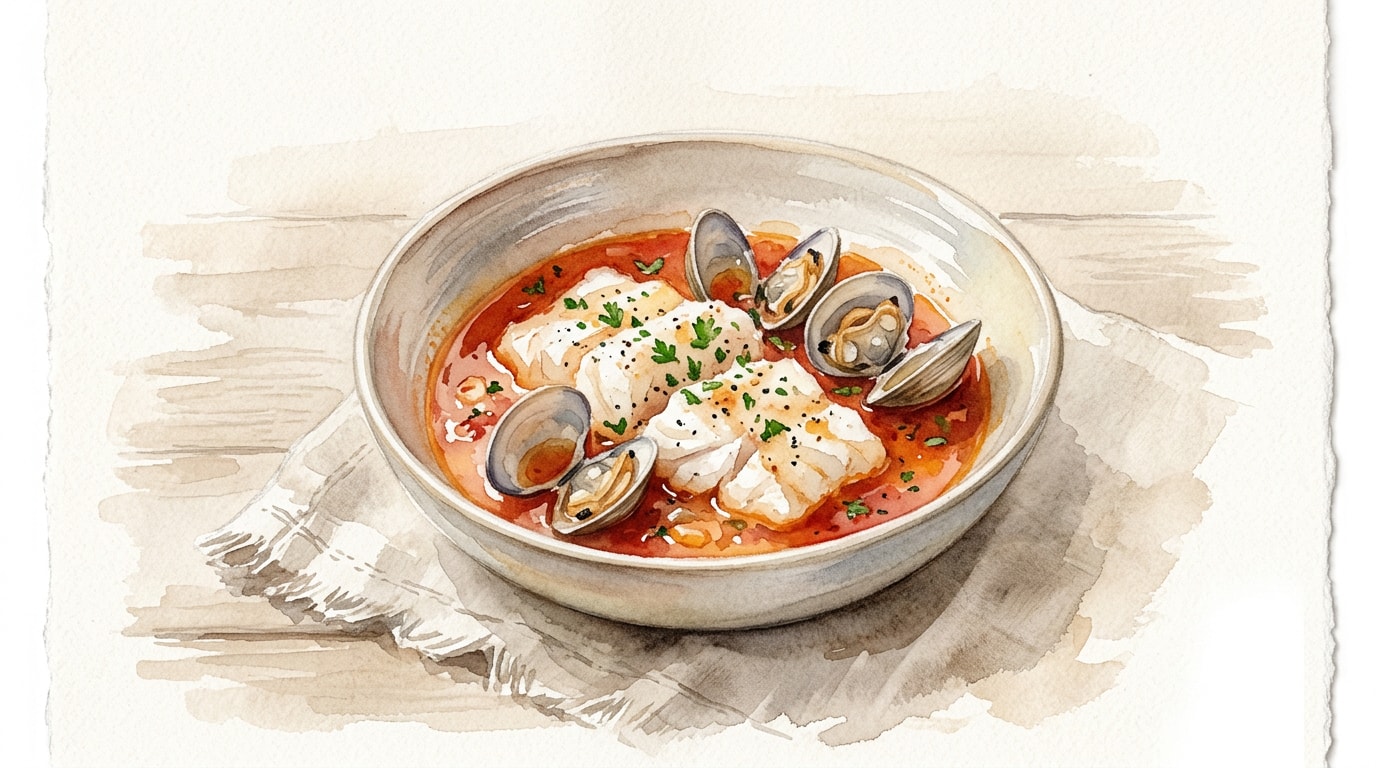
Nestle the scrod fillets and littleneck clams evenly into the simmering tomato and wine broth. Cover the skillet tightly with its lid and cook until the fish is entirely opaque and flakes easily, reaching an internal temperature of 63°C/145°F, and all clams have fully opened.
Divide the cooked fish, opened clams, and the rich tomato-wine broth evenly among four shallow serving bowls. Strictly discard any clams that have not opened.
Chef's Notes
- Purging your clams is absolutely essential to avoid a gritty broth. Soak them in cold, heavily salted water for 20 to 30 minutes before cooking so they expel any internal sand.
- Scrod is actually a regional New England trade term for young, small cod or haddock, rather than a specific species. Any flaky, firm white fish will excel in this preparation.
- The acidity of the cherry tomatoes and white wine creates a natural emulsion with the briny clam juices and olive oil, forming a lush, complex sauce with incredibly minimal effort.
- For those highly susceptible to foodborne illness, ensure that all raw seafood handling involves diligent hand washing to avoid cross-contamination in the kitchen.
- If your skillet lacks a tight-fitting lid, you can tightly crimp heavy-duty aluminum foil over the top of the pan to lock in the steam necessary for opening the clam shells.
Storage
Refrigerator: 1 day — Store in an airtight container. Seafood quality degrades rapidly; best consumed fresh.
Reheating: Gently warm on the stovetop over very low heat until just heated through to avoid rubbery clams and overcooked fish.
Troubleshooting
Clams do not open after steaming
Cause: The clams were dead prior to cooking
Fix: Cannot be fixed; unopened clams must be discarded to prevent foodborne illness
Prevention: Inspect all clams before cooking, discarding any that are crushed or refuse to close when tapped
Scrod fillets fall apart into a mushy texture
Cause: The fish was overcooked or the simmer was too aggressive
Fix: Gently fold the flaked pieces into the broth and serve it more like a rustic stew
Prevention: Keep the liquid at a gentle steam, check internal temperature promptly at the 8-minute mark, and remove from heat exactly at 63°C
Broth is overly salty
Cause: Clam liquor was exceptionally briny and too much additional salt was added at the start
Fix: Add a small squeeze of lemon juice or an extra splash of wine to balance the salinity
Prevention: Wait to taste and adjust the final seasoning of the broth until after the clams have opened and released their natural juices
Cultural Context
Livornese cuisine originates from Livorno, a historic port city on the coast of Tuscany. It is famous for rustic, deeply savory seafood preparations like the iconic Cacciucco stew. This abbreviated, five-ingredient dish pays homage to those traditions, relying on the synergistic flavors of garlic, tomatoes, and wine to elevate the delicate sweetness of the scrod and the briny liquor of fresh clams.


