
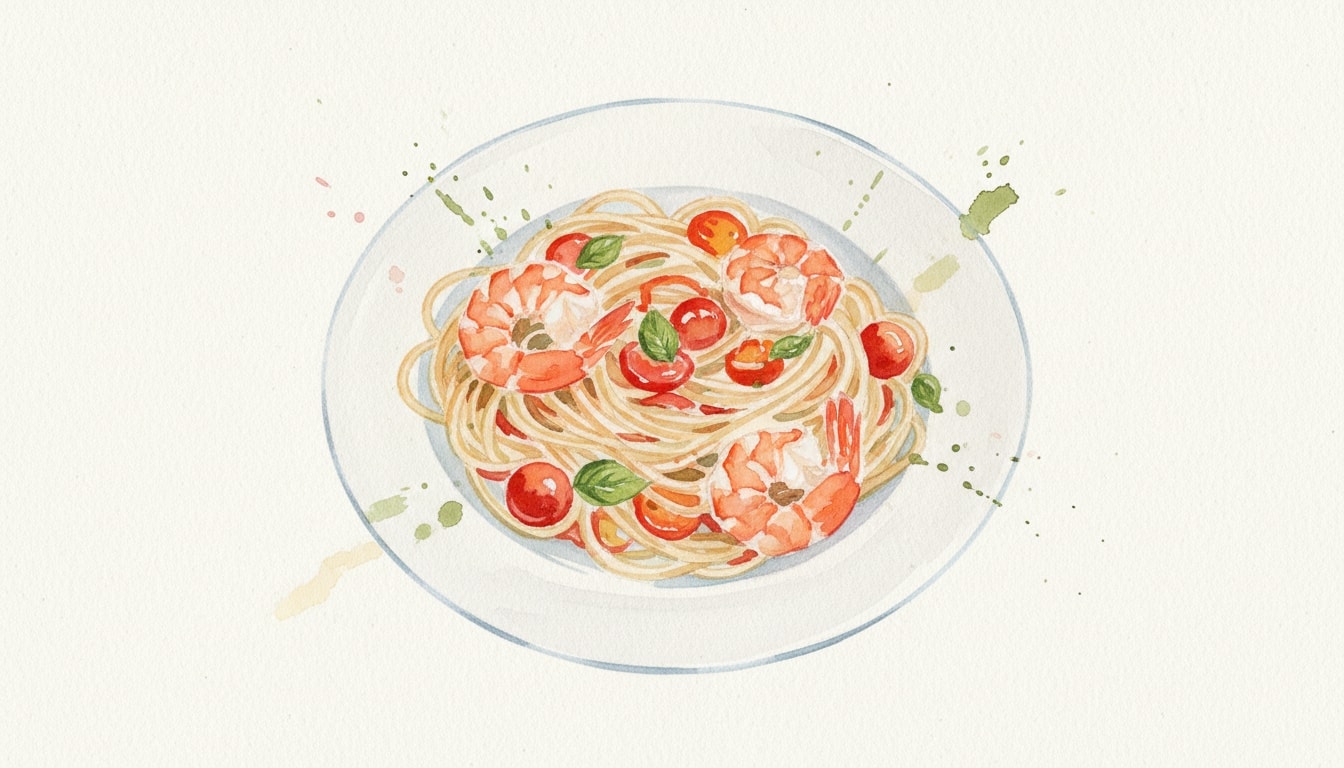
Equipment
Ingredients
Pasta
- 340 g linguine, dry
- 2850 ml water
- 5 g salt
Sauce
- 30 ml olive oil
- 9 g garlic, finely chopped
- 100 g red pepper, cored, seeded, and cut into 2.5cm cubes
- 100 g green pepper, cored, seeded, and cut into 2.5cm cubes
- 720 ml canned tomatoes, crushed
- 6 g dried oregano
- salt
- black pepper, freshly ground
Shrimp
- 570 g shrimp, medium-size, peeled and deveined
- 30 ml olive oil
- 1 g red-pepper flakes
Garnish
- 12 g basil, chopped
- 12 g parsley, chopped
Nutrition (per serving)
Nutrition is estimated per serving. Nutrients without complete source data are omitted.
Full nutrition
- Calories
- 669 kcal
- Protein
- 42 g
- Carbohydrates
- 87 g
- Fat
- 19 g
- Fiber
- 12 g
- Sugar
- 10 g
- Sodium
- 1544 mg
- Saturated Fat
- 3 g
- Monounsaturated Fat
- 11 g
- Polyunsaturated Fat
- 3 g
- Cholesterol
- 229 mg
- Potassium
- 965 mg
- Calcium
- 192 mg
- Iron
- 5.1 mg
- Magnesium
- 160 mg
- Phosphorus
- 561 mg
- Zinc
- 4.2 mg
- Vitamin A
- 83 mcg
- Vitamin C
- 67 mg
- Vitamin E
- 3.3 mg
- Vitamin K
- 85 mcg
- Vitamin B6
- 0.5 mg
- Vitamin B12
- 0.1 mcg
- Thiamin
- 0.54 mg
- Riboflavin
- 0.33 mg
- Niacin
- 8.3 mg
- Folate
- 136 mcg
- Water
- 1042 g
Sources: USDA FoodData Central
Method
Peel and devein the shrimp if not already prepared.
In a large pot, bring 2850ml of water and a generous pinch of salt to a rolling boil.
Heat 30ml of olive oil in a large saucepan over medium-high heat. Add chopped garlic and cubed peppers. Sauté for 1 minute until fragrant but do not brown the garlic.
Stir in crushed tomatoes, salt, black pepper, and dried oregano. Bring to a simmer and cook for 10 minutes, stirring occasionally.
Add linguine to the boiling water and cook for 9 minutes, or until al dente.
Reserve 120ml (1/2 cup) of the pasta cooking water, then drain the linguine using a colander.
In a separate small saucepan, heat the remaining 30ml of olive oil over medium-high heat. Add shrimp, red-pepper flakes, salt, and black pepper. Cook for 1 minute until shrimp just begin to turn pink.
Combine the sautéed shrimp, drained linguine, reserved pasta water, and chopped herbs into the tomato sauce. Toss thoroughly to heat through and serve immediately.
Chef's Notes
- For the best flavor, use high-quality canned San Marzano tomatoes. Their sweetness and lower acidity make a significant difference in the sauce.
- Don't overcrowd the pan when sautéing the shrimp. Cook them in batches if necessary to ensure they sear nicely rather than steam, which can make them rubbery.
- Reserve more pasta water than the recipe calls for. It's a versatile tool for adjusting sauce consistency and emulsifying the final dish. You can always use less, but you can't add more if you've drained it all.
- Taste and adjust seasoning for the sauce and the shrimp separately before combining. The pasta water adds saltiness, so be mindful of this when seasoning the other components.
Storage
Refrigerator: 2 days — Store in an airtight container; shrimp may become tough upon reheating.
Reheating: Reheat gently in a pan over medium heat with a splash of water to loosen the sauce.
Troubleshooting
Shrimp are tough or rubbery
Cause: The shrimp were overcooked during the initial sauté or the final heating step.
Fix: Cannot be fixed
Prevention: Remove shrimp from heat as soon as they turn pink and only toss them into the sauce at the very end.
The sauce does not coat the pasta evenly
Cause: The pasta was too dry or not enough reserved pasta water was used.
Fix: Add a small amount of warm water or additional olive oil and toss vigorously.
Prevention: Ensure you reserve the pasta water before draining.
Cultural Context
This dish is a vibrant interpretation of classic Italian coastal cuisine, where fresh seafood and simple, flavorful sauces are paramount. While not tied to a single specific region, it embodies the spirit of Southern Italian cooking, emphasizing bright flavors and readily available ingredients like tomatoes, peppers, and herbs.


