Equipment
* optional
Ingredients
For the Lemony Garlic Aioli
- 2 egg yolks, room temperature, large
- 3 garlic cloves, finely grated or minced
- 5 g dijon mustard, smooth
- 2 g lemon zest, finely grated from 1 lemon
- 30 ml lemon juice, freshly squeezed, about 1 lemon
- 100 ml extra-virgin olive oil
- 100 ml neutral oil
- 3 g fine sea salt
- 15 ml warm water, about 40°C / 105°F, optional for adjusting consistency
For the Summer Crudités
- 2 little gem lettuce, leaves separated, washed and dried
- 200 g rainbow carrots, peeled and cut into 7cm sticks
- 200 g persian cucumbers, trimmed and halved lengthwise
- 1 red bell pepper, cored, seeded, and sliced into 1.5cm strips
- 100 g radishes, trimmed and halved
- 250 g broccolini, trimmed into 10cm spears
- 150 g snap peas, trimmed and strings removed
- 200 g cherry tomatoes, left whole on the vine if possible
- flaky sea salt
Nutrition (per serving)
Nutrition is estimated per serving. Nutrients without complete source data are omitted.
Full nutrition
- Calories
- 385 kcal
- Protein
- 5 g
- Carbohydrates
- 15 g
- Fat
- 35 g
- Fiber
- 5 g
- Sugar
- 6 g
- Sodium
- 394 mg
- Saturated Fat
- 5 g
- Potassium
- 506 mg
- Calcium
- 65 mg
- Iron
- 1.3 mg
- Magnesium
- 24 mg
- Phosphorus
- 88 mg
- Zinc
- 0.6 mg
- Vitamin A
- 430 mcg
- Vitamin C
- 86 mg
- Water
- 158 g
Sources: Aggregated Public Data, USDA FoodData Central
Method
Wash and thoroughly dry all the vegetables. Pat the cherry tomatoes, lettuce leaves, and radishes especially dry so the aioli clings well when dipping.
Peel the carrots and cut them into sticks about 7cm long and 1cm thick. Halve the cucumbers lengthwise. Core and seed the bell pepper, then slice it into strips about 1.5cm wide. Halve the radishes lengthwise. Group everything on a tray.
Separate the little gem lettuce into individual leaves, keeping them whole and cup-shaped so they can scoop up the aioli.
Trim the broccolini into 10cm spears and snap off the woody stem ends. Pull the strings from the snap peas. Set both aside.
Zest the lemon on a microplane, then halve it and squeeze to yield about 30ml of juice. Finely grate the garlic cloves into a paste using the microplane or mince them very finely with a knife. Sprinkle a pinch of salt over the grated garlic and let it sit while you finish the prep.
Bring a medium saucepan of well-salted water to a rolling boil over high heat. Meanwhile, fill a large bowl with ice and cold water for an ice bath and set it beside the stove.
Drop the broccolini into the boiling water and blanch for 60 to 75 seconds, until the stems are crisp-tender and the florets turn vivid bright green.
Lift the broccolini out with a slotted spoon and plunge it straight into the ice bath. Add the snap peas to the same boiling water and blanch for just 30 seconds.
Transfer the snap peas to the ice bath with the broccolini. Once fully chilled, drain both vegetables and pat them very dry with a clean towel.
In a mixing bowl, whisk together the egg yolks, dijon mustard, grated garlic, lemon zest, and salt until smooth and slightly pale, about 30 seconds.
Whisk constantly with one hand while slowly drizzling the combined olive oil and neutral oil into the bowl in a thin, steady stream. Start with just a few drops and whisk vigorously until the mixture begins to thicken and lighten, then continue adding the oil in a slow stream. This should take 4 to 5 minutes and yield a thick, glossy, pale-yellow emulsion that holds a ribbon when the whisk is lifted.
Whisk in the lemon juice and the remaining warm water. Taste and adjust with additional salt or lemon juice as needed. The aioli should be bright, savory, and garlicky without any sharp bite.
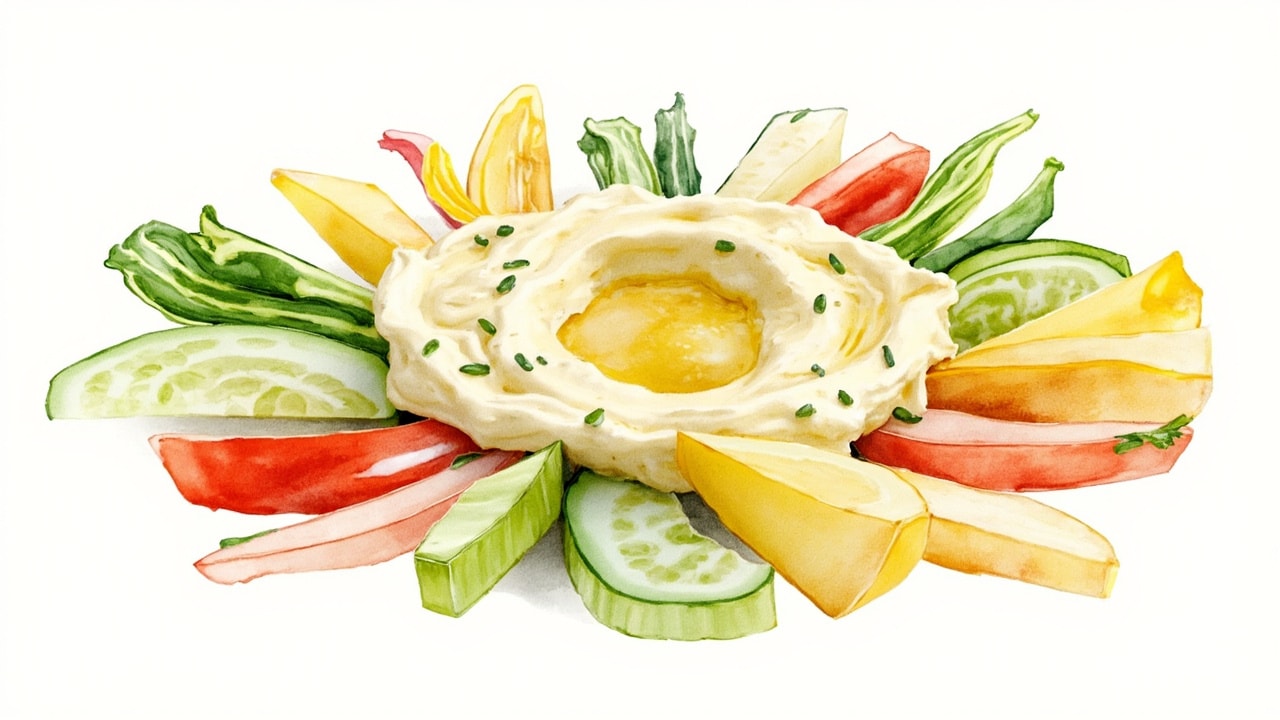
Spoon the aioli into a small serving bowl and place it in the center of a large platter. Arrange the lettuce cups, carrot sticks, cucumber halves, bell pepper strips, radishes, blanched broccolini, snap peas, and cherry tomatoes around the bowl in colorful sections. Finish with a light sprinkle of flaky sea salt over the vegetables and a thin grating of extra lemon zest over the aioli if you like. Serve immediately, or chill for up to 15 minutes for the flavors to meld.
Chef's Notes
- A blend of extra-virgin olive oil and a neutral oil gives you the fruity complexity of olive oil without the bitter, peppery finish that can overwhelm the lemon and garlic when olive oil is used on its own.
- Temperatures matter: room temperature eggs, mustard, and lemon juice emulsify far more reliably than cold ones. Set everything out on the counter 30 minutes before you begin.
- The little gem lettuce cups are not just decoration. Their natural curve and crisp texture make them the perfect edible vehicle for a thick aioli without breaking or bending.
- For extra lemon aroma, finish the aioli with a fresh grating of zest just before serving. Pre-grated zest loses its volatile oils within minutes and reads flat on the palate.
- If you are concerned about raw egg, look for pasteurized eggs at the grocery store. They emulsify identically and remove the safety concern for pregnant diners, young children, the elderly, and anyone immunocompromised.
Storage
Refrigerator: 3 days — Store aioli in a sealed jar with plastic wrap pressed directly onto the surface to prevent oxidation. Keep prepped raw vegetables in a separate airtight container. Refresh blanched vegetables in ice water before serving.
Freezer: 1 month — Freeze only the aioli in a freezer-safe container with a thin layer of oil on top to seal. Thaw overnight in the refrigerator and whisk vigorously to recombine; texture will be slightly thinner.
Reheating: Serve cold or at cool room temperature. Do not heat.
Troubleshooting
Aioli looks thin, soupy, or split into oily layers
Cause: Oil was added too quickly or the base ingredients were too cold, breaking the emulsion
Fix: Start a fresh egg yolk in a clean bowl and very slowly whisk the broken aioli into it, drop by drop, until it re-emulsifies into a thick, glossy sauce. A teaspoon of warm water can help rescue a slightly loose batch.
Prevention: Start with truly room temperature eggs and mustard. Add the first drops of oil one at a time until a thick base forms, then stream slowly while whisking continuously.
Garlic flavor is harsh, biting, or sulfurous
Cause: Garlic was used immediately after grating without any resting time, releasing harsh allicin compounds straight into the aioli
Fix: Stir in an extra teaspoon of lemon juice and a tablespoon of warm water to mellow the flavor, then let the finished aioli rest in the refrigerator for 30 minutes before serving.
Prevention: Grate the garlic finely and let it sit with the salt for 5 to 10 minutes before combining with the yolks. The salt and air moderate its intensity into a sweeter, rounder note.
Blanched vegetables look dull, olive-toned, or soggy
Cause: Vegetables were overcooked or not shocked quickly enough in the ice bath, allowing residual heat to continue softening them and leach out their color
Fix: Cannot be fully fixed; recook a fresh small batch with a strict ice-shock for the best color. Softer vegetables can be repurposed in a quick stir-fry where color matters less.
Prevention: Have the ice bath ready before blanching and move vegetables into it within 5 seconds of removing them from the boiling water. Keep blanch times strictly at 60 to 75 seconds for broccolini and 30 seconds for snap peas.
Cultural Context
Aioli hails from Provence in southern France and the neighboring Catalan coast of Spain, where it was traditionally made by grinding garlic and olive oil together with a mortar and pestle into a thick, glossy sauce. Modern French aioli often incorporates egg yolks for a more stable emulsion and is customarily served alongside raw vegetables, boiled potatoes, or grilled fish. This vegetable-forward presentation reflects the Mediterranean custom of crudités, a communal starter meant to celebrate seasonal produce at the height of its freshness.