
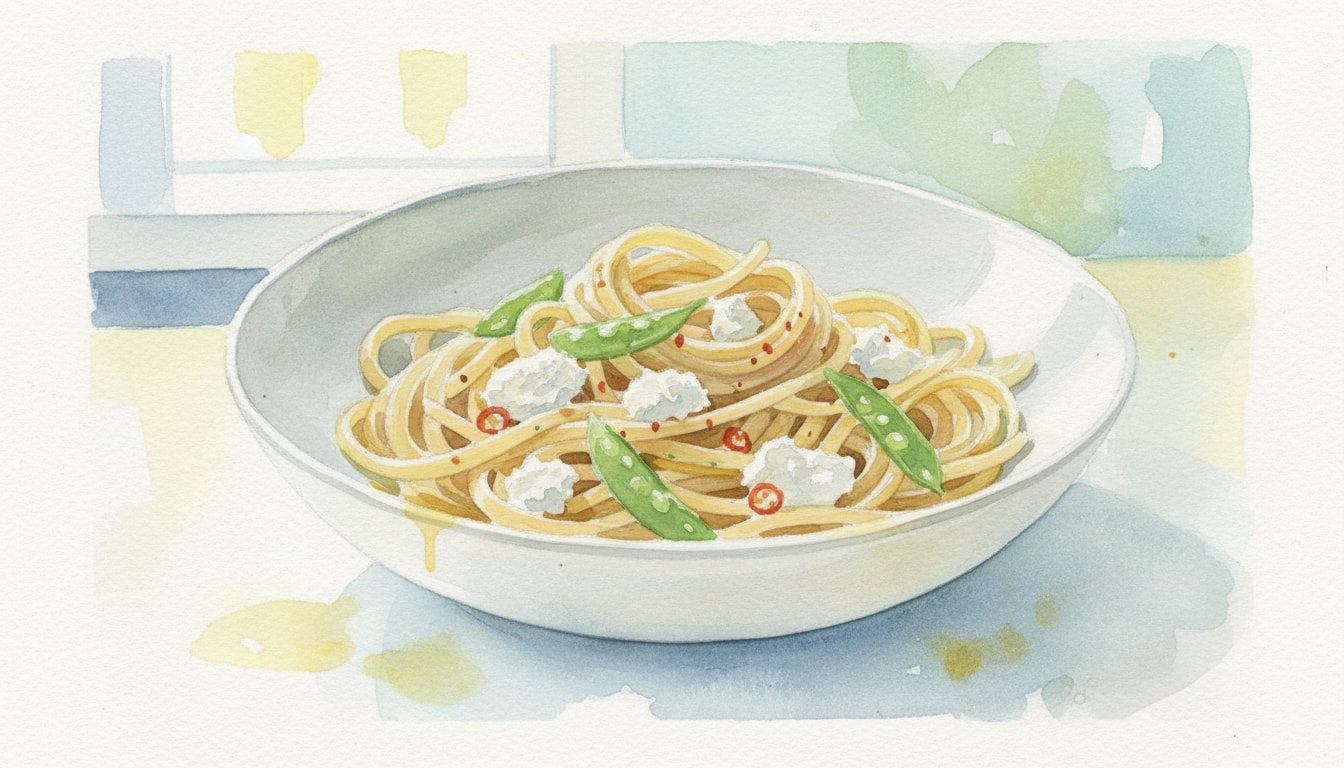
Equipment
Ingredients
Pasta & Base
- 400 g dried short pasta, dry
- 4000 ml water, boiling
- 30 g kosher salt
Sauce & Vegetables
- 250 g sugar snap peas, trimmed and halved diagonally
- 120 g fresh goat cheese (chèvre), softened log
- 30 ml olive oil
- 2 garlic, thinly sliced
- 2 g red chili flakes
- 1 lemon, zested and juiced
- 10 g fresh mint leaves, torn or chiffonade
Nutrition (per serving)
Nutrition is estimated per serving. Nutrients without complete source data are omitted.
Full nutrition
- Calories
- 559 kcal
- Protein
- 22 g
- Carbohydrates
- 80 g
- Fat
- 17 g
- Fiber
- 5 g
- Sugar
- 5 g
- Sodium
- 3101 mg
- Saturated Fat
- 6 g
- Monounsaturated Fat
- 7 g
- Polyunsaturated Fat
- 1 g
- Cholesterol
- 14 mg
- Potassium
- 616 mg
- Calcium
- 145 mg
- Iron
- 5.0 mg
- Magnesium
- 126 mg
- Phosphorus
- 457 mg
- Zinc
- 3.2 mg
- Vitamin A
- 99 mcg
- Vitamin C
- 12 mg
- Vitamin D
- 0.1 mcg
- Vitamin E
- 1.4 mg
- Vitamin K
- 6 mcg
- Vitamin B6
- 0.1 mg
- Vitamin B12
- 0.1 mcg
- Thiamin
- 0.04 mg
- Riboflavin
- 0.13 mg
- Niacin
- 0.3 mg
- Folate
- 9 mcg
- Water
- 1041 g
Sources: Aggregated Public Data, USDA FoodData Central
Method
Bring a large pot of water to a rolling boil and season heavily with salt until it tastes like the ocean.
Add the pasta to the boiling water and cook according to package directions until 1 minute shy of al dente.
While pasta cooks, heat olive oil in a large skillet over medium heat. Add sliced garlic and chili flakes, sautéing until the garlic is pale golden and fragrant.
Add the snap peas to the skillet and sauté briefly until they turn bright green but retain their crunch. Remove skillet from heat if pasta is not yet ready.
Carefully scoop out about 250ml (1 cup) of starchy pasta water from the pot, then drain the pasta.
Return the skillet to medium-low heat. Add the drained pasta, the goat cheese (broken into chunks), and about 120ml of the reserved hot pasta water.
Stir vigorously and constantly. The cheese will melt and emulsify with the starchy water to create a creamy coating. If the sauce looks dry, add more reserved pasta water a splash at a time.
Remove from heat. Stir in the lemon zest, lemon juice, and torn mint. Season with black pepper and additional salt if needed immediately before serving.
Chef's Notes
- Using 'starchy' pasta water is the secret weapon here. The starch helps the fat in the goat cheese and olive oil emulsify into a smooth sauce rather than an oily separation.
- Soft goat cheese logs (chèvre) work much better than pre-crumbled cheese, which often has anti-caking agents that prevent smooth melting.
- For extra texture, you can add toasted pine nuts or walnuts at the very end.
- Do not add the lemon juice while the sauce is boiling, as the acid can sometimes cause the dairy to curdle slightly; add it off the heat as a finishing touch.
Storage
Refrigerator: 3 days — The sauce may tighten significantly when cold. Reheat gently with a splash of water.
Reheating: Warm in a pan over low heat with a splash of water to re-emulsify the sauce.
Troubleshooting
Sauce is grainy or clumpy
Cause: The heat was too high when adding the cheese, causing the proteins to seize, or the cheese was too cold.
Fix: Add a splash of hot water and stir vigorously off the heat to try and smooth it out.
Prevention: Remove pan from high heat before adding cheese; use room temperature cheese.
Cultural Context
This dish is a modern interpretation of the Italian concept of 'pasta bianca' or 'pasta al limone', utilizing French chèvre to create creaminess without the heaviness of a traditional Alfredo or béchamel. It highlights the transition from winter to spring with the use of bright citrus and snap peas.


