Equipment
Ingredients
Lamb Chops
- 720 g lamb rib chops, bone-in, about 90g each, 8 chops total
- 15 ml olive oil
- 3 garlic cloves, finely minced
- 4 g fresh rosemary, leaves stripped and finely chopped
- 2 g fresh thyme, leaves stripped
- 2 g lemon zest, finely grated
- 5 g dijon mustard
- 4 g kosher salt
- 1 g black pepper, freshly ground
Roasted Salad
- 500 g baby potatoes, halved lengthwise
- 300 g artichoke hearts in brine, drained and quartered if large
- 200 g cherry tomatoes, halved
- 80 g red onion, thinly sliced
- 2 garlic cloves, left whole, lightly crushed with the side of a knife
- 15 ml olive oil
- 60 g baby arugula
- 10 g fresh flat-leaf parsley, roughly chopped
- 5 g fresh basil, torn by hand
- 10 g capers, drained and briefly rinsed
Lemon Vinaigrette
- 30 ml lemon juice, freshly squeezed, about 1.5 lemons
- 20 ml olive oil
- g kosher salt
- g black pepper
Nutrition (per serving)
Nutrition is estimated per serving. Nutrients without complete source data are omitted.
Full nutrition
- Calories
- 504 kcal
- Protein
- 29 g
- Carbohydrates
- 27 g
- Fat
- 32 g
- Fiber
- 5 g
- Sodium
- 968 mg
- Saturated Fat
- 11 g
- Potassium
- 674 mg
- Calcium
- 65 mg
- Iron
- 3.6 mg
- Magnesium
- 94 mg
- Phosphorus
- 248 mg
- Zinc
- 2.7 mg
- Vitamin C
- 31 mg
- Water
- 229 g
Sources: Aggregated Public Data, USDA FoodData Central
Method
Mince the 3 garlic cloves (about 9g) for the lamb. Strip the rosemary and thyme leaves from their stems and finely chop. Using a microplane, grate the zest from 1 lemon into a small pile and set aside. Pat the lamb chops dry with paper towels so the marinade clings.
In a large bowl, combine the lamb chops with 15ml olive oil, the minced garlic, chopped rosemary, thyme, lemon zest, dijon if using, 4g salt, and 1g pepper. Massage the marinade into the meat so every chop is coated. Let stand at room temperature for 15 minutes while you prepare the vegetables and preheat the oven.
Preheat the oven to 220°C/425°F with a rack in the upper third. Slide the rimmed sheet pan onto the rack so it heats with the oven.
Halve 500g baby potatoes lengthwise so they have flat sides for browning. Quarter 300g drained artichoke hearts if they are larger than a thumbnail. Halve 200g cherry tomatoes. Thinly slice 80g red onion. Lightly crush 2 whole garlic cloves with the side of a knife so they release their aroma without burning.
Carefully remove the hot sheet pan from the oven. Toss the halved potatoes on the pan with 10ml of olive oil, 2g salt, and a few grinds of pepper. Spread the potatoes cut-side down in a single layer with space between pieces. Roast at 220°C/425°F for 15 minutes until the undersides are deep golden.
Pull the pan from the oven. Flip the potatoes with tongs and push them to one side. Add the artichoke hearts, sliced red onion, and crushed garlic cloves to the empty side of the pan. Drizzle with 5ml olive oil and a pinch of salt. Return to the oven and roast at 220°C/425°F for 15 minutes until the artichoke edges begin to caramelize.
Add the halved cherry tomatoes to the pan, tucking them between the potatoes so they do not roll. Roast at 220°C/425°F for 5 more minutes until the tomato skins wrinkle and the potatoes are fully tender with crisp edges.
Heat a cast iron skillet over high heat until a drop of water skitters across the surface. Pat the marinated lamb chops dry once more so they sear rather than steam. Sear 2 minutes per side until a mahogany crust forms. Work in two batches if the pan would crowd.
Nestle the seared lamb chops onto the sheet pan, resting them on top of the potatoes. Roast at 220°C/425°F until an instant-read thermometer inserted into the thickest part of the meat (avoiding bone) reads 63°C/145°F for medium-rare, about 6 to 8 minutes. Thinner chops will finish sooner.
Transfer the lamb chops to a warm plate, tent loosely with foil, and rest for at least 5 minutes. Remove the sheet pan from the oven and scrape the roasted vegetables, garlic, and any pan juices into a large mixing bowl. Squeeze the softened roasted garlic cloves from their skins into the bowl.
In a small bowl, whisk together 30ml fresh lemon juice, 20ml olive oil, a generous pinch of salt, and several grinds of pepper until the vinaigrette emulsifies and turns pale and cloudy.
Pour the vinaigrette over the warm roasted vegetables. Add the chopped parsley, torn basil, and capers if using. Mix gently so the cut sides of the potatoes keep their crust but the vegetables absorb the dressing.
Add 60g baby arugula to the bowl and fold it through just until it wilts from the residual heat. Taste and adjust with additional salt, pepper, or a squeeze of lemon.
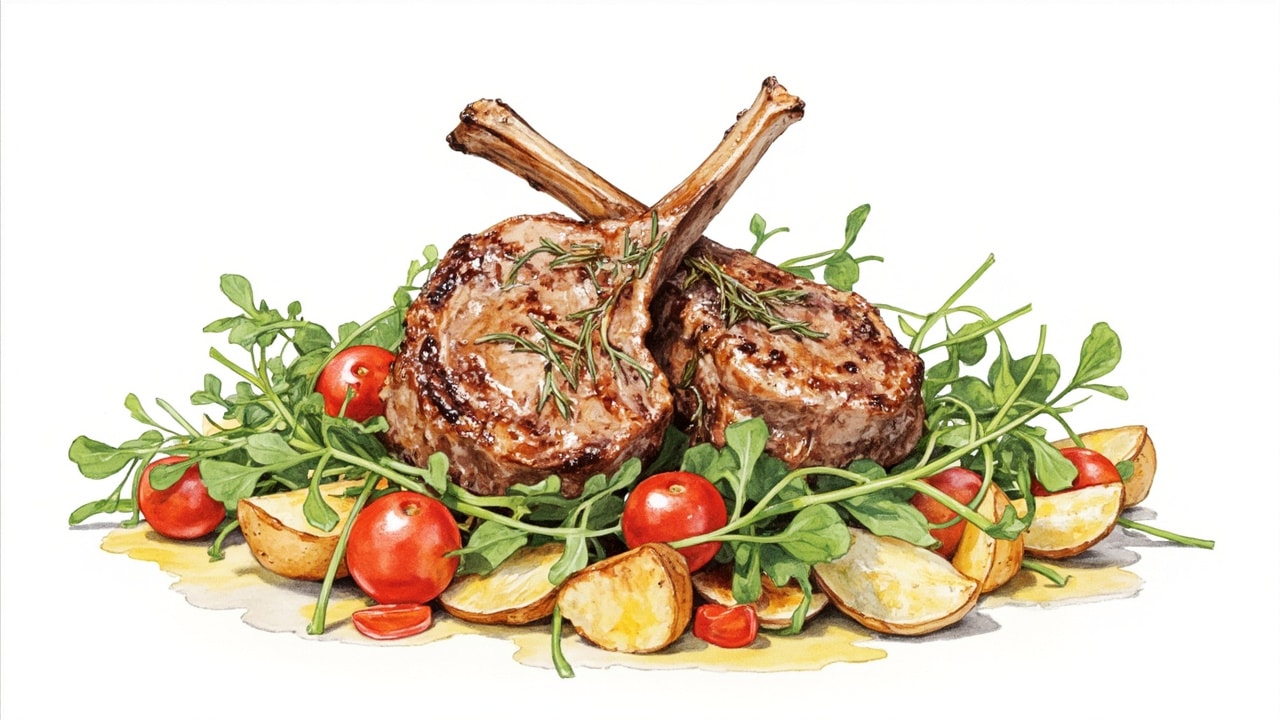
Divide the warm potato and artichoke salad among 4 plates. Arrange 2 lamb chops beside or slightly atop each salad. Finish with a final grind of pepper and a small pinch of flaky salt, and serve immediately while the salad is warm and the lamb is at its juiciest.
Chef's Notes
- Bone-in lamb rib chops deliver more flavor and stay juicier than boneless, but they cook faster than you expect. Rely on the thermometer rather than clock time, and remember carryover adds another 2-3°C/4-6°F during the rest.
- Preheating the sheet pan is the single most important step for a restaurant-style crust on the potatoes. A cold pan will steam them and you will never recover that lost browning.
- Choose artichoke hearts packed in plain brine rather than oil-packed or marinated versions. This keeps the dish lean and lets you control the seasoning, since oil-packed hearts often carry added salt and sometimes sugar.
- Resting the lamb is non-negotiable. Cutting into it the moment it leaves the oven releases all the juices onto the plate rather than letting them redistribute back through the meat.
- If fresh herbs are unavailable, substitute 1.5 teaspoons of a quality dried Italian herb blend, but add it to the marinade at least 30 minutes ahead so the dried leaves can rehydrate and soften.
Storage
Refrigerator: 2 days — Store lamb chops and salad in separate airtight containers. Lamb reheats more successfully than the dressed salad.
Reheating: Warm lamb in a 160°C/325°F oven just until heated through, 5-8 minutes. Bring the salad to room temperature before serving; do not reheat the dressed vegetables.
Troubleshooting
Lamb chops are tough, dry, and grey, cooked well past medium
Cause: Cooked too long or pulled from heat at too high an internal temperature without an adequate rest
Fix: Cannot be fully reversed. Slice thinly across the grain and serve with extra lemon juice and a small drizzle of olive oil to reintroduce surface moisture.
Prevention: Use an instant-read thermometer and pull the chops at 60-63°C/140-145°F; carryover will finish them to a perfect medium-rare during the rest.
Potatoes are pale and soft rather than crisp and golden
Cause: The sheet pan was overcrowded or was not preheated, so the potatoes steamed rather than roasted
Fix: Return the pan to 230°C/450°F for 5-8 minutes to drive off surface moisture and re-crisp the cut sides.
Prevention: Always preheat the sheet pan, spread the potatoes in a single layer with flat sides down, and avoid stacking or overlapping pieces.
Salad tastes flat, oily, and slightly soggy rather than bright
Cause: The vinaigrette was added while the vegetables were still too hot, wilting the greens and breaking the emulsion
Fix: Re-emulsify with a fresh squeeze of lemon juice and a pinch of salt, then add a handful of fresh arugula to replace any wilted greens.
Prevention: Let the roasted vegetables cool 2-3 minutes before dressing, and add the arugula last so it just barely wilts.
Artichoke hearts taste bitter or metallic
Cause: Artichokes packed in oil with added preservatives were used, or the artichokes were not roasted long enough for their edges to caramelize
Fix: Toss with an extra squeeze of lemon juice and a small pinch of sugar to balance the bitter notes, and roast briefly again if time allows.
Prevention: Choose artichoke hearts packed in plain brine and roast them until their edges turn golden; caramelization tames the bitterness.
Cultural Context
Lamb, or agnello, is a staple of central and southern Italian cooking, especially in regions like Abruzzo and Sardinia where sheep husbandry has ancient roots. Roman cuisine in particular celebrates the pairing of lamb with artichokes, since the carciofo is a defining ingredient of the city's spring markets. This recipe adapts that classic Mediterranean pairing into a heartier autumn preparation by roasting both the meat and the vegetables, drawing on the cucina povera tradition of stretching a small amount of protein across a generous platter of seasonal produce.