
Equipment
Ingredients
Pastry
- 540 g all-purpose flour
- 9 g salt
- 180 ml olive oil
- 160 ml water, very cold
Filling
- 680 g pumpkin, peeled, seeded, and coarsely grated
- 680 g butternut squash, peeled, seeded, and coarsely grated
- 4½ g salt
- 1 red pepper, seeded and cut into 6mm strips
- 1 yellow pepper, seeded and cut into 6mm strips
- 1 onion, thinly sliced
- 37½ ml olive oil
- 80 ml black olives, chopped
- 6 g thyme, chopped
- 6 g smoked paprika
- 3 g black pepper
- 1 garlic, minced
Nutrition (per serving)
Nutrition is estimated per serving. Nutrients without complete source data are omitted.
Full nutrition
- Calories
- 768 kcal
- Protein
- 13 g
- Carbohydrates
- 96 g
- Fat
- 39 g
- Fiber
- 9 g
- Sugar
- 8 g
- Sodium
- 1251 mg
- Saturated Fat
- 6 g
- Monounsaturated Fat
- 28 g
- Polyunsaturated Fat
- 4 g
- Potassium
- 987 mg
- Calcium
- 118 mg
- Iron
- 7.5 mg
- Magnesium
- 80 mg
- Phosphorus
- 204 mg
- Zinc
- 1.4 mg
- Vitamin A
- 1186 mcg
- Vitamin C
- 109 mg
- Vitamin E
- 8.8 mg
- Vitamin K
- 28 mcg
- Vitamin B6
- 0.4 mg
- Thiamin
- 0.89 mg
- Riboflavin
- 0.65 mg
- Niacin
- 7.7 mg
- Folate
- 228 mcg
- Water
- 321 g
Sources: USDA FoodData Central
Method
Place the grated pumpkin in a colander over a bowl and toss with 1.5g of salt. Let it drain for at least 2 hours or overnight at room temperature to remove excess moisture. Discard the liquid.
Mix the flour and 9g of salt in a large bowl. Incorporate 180ml of olive oil using a pastry blender or fork until the texture resembles coarse crumbs. Slowly add cold water, a few tablespoons at a time, mixing until a pliable dough forms. Shape into a ball, wrap in plastic, and chill for 1 hour.
Preheat the oven to 190°C (375°F). Toss the peppers and onion with 37.5ml olive oil and 3g salt. Spread on baking sheets in a single layer and roast for 40 minutes, tossing occasionally, until caramelized.
Combine the drained pumpkin, roasted pepper and onion mixture, olives, thyme, paprika, black pepper, and garlic in a large bowl.
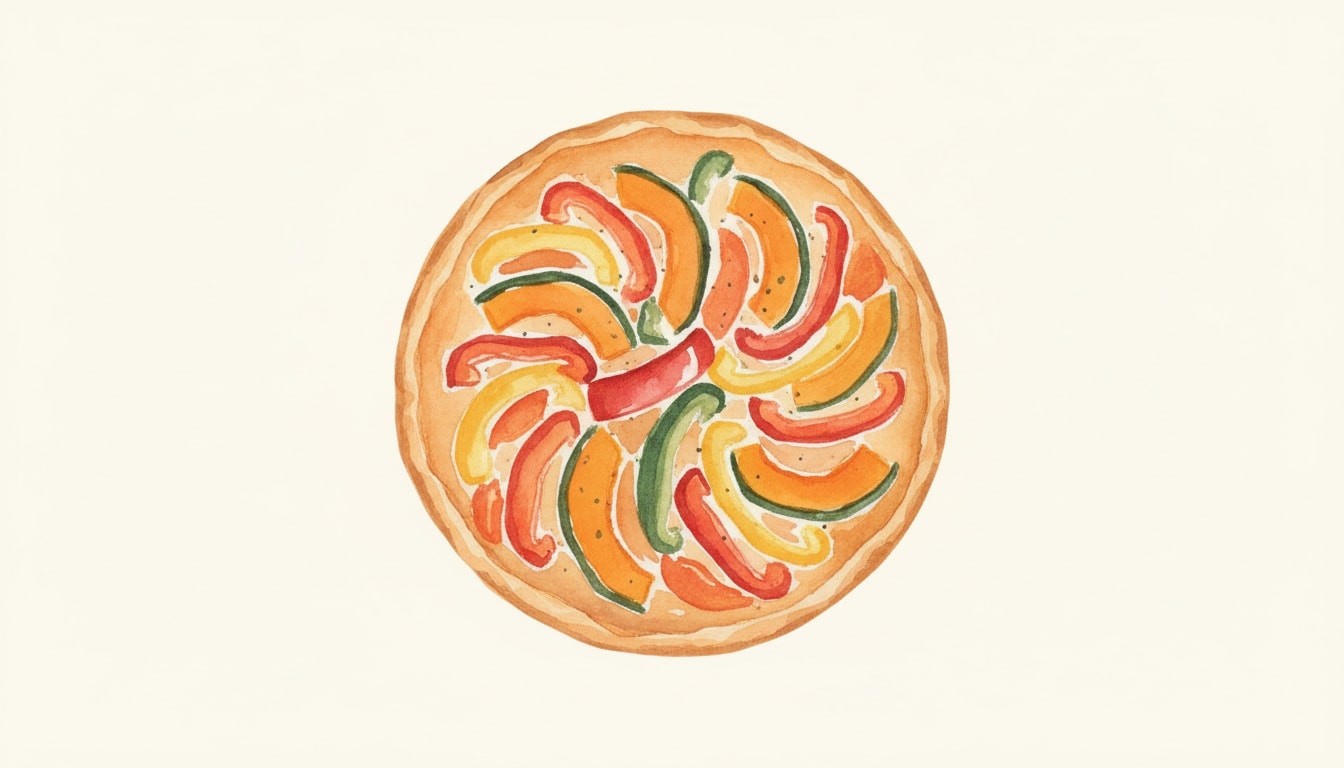
Preheat the oven to 220°C (425°F). Roll the dough on a floured surface into a 43x30cm (17x12 inch) rectangle. Spread the filling over the right half of the dough, leaving a border. Moisten the edges with water, fold the left half over, and pinch to seal. Cut a slit in the center.
Transfer the tart to a greased baking sheet. Bake at 220°C (425°F) for 20 minutes, then reduce the heat to 175°C (350°F) and bake for another 35-40 minutes. Let the tart rest for 30 minutes before serving.
Chef's Notes
- For an even flakier crust, ensure your water is ice-cold when making the pastry dough. This helps to keep the fat solid until it hits the oven, creating steam pockets.
- Don't skip the draining step for the pumpkin; excess moisture can lead to a soggy tart. You can speed this up by gently pressing the grated pumpkin in a clean kitchen towel.
- Caramelizing the onions and peppers properly is key to developing deep, sweet flavors. Low and slow is the mantra here; don't rush this step.
- For a richer filling, consider adding a tablespoon or two of crème fraîche or a sprinkle of grated hard cheese like Pecorino Romano along with the vegetables before assembling the tart.
- Allowing the tart to rest for 30 minutes before slicing is crucial. This lets the filling set, preventing it from spilling out when cut.
Storage
Refrigerator: 4 days — Store in an airtight container.
Freezer: 3 months — Wrap tightly in foil and plastic wrap.
Reheating: Reheat in a 175°C (350°F) oven for 10-15 minutes to maintain crust texture.
Troubleshooting
The bottom crust is soggy.
Cause: The grated pumpkin was not drained sufficiently.
Fix: Cannot be fixed once baked; serve immediately to prevent further softening.
Prevention: Ensure the pumpkin drains for the full 2 hours and squeeze out any remaining moisture by hand.
The pastry dough is tough and dry.
Cause: The dough was over-mixed or over-handled.
Fix: Cannot be fixed.
Prevention: Mix until the dough just comes together and use cold water.
Cultural Context
This harvest tart draws inspiration from Mediterranean cuisines, which frequently utilize seasonal vegetables like pumpkin and peppers in savory pies and tarts. The use of olive oil in the crust and hearty vegetable filling reflects the region's agricultural bounty and emphasis on fresh, flavorful ingredients.


