
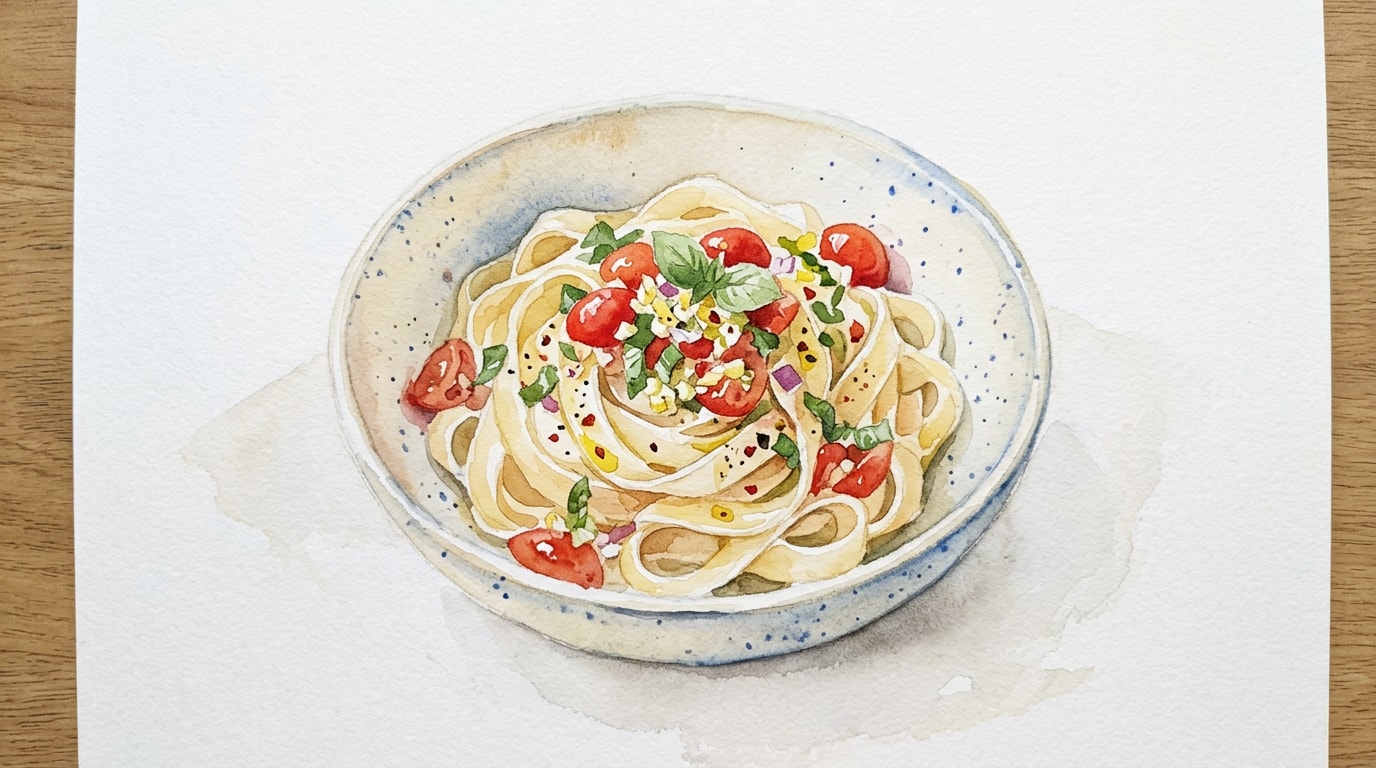
Equipment
Ingredients
Salsa Cruda
- 600 g cherry tomatoes, halved or quartered depending on size
- 60 ml extra virgin olive oil
- 2 garlic, peeled and lightly crushed
- 15 g fresh basil, hand-torn
- 5 g kosher salt
- 2 g black pepper, freshly cracked
Pasta
- 500 g fresh egg fettuccine
- 4000 ml water
- 40 g kosher salt
Nutrition (per serving)
Nutrition is estimated per serving. Nutrients without complete source data are omitted.
Full nutrition
- Calories
- 656 kcal
- Protein
- 20 g
- Carbohydrates
- 97 g
- Fat
- 21 g
- Fiber
- 6 g
- Sugar
- 8 g
- Sodium
- 628 mg
- Saturated Fat
- 4 g
- Monounsaturated Fat
- 11 g
- Polyunsaturated Fat
- 2 g
- Potassium
- 724 mg
- Calcium
- 51 mg
- Iron
- 5.8 mg
- Magnesium
- 4 mg
- Phosphorus
- 5 mg
- Zinc
- 0.1 mg
- Vitamin A
- 23 mcg
- Vitamin C
- 1 mg
- Vitamin E
- 2.2 mg
- Vitamin K
- 25 mcg
- Vitamin B6
- 0.0 mg
- Riboflavin
- 0.01 mg
- Niacin
- 0.1 mg
- Folate
- 3 mcg
- Water
- 4 g
Sources: Aggregated Public Data, USDA FoodData Central
Method
Cut the cherry tomatoes into halves or quarters, depending on their size, and place them into a large mixing bowl.
Add the olive oil, crushed garlic cloves, torn basil, 5g of kosher salt, and black pepper to the tomatoes. Stir gently to combine, then let sit at room temperature for 30 minutes to release the tomato juices.
Bring the 4000ml of water to a rolling boil in a large pot. Once boiling, add the 40g of kosher salt.
Drop the fresh fettuccine into the boiling water and stir gently to prevent sticking. Cook until al dente, usually 2 to 3 minutes for fresh pasta.
Remove and discard the crushed garlic cloves from the marinated tomatoes. Drain the pasta using a colander, reserving a small splash of the cooking water.
Immediately add the hot drained pasta to the bowl with the room temperature tomato mixture. Toss vigorously until the pasta is well coated, adding a teaspoon of pasta water if necessary to help emulsify the oil and tomato juices.
Chef's Notes
- Using warm pasta directly from the pot slightly heats the raw tomatoes, releasing their volatile aromatic compounds without cooking them.
- The crushed whole garlic method provides a gentle background warmth. If you prefer a sharper, more pungent garlic flavor, finely mince half a clove instead of using whole crushed cloves.
- Because there are so few ingredients, the quality of your extra virgin olive oil dictates the success of this dish. Opt for a grassy, robust, and slightly peppery oil to balance the sweetness of the summer tomatoes.
Storage
Refrigerator: 2 days — Store the sauce and pasta separately. Assembled dish will become mushy.
Troubleshooting
Sauce is too watery and pooling at the bottom of the bowl
Cause: Tomatoes were marinated for too long or pasta was not thoroughly drained
Fix: Toss the pasta vigorously for an additional 60 seconds; the starch from the hot pasta will eventually help bind the liquid into a light emulsion.
Prevention: Limit marination time to 30-45 minutes and shake the colander well when draining the pasta.
Garlic flavor is overpowering
Cause: Garlic was minced instead of left whole/crushed, or was left in the sauce during service
Fix: Cannot be fixed once mixed, but adding extra fresh basil can help mask the intensity.
Prevention: Only lightly crush the garlic so it infuses the oil without dispersing pieces into the sauce, and remember to remove it before adding the pasta.
Cultural Context
Known in Italy as Pasta alla Checca or simply Salsa Cruda, this dish is a classic Roman summer staple. It was designed to provide a hearty meal without needing to stand over a hot stove to simmer a traditional marinara, relying instead on the peak ripeness of seasonal tomatoes.


