
Equipment
Ingredients
Homemade Chips
- 800 g russet potatoes, unpeeled, scrubbed clean
- 30 ml olive oil
- 5 g kosher salt
Curry Base
- 15 ml coconut oil
- 150 g yellow onion, finely diced
- 15 g garlic, minced
- 15 g fresh ginger, minced
- 15 g madras curry powder
- 30 g tomato paste
- 400 ml full-fat coconut milk
- 200 ml vegetable stock
Protein and Finish
- 600 g salmon fillet, skinless, pin bones removed
- 15 ml lime juice, freshly squeezed
- 10 g fresh cilantro, roughly chopped
Nutrition (per serving)
Nutrition is estimated per serving. Nutrients without complete source data are omitted.
Full nutrition
- Calories
- 812 kcal
- Protein
- 39 g
- Carbohydrates
- 49 g
- Fat
- 54 g
- Fiber
- 6 g
- Sugar
- 4 g
- Sodium
- 758 mg
- Saturated Fat
- 28 g
- Monounsaturated Fat
- 13 g
- Polyunsaturated Fat
- 7 g
- Cholesterol
- 83 mg
- Potassium
- 1842 mg
- Calcium
- 102 mg
- Iron
- 6.8 mg
- Magnesium
- 152 mg
- Phosphorus
- 606 mg
- Zinc
- 2.0 mg
- Vitamin A
- 101 mcg
- Vitamin C
- 26 mg
- Vitamin D
- 16.5 mcg
- Vitamin E
- 7.5 mg
- Vitamin K
- 21 mcg
- Vitamin B6
- 1.8 mg
- Vitamin B12
- 4.8 mcg
- Thiamin
- 0.53 mg
- Riboflavin
- 0.32 mg
- Niacin
- 16.0 mg
- Folate
- 93 mcg
- Water
- 378 g
Sources: Aggregated Public Data, USDA FoodData Central
Method
Preheat the oven to 220C or 430F.
Using a chef's knife and cutting board, cut the potatoes into thick, even batons about 1.5 centimeters wide to create traditional chip shop style chips.
Transfer the potato batons to a baking sheet. Toss them thoroughly with olive oil and kosher salt until evenly coated, spreading them out into a single layer.
Bake the chips in the preheated oven for 30 minutes, flipping halfway through, until golden brown and crispy on the edges.
While the chips bake, heat the coconut oil in a large skillet over medium heat. Add the finely diced yellow onion and saute until softened and translucent.
Stir in the minced garlic, minced ginger, curry powder, and tomato paste. Toast the aromatics and spices constantly stirring to prevent burning, until highly fragrant and deep in color.
Pour the full-fat coconut milk and vegetable stock into the skillet, stirring to scrape up any browned bits from the bottom of the pan. Bring the mixture to a gentle bubble, then reduce the heat to maintain a simmer.
Using a dedicated fish cutting board to prevent cross-contamination with raw meat, cut the salmon fillets into large, bite-sized chunks. Wash your hands thoroughly with soap and warm water immediately after handling the raw fish.
Gently nestle the salmon chunks into the simmering curry sauce. Poach the fish gently until it reaches an internal temperature of 63C or 145F and is opaque throughout.
Remove the skillet from the heat. Carefully stir in the fresh lime juice and scatter the roughly chopped fresh cilantro over the top.
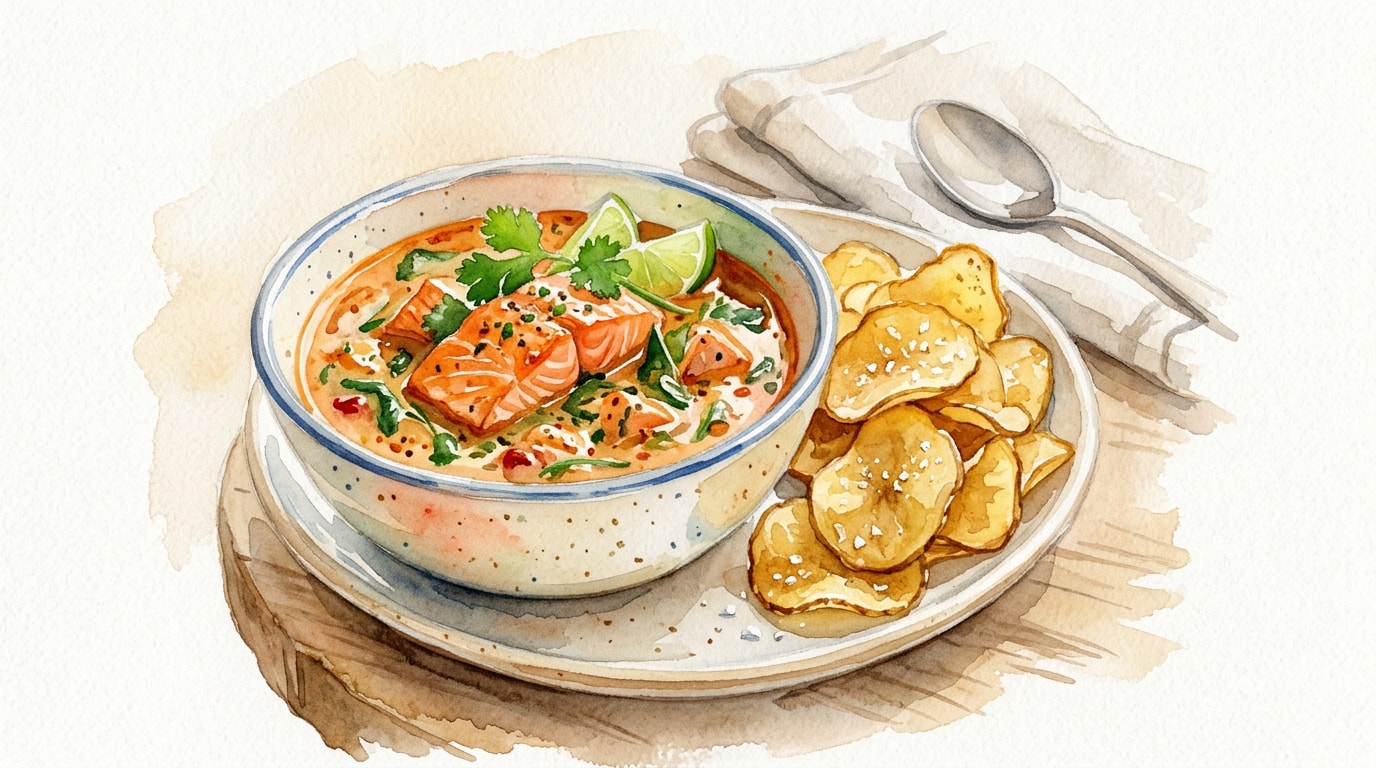
Divide the hot, crispy homemade chips among four warm plates. Spoon the fragrant salmon curry either alongside the chips or directly over them, pub-style.
Chef's Notes
- To achieve the crispiest homemade chips, soak the cut potato batons in cold water for 30 minutes to remove excess surface starch, then thoroughly pat them completely dry with paper towels before tossing in oil.
- Toasting the curry powder in oil is a critical step known as blooming. It releases the fat-soluble flavor compounds and removes any raw, dusty flavor from the ground spices.
- Salmon continues to cook gently in the residual heat of the sauce. For the best texture, remove the pan from the heat the moment the salmon is just cooked through.
- If your curry paste base is sticking to the skillet while toasting, add a tiny splash of water to deglaze and prevent the spices from turning bitter.
Storage
Refrigerator: 3 days — Store curry and chips in separate airtight containers to prevent chips from becoming soggy.
Freezer: 1 month — Curry base freezes well without the salmon. Do not freeze the cooked chips.
Reheating: Reheat curry gently on the stovetop over low heat until warmed through. Re-crisp chips in a 200C oven for 5 minutes.
Troubleshooting
Chips are pale, soggy, and steaming rather than roasting.
Cause: The baking sheet was overcrowded, trapping moisture released from the potatoes.
Fix: Transfer half the chips to another baking sheet, increase heat slightly, and turn on the broiler for 2 to 3 minutes, watching closely.
Prevention: Ensure potatoes are spread in a single, uncrowded layer. Use two baking sheets if necessary.
Curry sauce splits or looks grainy.
Cause: Coconut milk was boiled too vigorously instead of maintained at a gentle simmer.
Fix: Remove from heat immediately and whisk vigorously with a splash of cold water to re-emulsify before adding the fish.
Prevention: Never allow coconut milk-based sauces to reach a rolling boil; always lower the heat once bubbles appear.
Cultural Context
Combining the classic British chippy tradition of 'curry and chips' with vibrant South Asian spices, this variation elevates late-night comfort food into a refined, nourishing main course. Serving delicately poached salmon in place of standard chip shop saveloy modernizes the dish while honoring its multicultural roots.


