Equipment
* optional
Ingredients
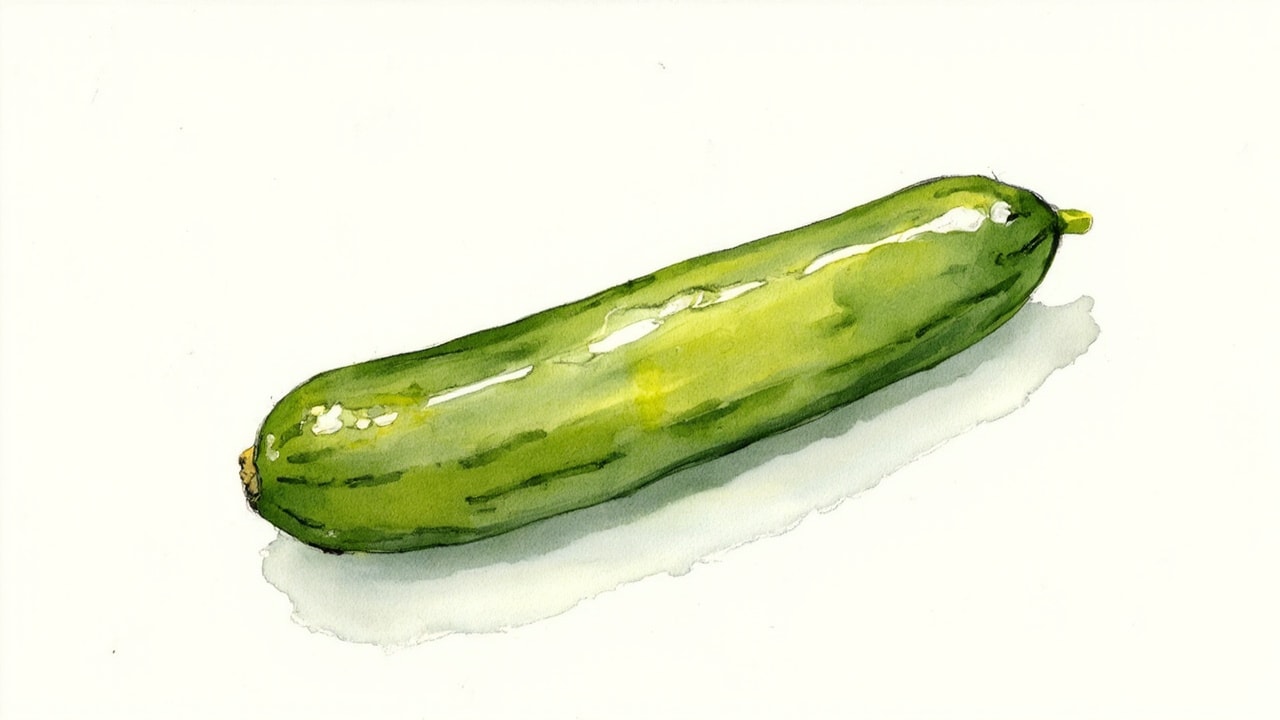
Cucumbers
- 1000 g pickling cucumbers (Kirby), fresh, firm, unwaxed, 4-7 cm diameter
Aromatics
- 8 garlic cloves, peeled and lightly crushed
- 40 g fresh dill, whole sprigs with stems and flower heads, divided among jars
- 4 grape leaves, fresh or preserved, rinsed
- 4 bay leaves, dried
Pickling Spices
- 4 g black peppercorns, whole
- 4 g yellow mustard seeds, whole
- 2 g coriander seeds, whole
- 2 g dill seeds, whole
- 1 g red pepper flakes, crushed
Brine
- 600 ml distilled water
- 600 ml distilled white vinegar, 5 percent acidity
- 40 g pickling salt, fine, no iodine or anti-caking agents
- 15 g granulated sugar, to balance acidity, not to sweeten
Nutrition (per serving)
Nutrition is estimated per serving. Nutrients without complete source data are omitted.
Full nutrition
- Calories
- 19 kcal
- Protein
- 1 g
- Carbohydrates
- 3 g
- Fat
- 0 g
- Fiber
- 0 g
- Sodium
- 674 mg
- Potassium
- 88 mg
- Calcium
- 21 mg
- Magnesium
- 9 mg
- Phosphorus
- 17 mg
- Vitamin C
- 3 mg
Sources: Aggregated Public Data, USDA FoodData Central
Method
Wash the cucumbers under cold running water, gently scrubbing away any dirt, spines, or clinging blossoms. Pat them completely dry with a clean kitchen towel. Cold water and prompt drying keep the flesh crisp and receptive to brine.
Slice off 3 mm (about 1/8 inch) from the blossom end of each cucumber. The blossom end contains pectin-softening enzymes that will cause pickles to lose their snap if left intact, so this trim is non-negotiable for crunch.
Halve the cucumbers lengthwise into spears about 10 cm (4 inches) long, or leave very small cucumbers whole. Aim for pieces that will stand upright in your jars without forcing.
Wash four pint-sized glass jars and their lids in hot soapy water, then rinse well or run them through a dishwasher sanitize cycle. Air-dry or towel-dry completely on a clean kitchen towel. Spotless vessels prevent surface mould and off-flavours during long cold storage.
Divide the aromatics evenly among the four jars. Into every jar drop 2 garlic halves, 10 g fresh dill, 1 grape leaf, 1 bay leaf, 1 g black peppercorns, 1 g mustard seeds, 0.5 g coriander seeds, 0.5 g dill seeds, and 0.25 g red pepper flakes if using.
Pack the cucumber spears tightly into the jars, standing them vertically with the blossom-end cut facing up. Leave about 2 cm (3/4 inch) of headspace at the rim. Tight packing keeps the cucumbers from floating above the brine as they cure.
Combine the distilled water, distilled white vinegar, pickling salt, and granulated sugar in a saucepan. Heat over medium, stirring gently with a mixing spoon, until the salt and sugar fully dissolve and the liquid reaches about 82 degrees C (180 degrees F). Do not boil; gentle heat preserves the brine's clarity.
Remove the brine from the heat and let it cool to room temperature, about 22 degrees C (72 degrees F). Cold brine preserves the cucumbers' crispness far better than hot brine, which partially cooks the flesh and yields a softer pickle.
Pour the cooled brine over the packed cucumbers, covering them by at least 1 cm (1/2 inch). Tap the jars gently to release trapped air bubbles, then top up with brine if the level drops. Wipe the jar rims clean with a kitchen towel before sealing.
Seal each jar with a tight-fitting lid and refrigerate immediately at or below 4 degrees C (40 degrees F). Do not store at room temperature; refrigerator pickles rely on continuous cold storage for both safety and crunch.
Wait at least 48 hours before opening the first jar, though a full 5 days allows the brine to penetrate deeply and develop a balanced flavour. The pickles will continue to mature and slightly soften with time. Give each jar a gentle shake once a day to redistribute the brine around the spears.
Chef's Notes
- The single biggest predictor of crunch is cucumber freshness. Farm-stand cucumbers picked that morning will yield noticeably snappier pickles than supermarket stock that has spent a week on a shelf, so source the freshest cukes you can find.
- Tannins are your quiet ally in this recipe. Grape leaves, oak leaves, horseradish leaves, or four black tea bags all release tannins that inhibit pectin-softening enzymes and lock in the snap over weeks of cold storage.
- A 1:1 ratio of 5 percent vinegar to water produces a balanced bright pickle suited to most palates. Dropping the vinegar below that threshold risks food safety under home refrigeration; raising it produces a sharper, more aggressive sourness that suits strong meats.
- Cucumbers lose roughly 10 percent of their weight during brining as water and sugars leach out and salt penetrates in. Plan your purchase weight slightly above your finished target if you want a jar that looks full to the brim after curing.
- Once opened, a jar keeps for about 2 weeks in the refrigerator. Always use clean utensils to extract pickles and never return partially eaten spears to the jar, as introduced saliva accelerates softening.
Storage
Refrigerator: 2 months — Keep cucumbers fully submerged under brine and store at or below 4 degrees C (40 degrees F) for best texture.
Troubleshooting
Pickles turn soft or rubbery after a few weeks
Cause: Old or low-quality cucumbers, residual blossom-end enzymes, or iodine and anti-caking agents in the salt
Fix: Cannot be fixed once softness sets in; consume immediately or discard
Prevention: Use the freshest cucumbers available, cut firmly off the blossom end, and weigh pure pickling or kosher salt with no additives
Brine turns cloudy or develops surface scum
Cause: Natural compounds leaching from garlic and spices, or wild yeast from inadequate jar sanitation
Fix: If only mildly cloudy with no off-odour, skim any surface film and consume within 2 weeks; discard if the brine smells yeasty or unexpectedly fermented
Prevention: Sterilize jars thoroughly, keep cucumbers fully submerged under brine, and store immediately at 4 degrees C (40 degrees F) or below
Pickles taste too salty or too sour
Cause: Brine ratio was not measured precisely, or cucumbers were left too long in the brine
Fix: Drain the brine, rinse the cucumbers briefly under cold water, then cover with a milder brine (20 g salt per 1.2 L) for 12 hours before serving
Prevention: Weigh salt at exactly 40 g per 1.2 L of combined liquid, and start tasting at 48 hours
Pickles are hollow inside or float above the brine
Cause: Cucumbers were over-mature when brined, or jars were not packed tightly enough
Fix: Cannot be fixed once brining has begun; weigh cucumbers down with a small clean glass disc to keep them submerged for future batches
Prevention: Choose small dense pickling cucumbers 4-7 cm in diameter and pack them snugly
Cultural Context
Crisp dill pickles trace their American heritage to Eastern European Jewish immigrants who arrived between 1880 and 1920, bringing with them traditions of brining cucumbers in wooden barrels with dill, garlic, and spices from old-world kitchens. The pickle bar became a cornerstone of New York delicatessens, where crocks of half-sours and full-sours sat beside every sandwich counter as a customary accompaniment. Today's refrigerator pickle captures that same tangy, herbaceous snap in a method accessible to home cooks, skipping the longer barrel fermentation while preserving the bright, garlicky character of the deli classic.