
Equipment
Ingredients
Prawns and Seasoning
- 400 g large raw prawns, peeled and deveined, tails left on
- 3 g kosher salt, fine
- 1 g black pepper, freshly ground
- 2 g smoked paprika
Sauce
- 15 ml olive oil, extra virgin
- 45 g unsalted butter, divided into a 15g portion and a 30g portion
- 4 garlic
- 80 ml dry white wine
- 80 ml heavy cream, minimum 35 percent fat
- 15 ml lemon juice, freshly squeezed
- 10 g fresh parsley
Accompaniment
- 200 g crusty baguette, sliced
Nutrition (per serving)
Nutrition is estimated per serving. Nutrients without complete source data are omitted.
Full nutrition
- Calories
- 822 kcal
- Protein
- 51 g
- Carbohydrates
- 55 g
- Fat
- 42 g
- Fiber
- 5 g
- Sugar
- 2 g
- Sodium
- 1215 mg
- Saturated Fat
- 22 g
- Trans Fat
- 1 g
- Monounsaturated Fat
- 15 g
- Polyunsaturated Fat
- 3 g
- Cholesterol
- 416 mg
- Potassium
- 852 mg
- Calcium
- 229 mg
- Iron
- 2.7 mg
- Magnesium
- 136 mg
- Phosphorus
- 639 mg
- Zinc
- 4.2 mg
- Vitamin A
- 364 mcg
- Vitamin C
- 12 mg
- Vitamin D
- 0.6 mcg
- Vitamin E
- 2.6 mg
- Vitamin K
- 92 mcg
- Vitamin B6
- 0.3 mg
- Vitamin B12
- 0.1 mcg
- Thiamin
- 0.56 mg
- Riboflavin
- 0.36 mg
- Niacin
- 4.2 mg
- Folate
- 109 mcg
- Water
- 273 g
- Alcohol
- 4 g
Sources: USDA FoodData Central
Method
Using a chef knife and cutting board, mince the garlic cloves and roughly chop the fresh parsley.
Pat the raw prawns completely dry using paper towels to ensure proper browning in the pan.
Season the dry prawns evenly with kosher salt, black pepper, and smoked paprika.
Place a large skillet over medium-high heat and add the olive oil along with 15g of the unsalted butter.
Add the seasoned prawns to the skillet and sear for 1 minute per side using tongs until the exterior is just pink, then immediately remove from the pan and set aside.
Reduce the heat to low, add the remaining 30g of butter and the minced garlic to the skillet, and cook for 30 seconds until aromatic.
Pour the dry white wine into the skillet to lift the browned fond from the bottom, simmering until the liquid reduces by half.
Pour in the heavy cream and maintain a gentle simmer for 2 minutes until the sauce coats the back of a spoon.
Return the par-cooked prawns to the simmering sauce and cook for an additional 1 to 2 minutes until they reach an internal temperature of 63°C/145°F and are entirely opaque.
Remove the skillet from the heat and stir in the fresh lemon juice and chopped parsley to finish the sauce.
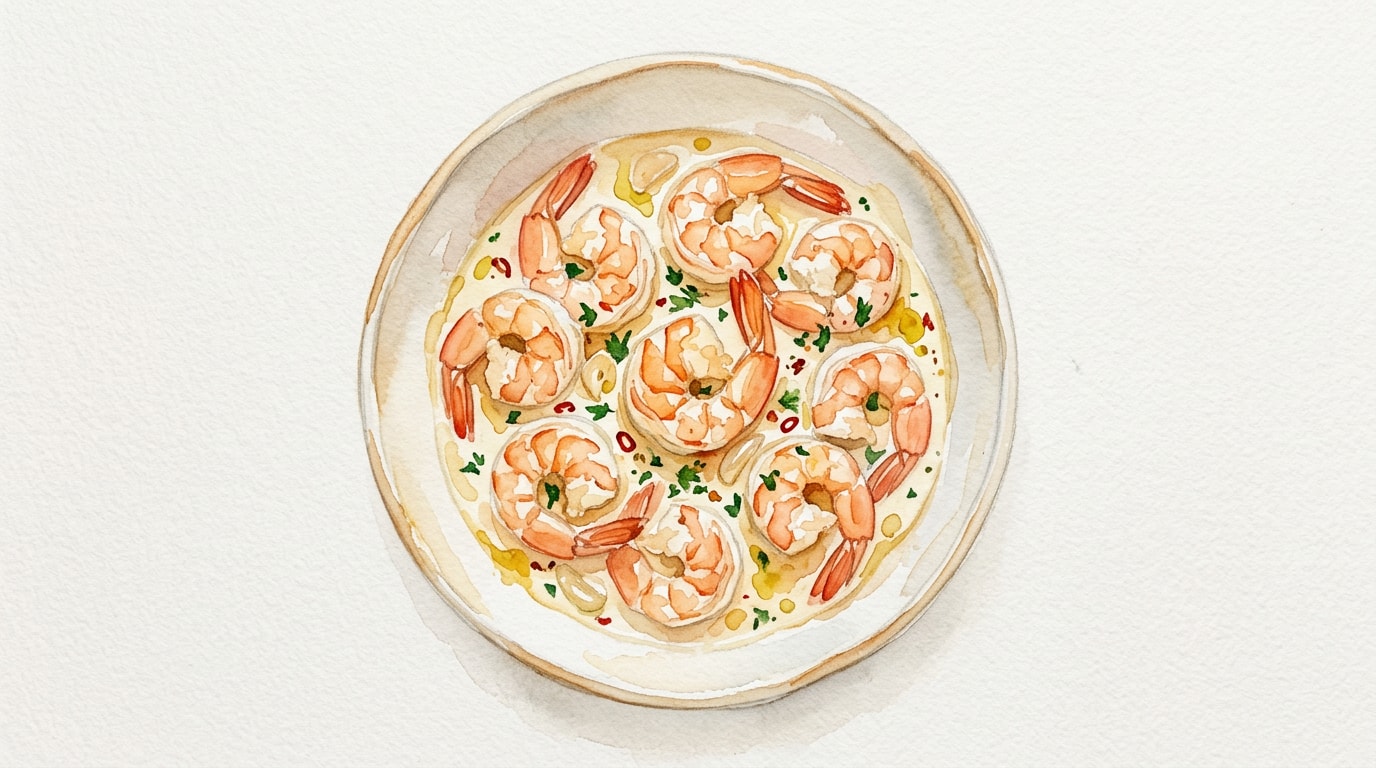
Serve the prawns and creamy garlic wine sauce immediately alongside sliced crusty baguette for dipping.
Chef's Notes
- Moisture is the enemy of a good sear. Patting the raw prawns perfectly dry before they hit the pan is crucial for triggering the Maillard reaction rather than accidentally steaming them.
- Selecting the right wine elevates this dish. Look for a dry, high-acid white wine like Albarino or a crisp Pinot Grigio to cut through the heavy richness of the butter and cream.
- Be mindful of the salt content if substituting salted butter or relying heavily on seasoned seafood stocks. Always taste the reduced sauce before seasoning the final dish.
- Residual heat will continue to cook the prawns even after you pull the pan off the stove. For the most tender bite, aim to stop the cooking process a fraction of a degree before you think they are fully done.
Storage
Refrigerator: 2 days — Store in an airtight container. The cream sauce may thicken significantly when chilled.
Reheating: Reheat very gently on the stovetop over low heat, adding a splash of water or cream to re-emulsify the sauce. Do not boil.
Troubleshooting
Cream sauce split or appears curdled and oily
Cause: The cream was boiled too vigorously, or the acidic lemon juice was added while the pan was still over high heat.
Fix: Remove from heat immediately and whisk vigorously with a 15ml splash of warm water or additional heavy cream to pull the emulsion back together.
Prevention: Maintain a gentle simmer once the dairy is added and always remove the pan from the heat source before stirring in citrus juice.
Prawns are rubbery and tough
Cause: Prawns were left in the pan too long during the initial sear or the final poaching stage.
Fix: Cannot be fixed
Prevention: Ensure the initial sear is strictly 1 minute per side just to develop flavor, relying on the gentle residual heat of the sauce to finish cooking.
Cultural Context
While traditional Spanish Gambas al Ajillo relies solely on an aggressive infusion of olive oil, garlic, and dried chilies, this iteration introduces a creamy, wine-reduced emulsion reminiscent of northern coastal European influences. It bridges the robust aromatics of tapas culture with luxurious pan sauces designed specifically to be absorbed by rustic artisan bread, making it a hearty standalone dinner.


