
Equipment
Ingredients
Produce and Meat
- 150 g bacon, diced into small pieces
- 300 g sweet corn kernels, fresh off the cob or thawed from frozen
- 3 garlic, minced
- 10 g fresh basil, torn
Pantry and Dairy
- 250 g orzo pasta
- 700 ml chicken broth, warm or room temperature
- 15 g calabrian chile paste
- 60 ml heavy cream
- 50 g parmesan cheese, freshly grated
- kosher salt
- black pepper, freshly cracked
Nutrition (per serving)
Nutrition is estimated per serving. Nutrients without complete source data are omitted.
Full nutrition
- Calories
- 563 kcal
- Protein
- 22 g
- Carbohydrates
- 64 g
- Fat
- 25 g
- Fiber
- 4 g
- Sugar
- 8 g
- Sodium
- 1390 mg
- Saturated Fat
- 10 g
- Trans Fat
- 0 g
- Monounsaturated Fat
- 9 g
- Polyunsaturated Fat
- 3 g
- Cholesterol
- 54 mg
- Potassium
- 516 mg
- Calcium
- 195 mg
- Iron
- 3.1 mg
- Magnesium
- 78 mg
- Phosphorus
- 359 mg
- Zinc
- 2.2 mg
- Vitamin A
- 107 mcg
- Vitamin C
- 12 mg
- Vitamin D
- 0.5 mcg
- Vitamin E
- 0.6 mg
- Vitamin K
- 13 mcg
- Vitamin B6
- 0.3 mg
- Vitamin B12
- 0.4 mcg
- Thiamin
- 0.83 mg
- Riboflavin
- 0.51 mg
- Niacin
- 7.9 mg
- Folate
- 184 mcg
- Water
- 272 g
Sources: USDA FoodData Central
Method
Dice the bacon, mince the garlic, and carefully slice the corn kernels off the cob if using fresh corn. Gather all ingredients near the stove.
Place a large Dutch oven over medium heat. Add the diced bacon and fry until crispy and the fat has completely rendered. Use a slotted spoon to remove about half of the cooked bacon to reserve for garnish, leaving the remaining bacon and all the rendered fat in the pot.
Add the sweet corn kernels directly into the hot bacon fat. Saute until the corn is tender and begins to develop slight browned and charred spots.
Stir the minced garlic and Calabrian chile paste into the corn mixture. Cook briefly until the garlic softens and releases its aroma, taking care not to let the garlic brown.
Pour the dry orzo pasta into the pot. Stir continuously to coat every grain of pasta in the flavored fat, toasting the orzo gently.
Pour in the chicken broth and bring the mixture to a lively simmer. Cook while stirring frequently, scraping the bottom of the pot to prevent the orzo from sticking, until the pasta is al dente and the liquid has mostly absorbed and reduced to a thick starchy glaze.
Remove the pot entirely from the heat. Vigorously stir in the heavy cream and grated parmesan cheese until a rich, cohesive sauce forms. Taste the pasta and stir in kosher salt and freshly cracked black pepper as needed.
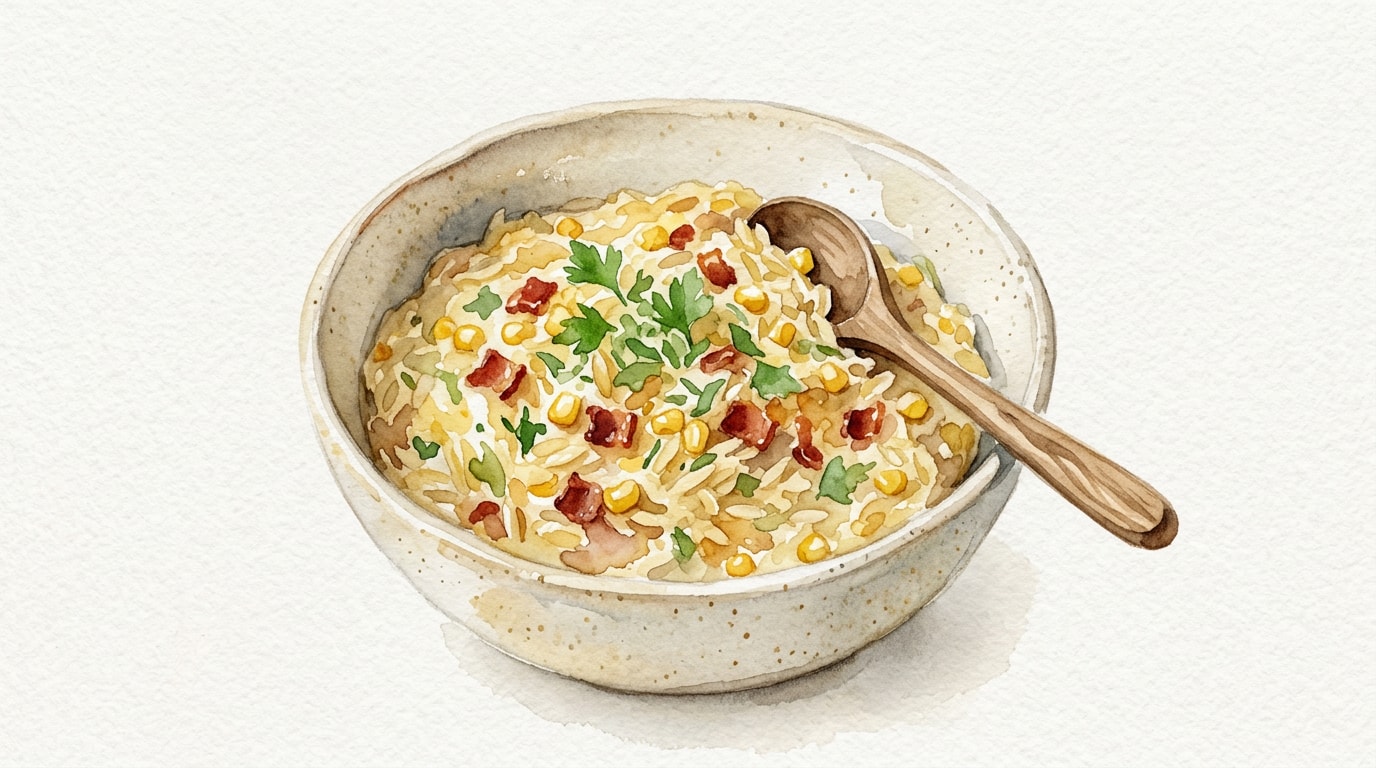
Divide the creamy pasta evenly among shallow serving bowls. Garnish with the reserved crispy bacon and freshly torn basil leaves. Serve immediately.
Chef's Notes
- Using freshly grated parmesan from a block rather than pre-packaged ground cheese ensures it melts seamlessly into the residual heat without clumping or turning grainy.
- The starch released by the dry orzo cooking directly in the broth is the structural secret to the velvety texture of this one-pot method, acting as a natural thickener alongside the heavy cream.
- If authentic Calabrian chile paste is unavailable, a mixture of double-concentrated tomato paste and crushed red pepper flakes can provide a comparable sweet, tangy heat.
- Tearing the basil leaves by hand rather than chopping them with a knife prevents the delicate edges from bruising and oxidizing, which preserves their vibrant green color and fresh aromatic oils.
- To handle raw bacon safely, designate one cutting board solely for raw meats and wash your hands thoroughly before moving on to chopping the garlic and corn.
Storage
Refrigerator: 3 days — Store in an airtight container.
Reheating: Reheat gently on the stovetop over low heat with a splash of chicken broth or water to restore the creamy consistency.
Troubleshooting
Orzo is sticking to the bottom of the pot and scorching.
Cause: Insufficient stirring during the simmering phase or heat is set too high.
Fix: Lower the heat immediately. Do not scrape up the scorched bits. Add a 30ml splash of broth or water and stir the upper layers gently.
Prevention: Stir the pasta every 60 seconds while simmering, making sure to scrape the entire bottom surface of the pot with a wooden spoon.
The pasta is crunchy but all the liquid is gone.
Cause: Evaporation occurred too quickly due to high heat, or the simmer was too aggressive.
Fix: Add an additional 120ml of warm chicken broth or water, stir well, and continue to cook over low heat until the pasta reaches the desired tenderness.
Prevention: Maintain a gentle simmer rather than a rapid boil, and use a pot with straight high sides to slow evaporation.
The sauce is clumped or slightly grainy.
Cause: Adding the cheese while the pot is still on the heat, or using pre-grated cheese coated in anti-caking agents.
Fix: Stir in an extra 15ml of heavy cream or warm broth off the heat to try and re-emulsify the sauce. If caused by pre-grated cheese, it cannot be fully fixed.
Prevention: Always remove the pot from the heat source before stirring in dairy, and grate your own cheese from a fresh block.
Cultural Context
Orzo, meaning barley in Italian due to its grain-like shape, is traditionally featured in delicate soups and broths across the Mediterranean region. This specific dish adapts the highly popular modern Italian-American one-pot pasta technique, leaning heavily on the pasta's own starches to self-thicken into a luxurious sauce without a traditional roux. The pairing of smoky American bacon, sweet summer corn, and fiery Southern Italian Calabrian chiles represents an accessible fusion of seasonal farm produce and bold pantry staples.


