Equipment
* optional
Ingredients
Dairy Base
- 250 g whole milk ricotta cheese, room temperature
- 60 g mascarpone cheese, room temperature
- 30 g parmesan cheese, finely grated
Aromatics and Seasoning
- 30 ml extra virgin olive oil
- 1 garlic, minced
- 15 ml lemon juice, freshly squeezed
- 1 lemon zest
- 3 g kosher salt
- 1 g black pepper, freshly cracked
Nutrition (per serving)
Nutrition is estimated per serving. Nutrients without complete source data are omitted.
Full nutrition
- Calories
- 170 kcal
- Protein
- 6 g
- Carbohydrates
- 7 g
- Fat
- 15 g
- Fiber
- 0 g
- Sugar
- 1 g
- Sodium
- 303 mg
- Saturated Fat
- 7 g
- Trans Fat
- 0 g
- Monounsaturated Fat
- 5 g
- Polyunsaturated Fat
- 1 g
- Cholesterol
- 24 mg
- Potassium
- 105 mg
- Calcium
- 169 mg
- Iron
- 0.2 mg
- Magnesium
- 11 mg
- Phosphorus
- 101 mg
- Zinc
- 0.4 mg
- Vitamin A
- 114 mcg
- Vitamin C
- 2 mg
- Vitamin D
- 0.1 mcg
- Vitamin E
- 0.8 mg
- Vitamin K
- 4 mcg
- Vitamin B6
- 0.1 mg
- Vitamin B12
- 0.4 mcg
- Thiamin
- 0.01 mg
- Riboflavin
- 0.14 mg
- Niacin
- 0.1 mg
- Folate
- 3 mcg
- Water
- 35 g
Sources: Aggregated Public Data, USDA FoodData Central
Method
Place the ricotta cheese in a fine mesh strainer over a bowl and drain any excess whey to prevent a watery sauce.
Using a microplane, finely grate the parmesan cheese and zest the lemon.
Mince the garlic clove into a very fine paste. You can add a small pinch of the measured salt and crush it with the side of a knife to help form a paste.
In a medium mixing bowl, combine the drained ricotta, mascarpone, grated parmesan, minced garlic, and lemon zest.
Whip the mixture vigorously with a whisk while slowly drizzling in the extra virgin olive oil and lemon juice. Continue whipping until the sauce is completely smooth and aerated.
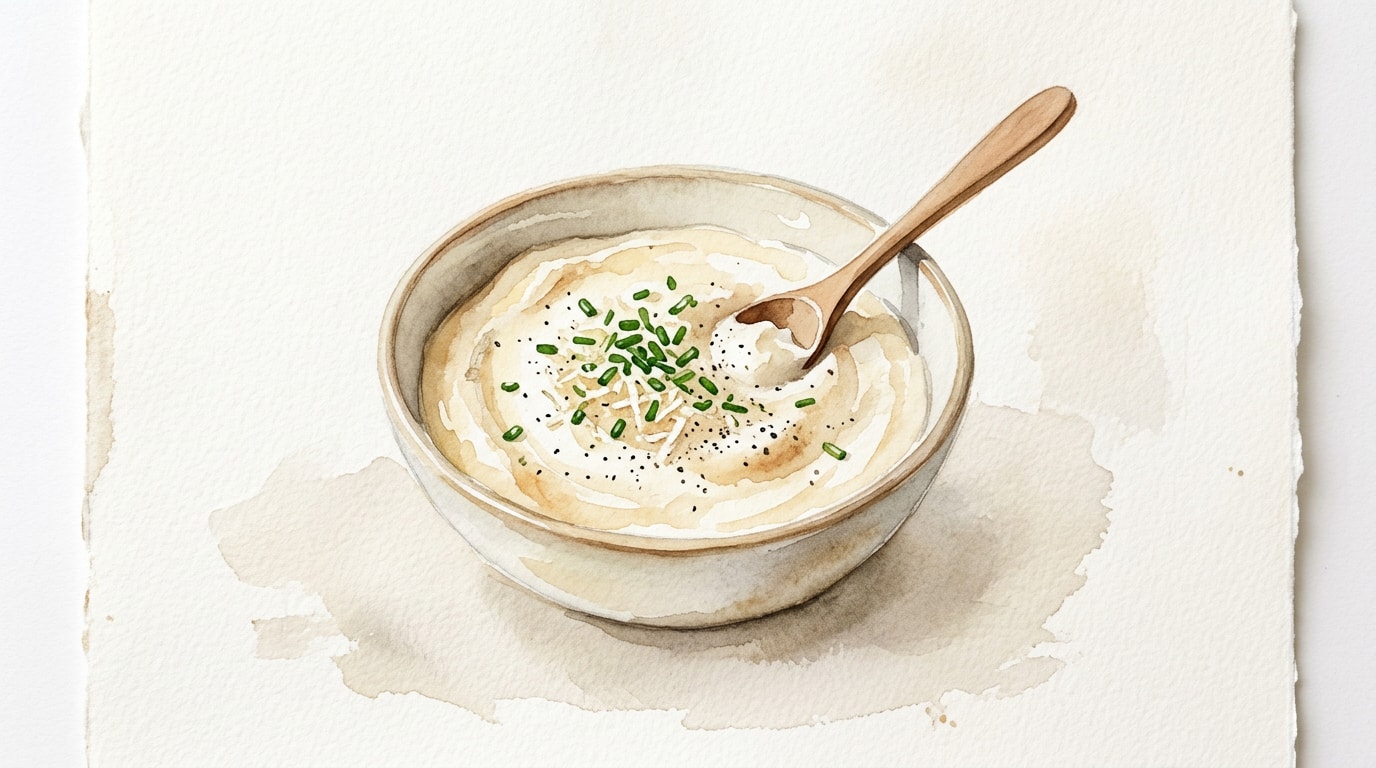
Season the finished sauce with salt and black pepper. Taste and adjust seasoning as necessary before serving immediately over hot pasta or chilled on canapes.
Chef's Notes
- For the absolute creamiest texture, allow the ricotta and mascarpone to sit at room temperature for twenty minutes before mixing. Cold dairy resists emulsification and can lead to a lumpy final product.
- High quality whole milk ricotta makes a significant difference in this uncooked sauce. Avoid skim or low-fat varieties, which contain stabilizers that can become gummy when whipped.
- When applying this sauce to canapes, consider whipping it in a food processor for thirty seconds to achieve a perfectly pipeable, mousse-like consistency.
- Fresh herbs elevate this dish beautifully. Folding in finely chopped basil, parsley, or chives just before serving adds an excellent layer of fresh flavor.
Storage
Refrigerator: 4 days — Store in an airtight container. Stir well before reusing as some liquid may separate.
Reheating: Warm gently over low heat. If using for pasta, loosen with a splash of hot pasta water rather than heating the sauce directly in a pan to prevent splitting.
Troubleshooting
Sauce is too thick and clumpy when mixed with pasta
Cause: Ricotta and mascarpone lack the hydration needed to coat noodles naturally
Fix: Vigorously stir in hot, starchy pasta water 15ml at a time off the heat until a silky consistency is reached
Prevention: Always reserve hot pasta cooking water before draining the noodles
Sauce split or became grainy
Cause: The cheese was subjected to high direct heat
Fix: Remove from heat immediately and whisk in a small splash of cold heavy cream or milk to re-emulsify
Prevention: Never heat this sauce directly in a pan over a flame
Cultural Context
Ricotta, translating to recooked in Italian, represents the historical resourcefulness of cheesemakers utilizing leftover whey. By blending this foundational dairy with the opulent richness of mascarpone from the Lombardy region, this sauce bridges rustic simplicity with luxurious texture. It serves as a versatile, modern staple that honors classic Italian flavor profiles while requiring minimal time and equipment.