Equipment
* optional
Ingredients
Dry Brine
- 50 g kosher salt
- 25 g light brown sugar
- 5 g black pepper, coarsely ground
Herb Butter
- 113 g unsalted butter, softened to room temperature
- 1 fresh rosemary, finely chopped
- 1 fresh sage, finely chopped
- 1 fresh thyme, finely chopped
- 3 garlic, minced
- 1 lemon zest, from 1 lemon
Aromatics
- 1 yellow onion, quartered, skin on
- 2 carrots, rough chopped
- 2 celery stalks, rough chopped
- 1 garlic head, halved crosswise
- 1 fresh herb bundle, rosemary, sage, and thyme sprigs tied with twine
- 1 lemon, halved
Pan Liquid
- 240 ml dry white wine
- 240 ml low-sodium chicken stock, warmed
Turkey
- 5400 g whole turkey, thawed if previously frozen, giblets and neck removed and reserved for stock or gravy
Nutrition (per serving)
Nutrition is estimated per serving. Nutrients without complete source data are omitted.
Full nutrition
- Calories
- 687 kcal
- Protein
- 83 g
- Carbohydrates
- 11 g
- Fat
- 31 g
- Fiber
- 2 g
- Sodium
- 2422 mg
- Saturated Fat
- 11 g
- Potassium
- 1031 mg
- Calcium
- 85 mg
- Iron
- 3.9 mg
- Magnesium
- 107 mg
- Phosphorus
- 729 mg
- Zinc
- 7.0 mg
- Vitamin A
- 250 mcg
- Vitamin C
- 9 mg
- Water
- 366 g
Sources: Aggregated Public Data, USDA FoodData Central
Method
Unwrap the turkey and remove the giblet pouch from both cavities. Reserve the neck and giblets for stock or gravy. Pat the entire bird dry with paper towels, inside and out. Place breast-side up on a wire rack set over a baking sheet.
In a small mixing bowl, combine 50g kosher salt, 25g packed light brown sugar, and 5g coarsely ground black pepper. Sprinkle the mixture generously over the entire turkey, rubbing it into the skin and into the cavity. Leave the turkey uncovered on the rack in the refrigerator for 12 to 24 hours.
Make the herb butter: in a mixing bowl, mash together 113g softened butter with 1 tablespoon each chopped rosemary, sage, and thyme, 3 minced garlic cloves, and the zest of 1 lemon until evenly combined and flecked with herbs.
Remove the turkey from the refrigerator about 1 hour before roasting. Pat the skin dry again with paper towels to remove any moisture drawn out by the brine.
Gently slide your fingers between the breast skin and the meat, working carefully to separate the skin from the breast and thighs without tearing it. Rub about two-thirds of the herb butter directly onto the meat under the skin. Spread the remaining butter over the outside of the skin.
Stuff the cavity with the quartered onion, halved garlic head, herb bundle, and lemon halves. Tie the drumsticks together loosely with kitchen twine and tuck the wing tips behind the back of the bird.
Position a rack in the lower third of the oven and preheat to 230°C/450°F. Scatter the chopped carrots and celery in the bottom of a roasting pan and place the roasting rack on top.
Set the turkey breast-side up on the rack. Pour 240ml dry white wine and 240ml warmed chicken stock into the bottom of the pan. Roast at 230°C/450°F for 30 minutes to brown and crisp the skin.
Reduce the oven temperature to 175°C/350°F. Continue roasting, basting with pan juices every 30 minutes. If the breast or drumsticks brown too deeply, tent loosely with aluminum foil.
Begin checking the internal temperature about 2 hours into the lower-heat phase. Insert an instant-read thermometer into the thickest part of the thigh without touching bone; the turkey is done when the thigh reads 74°C/165°F and the breast reads 71°C/160°F.
Transfer the turkey to a cutting board, tent loosely with foil, and let rest for at least 30 minutes before carving. Strain the pan drippings through a fine sieve; skim fat from the surface to use as the base for gravy.
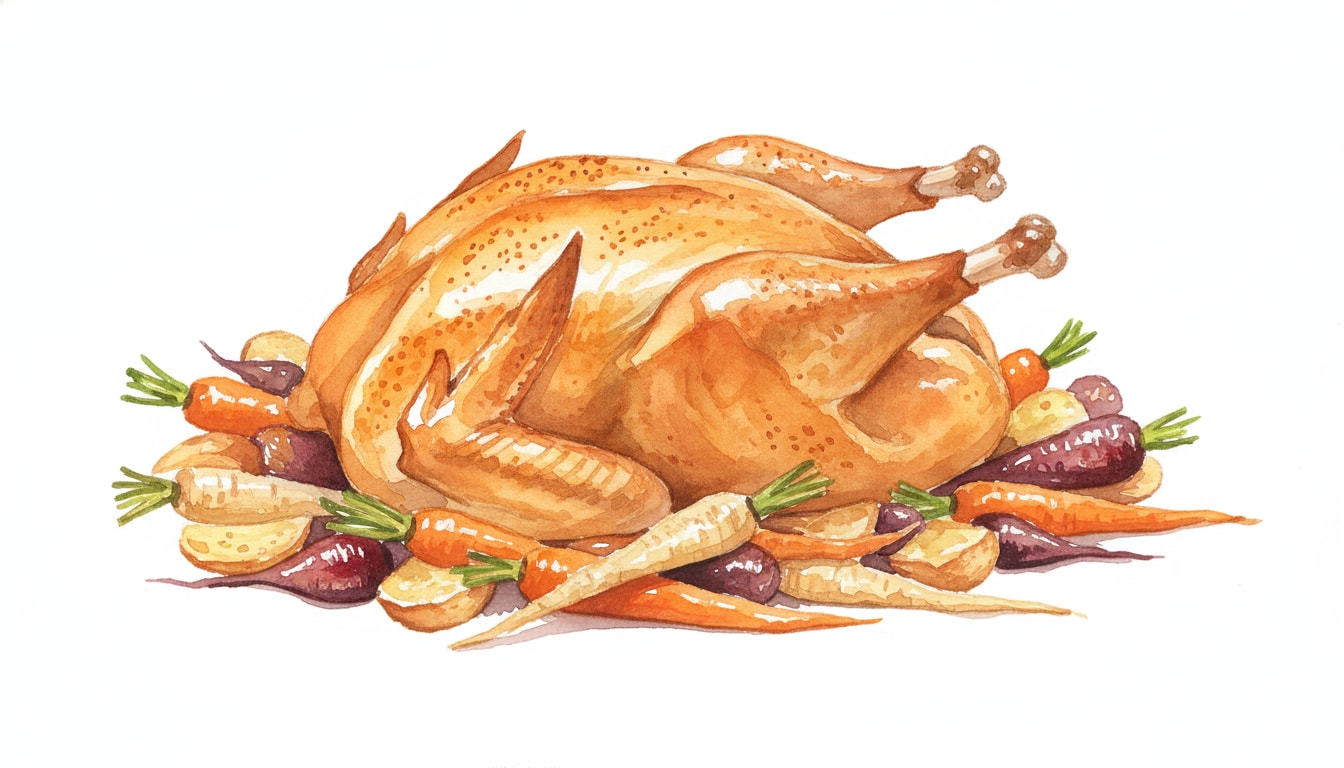
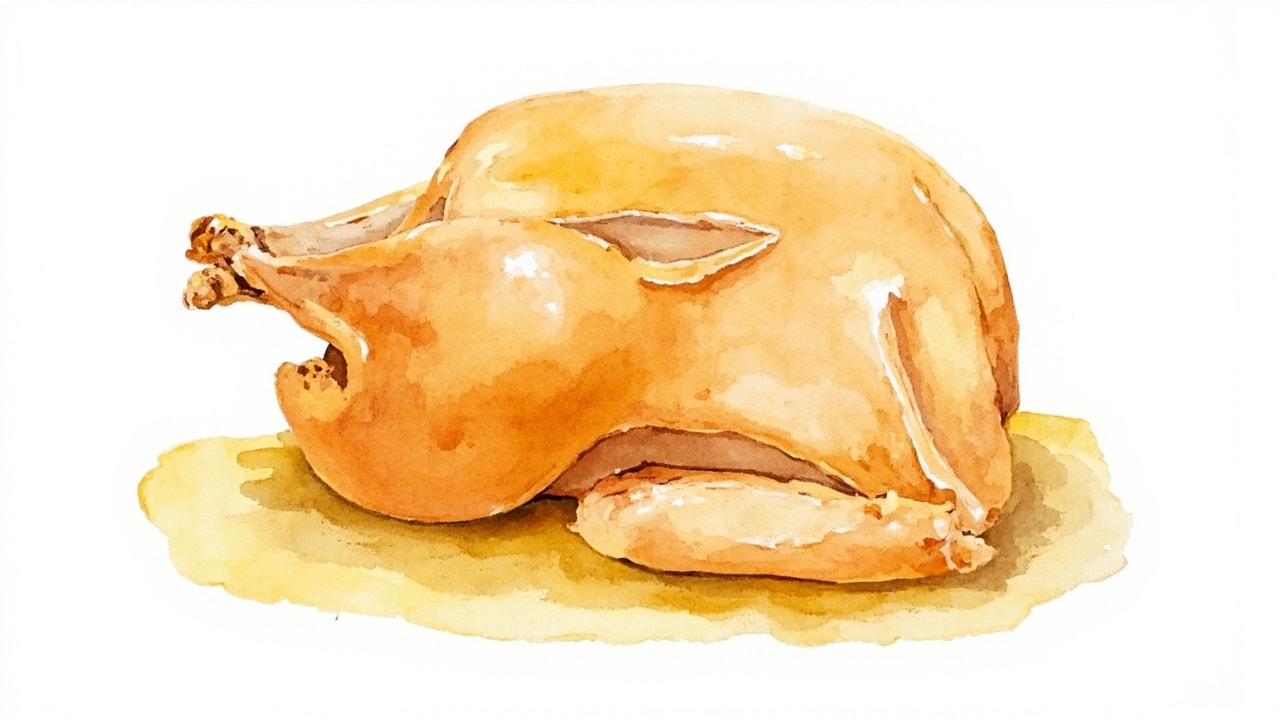
Carve the turkey by removing the legs and thighs first, then slicing the breast meat against the grain. Arrange on a warmed platter and serve with the strained pan juices.
Chef's Notes
- Dry-brining outperforms wet brining for roast poultry because the salt seasons deeply without adding water that has to be cooked off, and the uncovered refrigeration desiccates the skin for maximum crispness.
- Placing herb butter under the skin protects the lean breast from drying while flavoring the meat directly; the butter melts during roasting and effectively self-bastes the bird from within.
- The two-stage temperature approach (high then lower) gives a Maillard-rich crust without overcooking the interior, mimicking professional technique and working reliably across a range of turkey sizes.
- Carryover cooking is significant on a large roast. Plan to pull the turkey from the oven 3 to 5°C below your target internal temperature; the resting period will finish the job.
- Reserve the neck and giblets before brining. Simmer them with onion, celery, and herbs for an hour to make a quick stock that will outperform any canned product in your gravy.
Storage
Refrigerator: 4 days — Carve meat off the bone and store in shallow airtight containers. Cool within 2 hours of cooking per food safety guidelines.
Freezer: 3 months — Wrap sliced meat tightly in plastic wrap, then foil, or use vacuum-sealed bags. Thaw overnight in the refrigerator before reheating.
Reheating: Reheat slices gently in a 160°C/325°F oven covered with foil and a splash of stock, or in pan sauce at low heat until the internal temperature reaches 74°C/165°F. Do not microwave as it toughens the protein.
Troubleshooting
Pale, flabby, or rubbery skin
Cause: Skin was not thoroughly dried before roasting, or the initial high-heat sear was skipped or shortened
Fix: Cannot be fully fixed after roasting; broil 8 to 10 cm from the element for 2 to 3 minutes for minor improvement, watching carefully to avoid burning
Prevention: Dry-brine uncovered in the refrigerator for 12 to 24 hours, pat dry again before buttering, and start at 230°C/450°F for a full 30 minutes
Dry, overcooked breast meat
Cause: Turkey was cooked too long or at too high a temperature throughout, or rested insufficiently
Fix: Cannot be reversed once overcooked; serve with pan sauce, gravy, or compound butter to add moisture
Prevention: Use a thermometer and pull the turkey when the breast hits 71°C/160°F, knowing carryover will finish the cook; always rest at least 30 minutes
Undercooked meat near the bone despite browning on the outside
Cause: Thermometer was not used, or reading was taken against the bone giving a false low, or the bird was removed too early
Fix: Return to oven at 175°C/350°F and check every 10 minutes until 74°C/165°F is reached in the thigh
Prevention: Always verify with an instant-read thermometer in the thickest part of the thigh, avoiding contact with bone
Skin tears when carving
Cause: Bird was carved while still hot or skin was not loosened from the meat with butter underneath
Fix: Cannot be fully restored; serve torn pieces skin-side up and arrange to hide imperfections
Prevention: Allow a full 30-minute rest and apply butter directly to the meat beneath the skin during prep
Cultural Context
Roast turkey became synonymous with the American Thanksgiving table in the 19th century, championed by writer Sarah Josepha Hale and elevated to national-symbol status when President Lincoln proclaimed Thanksgiving a federal holiday in 1863. The bird represents harvest abundance, and the herb-and-citrus aromatic profile remains a hallmark of contemporary holiday tables across the United States.