Equipment
* optional
Ingredients
Pasta
- 300 g farfalle pasta, dry
- 15 g fine salt
Salad
- 250 g cherry tomatoes, halved lengthwise
- 200 g fresh mozzarella pearls, drained and patted dry
- 150 g salami, cured, casing removed, diced into 1cm cubes
- 100 g kalamata olives, pitted, halved lengthwise
- 150 g cucumber, diced into 1cm pieces
- 50 g red onion, finely diced
- 10 g fresh basil, torn or chiffonade
- 10 g fresh flat-leaf parsley, roughly chopped
Red Wine Vinaigrette
- 80 ml extra virgin olive oil
- 40 ml red wine vinegar
- 2 garlic, minced
- 3 g dried oregano
- 5 g Dijon mustard
- fine salt
- black pepper
Nutrition (per serving)
Nutrition is estimated per serving. Nutrients without complete source data are omitted.
Full nutrition
- Calories
- 550 kcal
- Protein
- 19 g
- Carbohydrates
- 43 g
- Fat
- 34 g
- Fiber
- 4 g
- Sugar
- 4 g
- Sodium
- 1106 mg
- Saturated Fat
- 9 g
Sources: Aggregated Public Data, USDA FoodData Central
Method
Fill a large pot with about 2.5 liters of water, add 15g of fine salt, and bring to a rolling boil (100°C/212°F) over high heat.
Add 300g of farfalle and stir immediately with a wooden spoon to keep the pieces from clumping or sticking to the pot. Cook at a steady boil for 10 to 12 minutes, stirring once or twice, until the pasta is al dente.
Pour the pasta into a colander and rinse under cold running water for 30 seconds, tossing gently with your hand, until the pasta is fully cooled. Shake the colander well to remove excess water.
While the pasta cooks, halve 250g of cherry tomatoes lengthwise, halve 100g of pitted Kalamata olives lengthwise, dice 150g of cucumber into roughly 1cm pieces, finely dice 50g of red onion, and cube 150g of salami into 1cm pieces.
Drain 200g of mozzarella pearls and pat them dry between layers of paper towel. Tear 10g of fresh basil leaves and roughly chop 10g of fresh parsley.
In a small mixing bowl, combine 40ml of red wine vinegar, 2 minced garlic cloves (about 6g), 3g of dried oregano, and 5g of Dijon mustard. Whisk until smooth.
While whisking continuously, slowly drizzle 80ml of extra virgin olive oil into the vinegar mixture in a thin stream until the vinaigrette looks glossy and slightly thickened. Season with salt starting at 4g and black pepper starting at 1g, whisking again, then taste and adjust.
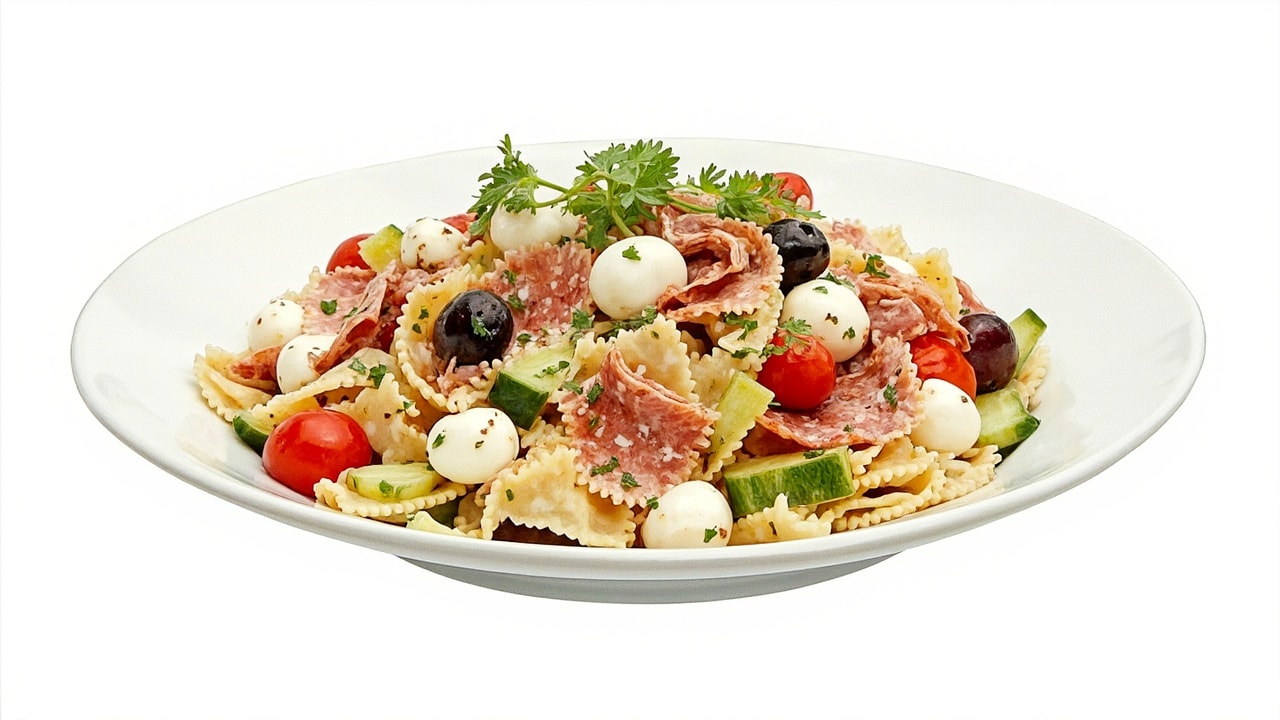
In a large mixing bowl, combine the cooled farfalle, halved cherry tomatoes, mozzarella pearls, salami, kalamata olives, cucumber, and red onion. Toss gently with a large spoon to distribute the ingredients evenly.
Pour about three-quarters of the vinaigrette over the salad and toss gently until everything is evenly coated. Taste and add more dressing, salt, or pepper until the salad is bright and well seasoned.
Fold in the torn basil and chopped parsley. Cover the bowl with a lid or plastic wrap and refrigerate for at least 20 minutes so the flavors can meld.
Just before serving, stir the salad, taste and adjust seasoning, and drizzle over the remaining vinaigrette. Serve cold or at cool room temperature.
Chef's Notes
- Use the best extra virgin olive oil you have on hand. The vinaigrette is the soul of this salad, and a sharp, peppery oil elevates everything, while a flat supermarket oil makes the whole dish taste dull.
- Cook the pasta to the lower end of the package time. It will keep absorbing liquid after draining, and slightly underdone noodles hold their bow shape and chewy texture much better in a cold salad.
- Salt your halved tomatoes lightly and let them drain in a colander for 10 minutes while you prep everything else. This single step is the difference between a vibrant salad and a watery one at the bottom of the lunchbox.
- If packing this for a school or work lunch, keep the remaining dressing in a small separate container. Toss it in just before eating so the pasta does not soak up all the flavor by mid-morning.
- A small squeeze of lemon juice stirred in right at the end wakes up the herbs and adds a clean, bright finish without making the salad taste overtly citrusy.
Storage
Refrigerator: 3 days — Store in a sealed container. Stir and refresh with a splash of olive oil and a pinch of salt before serving, since the pasta absorbs dressing as it rests.
Reheating: Serve cold or at cool room temperature; do not heat. If pasta feels stiff after refrigeration, let it sit at room temperature for 10 minutes before serving.
Troubleshooting
The salad looks dry and dull after an hour or two
Cause: Farfalle continues absorbing the vinaigrette as it rests, pulling moisture off the surface of the ingredients
Fix: Add 1 to 2 tablespoons of olive oil and a small splash of red wine vinegar, then toss well. Adjust salt and pepper.
Prevention: Reserve about a quarter of the dressing to refresh the salad just before serving, and slightly undercook the pasta
Liquid pools at the bottom of the bowl
Cause: Mozzarella pearls, tomatoes, or cucumber released moisture, often because they were not dried or salted before mixing
Fix: Tip off the liquid, re-toss with a tablespoon of olive oil, and consume within a few hours
Prevention: Pat the mozzarella dry, lightly salt the tomatoes in a colander for 10 minutes and drain them, and toss cucumbers with a pinch of salt and drain before combining
Pasta is soft, sticky, and clumps together
Cause: Pasta was cooked past al dente or was not rinsed after draining
Fix: Cannot be fully fixed. Toss with extra olive oil and dressing to loosen, and serve right away.
Prevention: Cook only to the lower end of the package time and rinse under cold running water immediately to wash away surface starch
Vinaigrette tastes sharply acidic or one-note
Cause: Garlic was raw and aggressive, or the vinegar-to-oil balance is too sour
Fix: Whisk in another tablespoon of olive oil and a small pinch of sugar or honey to balance the acidity
Prevention: Soak minced garlic in the vinegar for 5 minutes before adding oil, and use a good-quality aged red wine vinegar
Cultural Context
Pasta salad is a distinctly American invention that took hold in the mid-twentieth century alongside the rise of refrigerator culture, suburban potlucks, and the Italian-American deli tradition. It borrows the flavor palette of a classic Italian antipasto platter, with cured meats, briny olives, fresh cheese, and herbs, but reimagines those ingredients as a make-ahead, transportable, room-temperature dish suited to weeknight dinners, picnics, and lunchboxes. This particular combination of salami, mozzarella pearls, and Kalamata olives reflects the casual deli sensibility that has shaped easy American home cooking for decades.