Equipment
Ingredients
Pâte Sucrée (Sweet Shortcrust)
- 250 g all-purpose flour, sifted
- 150 g unsalted butter, cold, cut into 1 cm cubes
- 90 g powdered sugar, sifted
- 1 large egg, cold, lightly beaten
- 1 g fine sea salt, a generous pinch
Marinated Prunes
- 400 g pitted prunes, whole, pitted
- 500 ml water
- 80 g granulated sugar
- 2 earl grey tea bags
- 5 ml vanilla extract
- 1 cinnamon stick, small, about 5 g; used for infusing and removed before baking
- 2 lemon zest, wide strips peeled with a vegetable peeler
- 60 ml armagnac or dark rum
Vanilla Custard
- 250 ml whole milk
- 200 ml heavy cream
- 3 large eggs, room temperature
- 80 g granulated sugar
- 1 vanilla bean, split lengthwise, seeds scraped
- 1 g fine sea salt
Nutrition (per serving)
Nutrition is estimated per serving. Nutrients without complete source data are omitted.
Full nutrition
Only basic nutrition values are available for this recipe. More detailed nutrient data is incomplete.
- Calories
- 638 kcal
- Protein
- 9 g
- Carbohydrates
- 90 g
- Fat
- 28 g
Sources: Aggregated Public Data, USDA FoodData Central
Method
In a medium mixing bowl, whisk together the sifted flour, powdered sugar, and salt for the pâte sucrée. Add the cold cubed butter and work it in with your fingertips or a pastry blender until the mixture looks like coarse meal with pea-sized butter pieces still visible. Make a well in the center and pour in the lightly beaten egg. Mix with a fork or your hands just until a rough dough forms; do not overwork.
Shape the dough into a flat disc about 2 cm thick, wrap tightly in plastic wrap, and refrigerate for at least 1 hour 30 minutes, or up to 48 hours. The dough should feel cold and firm but pliable when you are ready to roll.
Meanwhile, prepare the prune marinade. In a medium heavy-bottomed saucepan, combine the water, granulated sugar, Earl Grey tea bags, vanilla extract, cinnamon stick, and lemon zest strips. Bring to a gentle boil over medium heat, stirring to dissolve the sugar. Reduce the heat and simmer for 5 minutes so the tea and aromatics infuse the syrup.
Remove the saucepan from the heat. Stir in the Armagnac or rum if using. Add the pitted prunes and push them down so they are mostly submerged in the hot syrup. Cover and set aside to cool to room temperature.
Transfer the covered saucepan to the refrigerator and marinate the prunes for at least 8 hours, preferably overnight. The prunes will absorb the syrup and become plump, silky, and deeply flavored.
On a lightly floured surface, roll the chilled dough into a round about 32 cm in diameter and 3 mm thick. Transfer to the 24 cm tart pan and gently press into the base and up the sides. Trim the overhang flush with the rim. Prick the base all over with a fork to prevent puffing, then freeze the lined shell for 15 minutes to firm up the butter.
Preheat the oven to 180°C (350°F). Line the chilled tart shell with a sheet of parchment paper and fill with pie weights or dried beans up to the edges. Blind bake for 20 minutes, then carefully lift out the parchment and weights.
Return the shell to the oven and bake for another 8 to 10 minutes at 180°C (350°F), until the base is pale golden and feels dry to the touch. Transfer to a cooling rack and reduce the oven temperature to 160°C (320°F).
Drain the marinated prunes in a fine-mesh strainer set over a bowl, reserving the syrup for another use if desired. Pat the prunes gently with paper towels so they are moist but not dripping; excess liquid will make the finished custard weep.
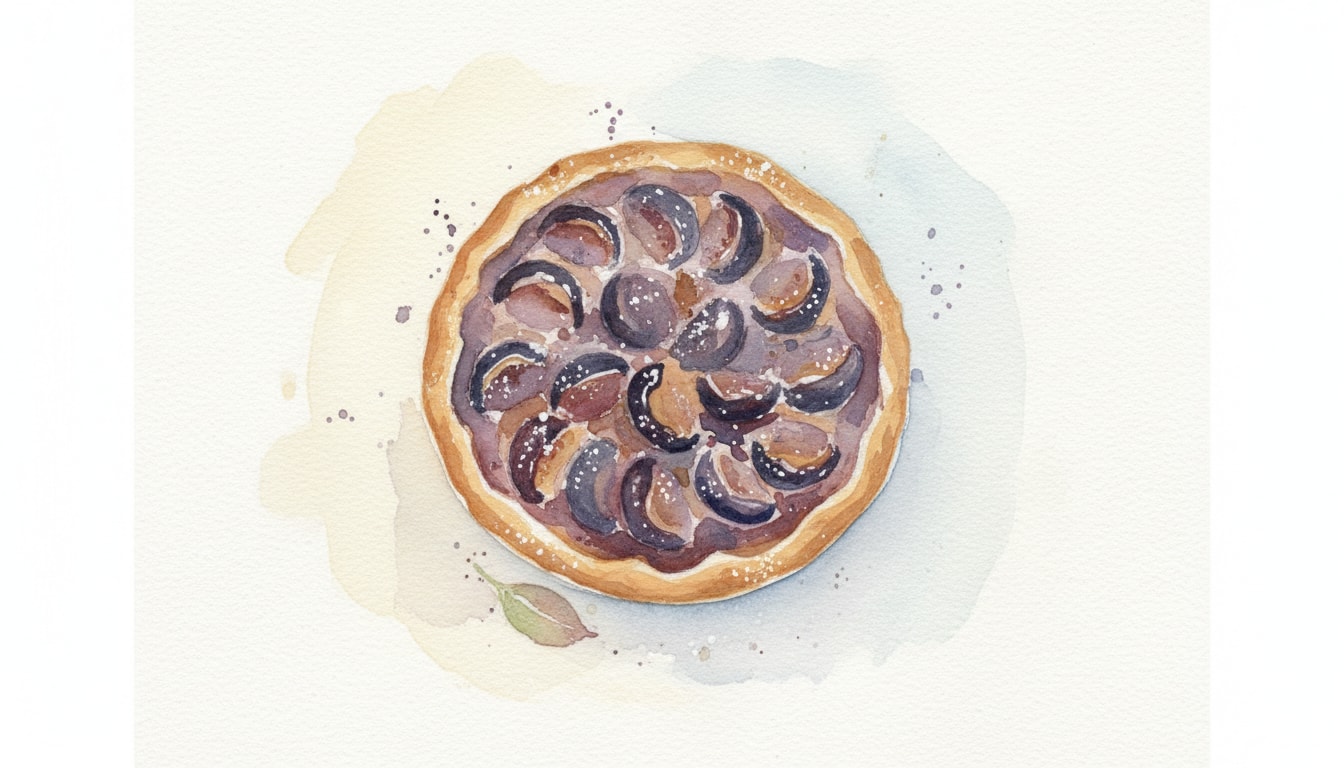
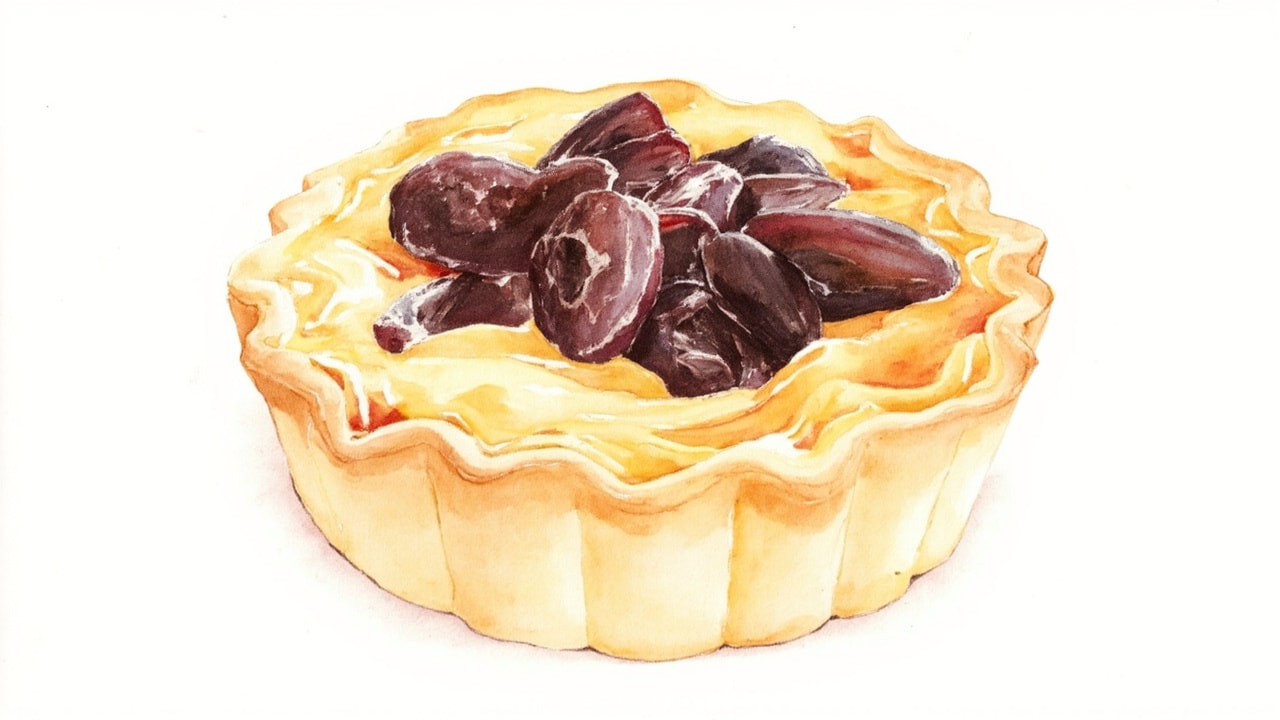
Arrange the drained prunes in a single snug layer over the warm tart shell, setting them on their sides or cut side down so the curved backs face up. Pack them in tightly so they support one another; any small gaps will fill with custard.
Make the custard: in a medium saucepan, combine the whole milk, heavy cream, sugar, split vanilla bean with its scraped seeds, and salt. Warm over medium-low heat, whisking occasionally, until the sugar dissolves and small bubbles appear around the edges. Do not let it boil. Remove from the heat, cover, and steep for 10 minutes to infuse the vanilla.
In a large mixing bowl, whisk the three eggs just until the yolks and whites are combined; do not whip in air. Gradually pour the warm cream mixture into the eggs in a thin, steady stream while whisking constantly to temper them. Strain the custard through a fine-mesh strainer into a large measuring cup or pitcher to remove the vanilla pod and any bits of cooked egg. Skim off any surface foam with a spoon.
Carefully pour the strained custard over the arranged prunes, filling the shell almost to the rim. Gently tap the pan on the counter two or three times to release any trapped air bubbles and let the custard settle evenly around the prunes.
Bake the tart on the middle rack at 160°C (320°F) for 35 to 40 minutes, until the custard is just barely set 3 cm from the edge but still has a soft wobble in the center. The internal temperature of the custard should reach 71°C (160°F) in the center for safe consumption of the egg-based custard. The surface should be pale gold with no brown spots. If the rim of the crust browns too quickly, tent it loosely with foil.
Cool the tart in the pan on a cooling rack for at least 1 hour 30 minutes. The custard will finish setting as it cools; do not cut into it while warm or it will slump. Once fully cooled, the tart can be served at cool room temperature or after a brief 30-minute chill in the refrigerator.
Release the tart from the pan by loosening the rim, transfer to a serving plate, and slice with a thin sharp knife wiped clean between cuts. Serve plain, with a small dollop of crème fraîche, or dusted lightly with powdered sugar.
Chef's Notes
- Earl Grey tea is the secret backbone of the prune flavor here; its bergamot oils echo the floral notes of vanilla and brighten the deep caramel of the prunes. If you do not have Earl Grey, a robust Assam or English Breakfast also works well.
- Tempering the eggs slowly with warm cream is the difference between a satin custard and a scrambled one. If you are nervous, whisk a small ladle of warm cream into the eggs first, then gradually whisk that thinned mixture back into the pot.
- Pulling the tart when the center still wobbles like set gelatin is crucial. The custard will continue to firm up during cooling, and a true wobble at the bake stage means a tender, just-set texture rather than a rubbery one.
- The reserved prune syrup is a treasure: spoon it over yogurt, drizzle it on pancakes, stir it into hot chocolate, or use it to baste roasted pork or duck. It keeps in the refrigerator for 2 weeks.
- For a traditional variation, spread a thin layer of frangipane almond cream on the prebaked shell before adding the prunes. The custard-only version in this particular is the cleaner, more old-fashioned country style, but the nut layer adds welcome depth if you want a richer tart.
Storage
Refrigerator: 3 days — Cover loosely once fully cooled. Best within 36 hours as the crust gradually softens from the custard moisture.
Freezer: 1 month — Freeze only the blind-baked shell, wrapped tightly in two layers of plastic wrap. Do not freeze the filled custard tart as the custard will weep upon thawing.
Reheating: Serve at cool room temperature, about 30 minutes out of the refrigerator. Do not reheat in the oven as the custard will weep and the crust will toughen.
Troubleshooting
Custard cracks on top during baking
Cause: Oven temperature was too high, or the custard was overbaked past its set point
Fix: Cannot be fully fixed once cracked, but a thin dusting of powdered sugar can disguise small fissures.
Prevention: Bake at no higher than 160°C (320°F) and pull the tart when the center still wobbles, since carryover heat will finish the set during cooling.
Soggy or underbaked pastry base
Cause: Insufficient blind baking, or the custard was poured into a shell that was not fully dried out, or excess prune syrup soaked into the base
Fix: Cannot be retroactively fixed; for future bakes, extend blind baking by 5 minutes and cool fully before adding the filling.
Prevention: Blind bake the shell until the base looks dry and pale gold before filling. Pat the marinated prunes thoroughly dry so no excess syrup reaches the crust.
Crust shrinks down the sides of the pan during baking
Cause: Dough was overworked, not rested long enough, or stretched when lining the pan
Fix: Patch any cracks with leftover trimmed dough, pressing firmly to seal before baking.
Prevention: Handle the dough gently, chill the lined shell for at least 15 minutes before blind baking, and let the dough fall into the pan rather than pulling it into place.
Custard is watery or does not set
Cause: Too much liquid in proportion to eggs, or the custard was underbaked
Fix: Return the tart to a 150°C (300°F) oven for 5 to 10 minutes if it slumps heavily after cooling.
Prevention: Measure liquids carefully; the egg-to-dairy ratio should be roughly 150 g eggs to 450 ml liquid for a tender set. Pull the tart only when an instant-read thermometer in the center reads 71°C (160°F).
Prunes are tough or chewy in the finished tart
Cause: Marination time was too short, or the prunes were particularly dry to begin with
Fix: Cannot be fixed once baked, but lightly simmering any reserved marinade and drizzling it over each serving softens the perception of the texture.
Prevention: Soak the prunes for at least 8 hours, preferably overnight, in the warm spiced syrup. Choose plump, soft prunes from a reputable source.
Cultural Context
The tarte aux pruneaux holds a cherished place in French country patisserie, particularly in Gascony, Alsace, and Lorraine, regions where the marriage of prunes preserved at the height of summer with a splash of local Armagnac or eau-de-vie is a centuries-old autumn ritual. The dish reflects a thrifty, resourceful French sensibility: a handful of pantry staples transformed into a dessert worthy of Sunday lunch. It belongs to the same rustic canon as tarte Tatin and clafoutis, where imperfect fruit and humble cream become something quietly elegant.